 Save
Save I threw this together on a sweltering July afternoon when the thought of turning on the stove for more than ten minutes made me want to flee my own kitchen. The noodles cooled under cold water, the vegetables stayed crisp, and suddenly I had a bowl that tasted like relief. It became my go-to whenever the heat pressed in or I needed something that felt clean and bright without any fuss. Now I keep soba noodles stocked year-round, just in case.
The first time I made this for friends, I panicked because I forgot to buy protein and figured it would feel incomplete. But no one noticed, or if they did, they didnt care. We sat on the back porch with our bowls balanced on our knees, and someone said it tasted like the kind of meal you eat when youre taking care of yourself. That stuck with me.
Ingredients
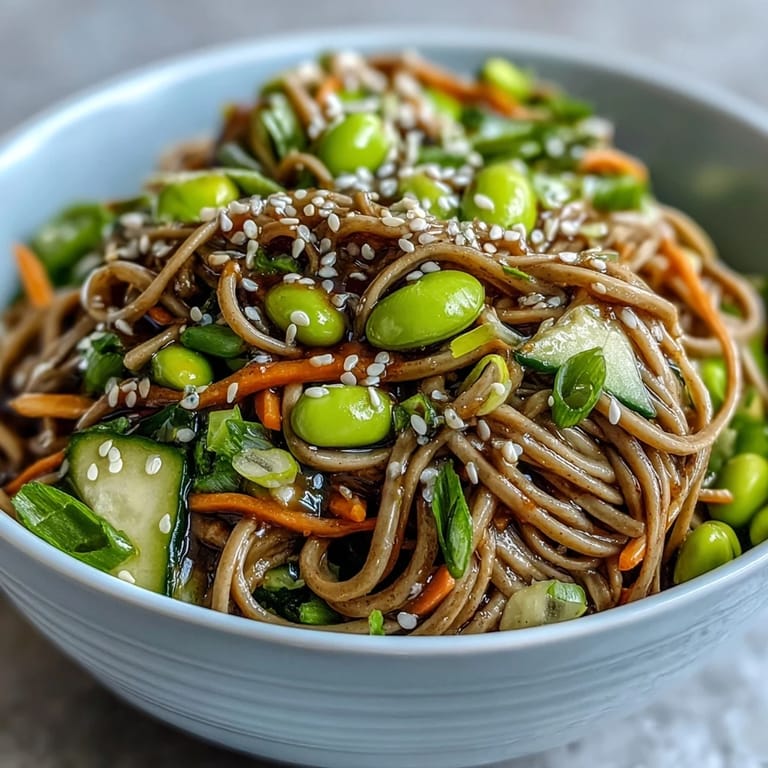
- Dried soba noodles: Look for ones that list buckwheat first on the label, they have more flavor and a nicer chew, and always rinse them well after cooking or theyll clump together in a sad tangle.
- Shelled edamame: Frozen works just as well as fresh, and a quick blanch brings them back to life with a little pop of sweetness and texture.
- Cucumber: English cucumbers are less watery and dont need peeling, which saves time and keeps the bowl from getting soggy.
- Carrots: Julienned carrots add crunch and a slight sweetness that balances the salty dressing, plus they look cheerful in the bowl.
- Scallions: Slice them thin and they add a sharp, fresh bite without overwhelming the other flavors.
- Toasted sesame seeds: These bring a nutty richness and a little crunch that makes each bite feel complete.
- Fresh cilantro or mint: Optional, but a handful of herbs makes the whole thing feel more awake and alive.
- Soy sauce: The backbone of the dressing, use tamari if you need it gluten-free and it will taste just as good.
- Rice vinegar: Adds brightness and cuts through the richness of the sesame oil without being too sharp.
- Toasted sesame oil: A little goes a long way, it smells like warmth and gives the dressing its signature depth.
- Tahini or peanut butter: Either one works to make the dressing creamy and help it cling to the noodles instead of pooling at the bottom.
- Honey or maple syrup: Just enough sweetness to round out the salty and tangy notes, but not enough to make it dessert.
- Fresh ginger: Grate it fine so it blends in smoothly and adds a little zing that wakes up your mouth.
- Garlic clove: One small clove minced finely gives the dressing a quiet savory hum in the background.
- Water: Thins the dressing just enough so it drizzles instead of gloops, adjust to your preference.
Tired of Takeout? 🥡
Get 10 meals you can make faster than delivery arrives. Seriously.
One email. No spam. Unsubscribe anytime.
Instructions
- Cook the noodles:
- Boil the soba according to the package directions, usually around five to seven minutes, then drain and rinse them thoroughly under cold running water. This stops the cooking and washes away the excess starch so they stay separate and slippery.
- Blanch the edamame:
- While the noodles cook, drop the edamame into boiling water for two to three minutes until bright green and tender. Drain them and set aside to cool.
- Make the dressing:
- In a small bowl, whisk together the soy sauce, rice vinegar, sesame oil, tahini, honey, ginger, and garlic until smooth and glossy. Add a tablespoon of water if it feels too thick, you want it pourable but not watery.
- Prep the vegetables:
- Julienne the cucumber and carrots into thin matchsticks, and slice the scallions on a sharp angle so they look pretty. This step goes fast if your knife is sharp.
- Toss the noodles:
- In a large bowl, toss the cooled soba with about half the dressing so every strand gets coated. Dont be shy, use your hands if it helps.
- Assemble the bowls:
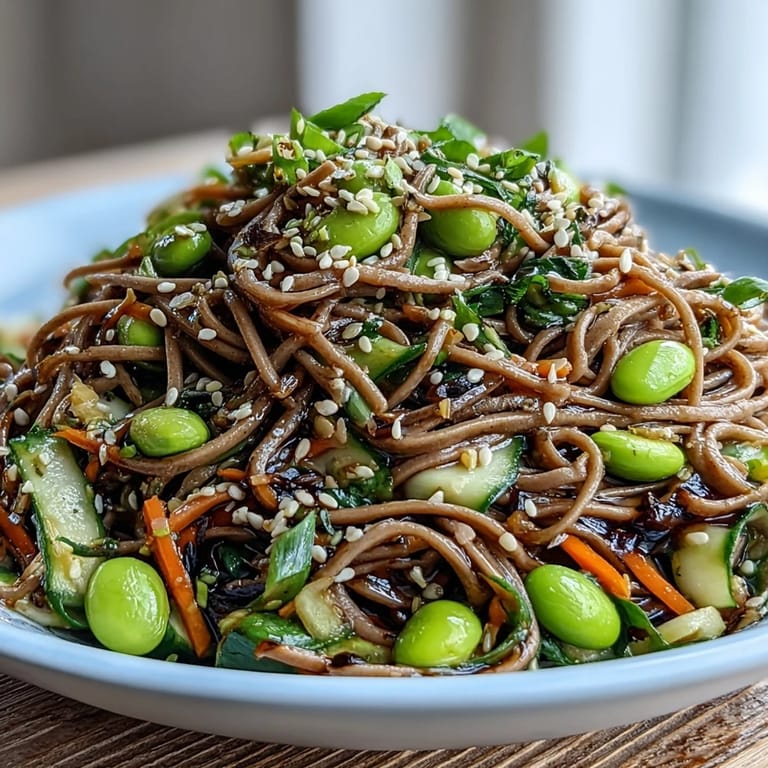
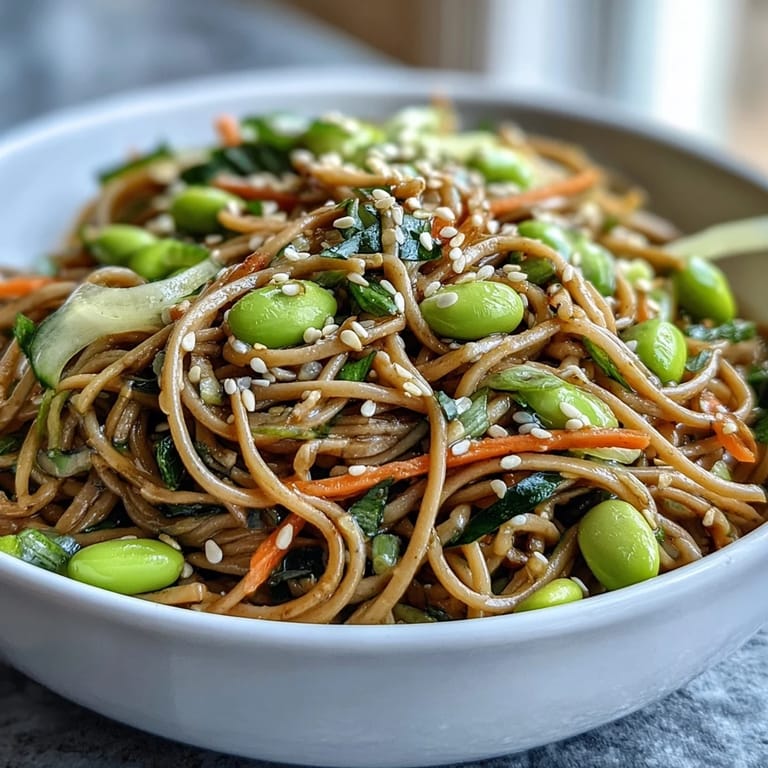
- Divide the dressed noodles among four bowls, then top each with edamame, cucumber, carrots, and scallions arranged however feels right to you. Drizzle the remaining dressing over the top.
- Garnish and serve:
- Sprinkle toasted sesame seeds and a handful of fresh herbs over each bowl, then serve immediately while everything is still crisp and cold.
 Save
Save I started keeping a jar of this sesame dressing in the fridge after I realized it made everything taste intentional, even when I was just using up odds and ends from the crisper drawer. One night I ate this bowl alone at the counter after a long day, and it felt like the kitchen was taking care of me instead of the other way around. Thats when I knew it had earned a permanent spot in my routine.
Making It Your Own
This bowl is forgiving and adaptable in ways that make it easy to riff on without a recipe. Swap in snap peas, bell peppers, or thinly sliced radishes if thats what you have, or add grilled tofu, a soft-boiled egg, or even leftover rotisserie chicken if you want more protein. The dressing works on almost anything, so feel free to experiment with whatever vegetables look good at the market or are languishing in your fridge.
Storing and Serving
If youre making this ahead, keep the noodles, vegetables, and dressing separate until youre ready to eat, otherwise everything gets a little soggy and sad. Store each component in its own container in the fridge for up to three days, then assemble just before serving. It also works well as a packed lunch, just bring the dressing in a small jar and toss everything together when youre ready.
What to Serve Alongside
This bowl is light and refreshing, so it pairs beautifully with something a little richer or more savory on the side. I like to serve it with miso soup, crispy gyoza, or even just a handful of seaweed snacks if Im keeping things simple. A cold glass of green tea or a chilled riesling makes it feel like a meal worth sitting down for.
- Miso soup adds warmth and a savory depth that balances the bright, fresh flavors of the noodles.
- Crispy gyoza or spring rolls bring a little crunch and richness that makes the whole meal feel more complete.
- Seaweed snacks or pickled vegetables offer a salty, tangy contrast that keeps your palate interested between bites.
 Save
Save This bowl has become one of those recipes I make without thinking, the kind that feels like muscle memory and always delivers. I hope it becomes that for you too, a little bit of ease and brightness whenever you need it.
Recipe Help & Answers
- → What makes soba noodles special?
Buckwheat soba noodles have a nutty flavor and chewy texture that pairs perfectly with Asian-inspired dressings. They're traditionally served cold or at room temperature, making them ideal for noodle bowls.
- → Can I make this gluten-free?
Yes—choose 100% buckwheat soba noodles and substitute tamari for soy sauce. Many brands contain wheat, so check labels carefully to ensure they're certified gluten-free.
- → How do I prevent noodles from sticking?
Rinse cooked soba thoroughly under cold water immediately after draining. This removes excess starch and stops the cooking process. Toss with a small amount of oil or dressing if storing.
- → What vegetables work best?
Julienned cucumber and carrots provide crunch, but try snap peas, bell peppers, radishes, or shredded cabbage. The key is varying textures and colors for an appealing bowl.
- → Can I add protein?
Grilled tofu, shredded chicken, or soft-boiled eggs make excellent additions. For a vegan option, try baked tempeh or extra edamame to boost protein content.