 Save
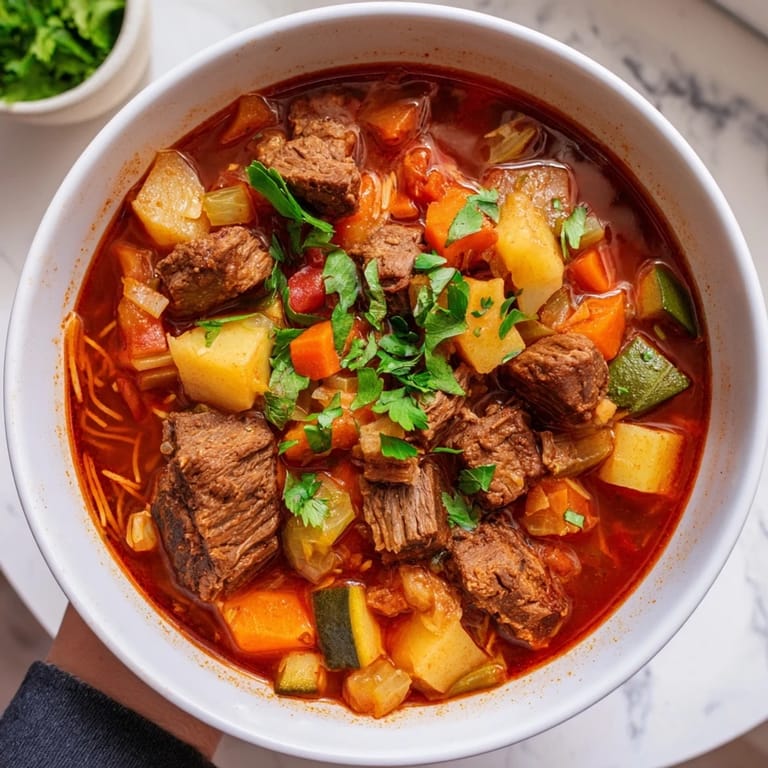
Save There's a particular evening I'll never forget, sitting in my neighbor's kitchen in Algiers, watching her grandmother stir a massive pot of chorba with the kind of confident hand movements that come from decades of practice. The aroma was intoxicating—cumin and coriander dancing with tomatoes and something deeper, almost sweet, that I later learned was cinnamon. She never consulted a recipe, just tasted and adjusted, and when she finally ladled it into bowls and handed me one with a knowing smile, I understood why this soup has survived generations. That bowl changed how I thought about what a simple soup could be.
I made this for friends on a cold November night, and I remember one of them closing their eyes after the first taste and just sitting there quietly for a moment. That's when I knew I'd gotten it right—when a dish stops conversation and makes people present. She asked for the recipe immediately, and I realized this wasn't just comfort food, it was a keeper.
Ingredients
- Lamb shoulder, cut into 2 cm cubes (500 g): The shoulder stays tender through long cooking and has enough fat to flavor the broth beautifully.
- Onion, finely chopped (1 large): The foundation of everything—let it soften properly before moving forward.
- Carrots, diced (2): They add natural sweetness that balances the warm spices.
- Celery stalks, diced (2): Often overlooked, but it brings an earthy depth that ties flavors together.
- Potato, peeled and diced (1 medium): Creates a gentle creaminess as it breaks down without needing cream.
- Zucchini, diced (1): Added late so it stays slightly firm and doesn't turn mushy.
- Fresh tomato, peeled and diced (1 large): The fresh tomato gives brightness that canned alone can't quite achieve.
- Canned chopped tomatoes (400 g): Provides concentrated tomato flavor and body to the broth.
- Garlic cloves, minced (2): Added early so it mellows into the background rather than shouting.
- Tomato paste (2 tbsp): Deepens the tomato flavor and adds richness—don't skip this step.
- Fresh coriander, chopped (1 bunch, reserve some for garnish): This is the soul of Algerian chorba; the fresh herbs at the end are not optional.
- Fresh parsley, chopped (1 bunch, reserve some for garnish): Adds freshness and a grassy note that cuts through the richness.
- Ground cumin (1 tsp): Warm and earthy, it's the spice that makes people wonder what you did differently.
- Ground coriander (1 tsp): Subtle and slightly citrusy, it rounds out the spice profile beautifully.
- Paprika (1 tsp): Brings color and a gentle, slightly sweet pepper note.
- Ground cinnamon (1/2 tsp): The secret ingredient that makes people ask what it is—use it sparingly so it whispers rather than shouts.
- Ground black pepper (1/2 tsp): Just enough for a finish line.
- Ground turmeric (1/2 tsp): Adds earthiness and helps with digestion.
- Chili flakes, optional (1/2 tsp or to taste): For heat if you want it; the soup is warming enough on its own.
- Salt (1 1/2 tsp, or to taste): Taste as you go—you'll likely need to adjust at the end.
- Olive oil (2 tbsp): Good quality oil makes a difference in the initial browning and final flavor.
- Water or low-sodium beef stock (1.5 L): Stock brings more depth than water, but water works if that's what you have.
- Vermicelli or small soup pasta (60 g): Adds substance and texture; it should be tender but not dissolved.
Tired of Takeout? 🥡
Get 10 meals you can make faster than delivery arrives. Seriously.
One email. No spam. Unsubscribe anytime.
Instructions
- Brown the lamb:
- Heat olive oil in a large pot over medium heat and add the lamb cubes. Let them sit undisturbed for a minute or two—this is where the magic starts. You want a golden crust on each side, not gray meat, so give it about 5 minutes total, stirring occasionally. This step builds flavor that the entire soup will rest on.
- Build the flavor base:
- Add the chopped onions, garlic, carrots, celery, and potato. Stir occasionally for about 5 minutes until everything softens and the kitchen starts smelling like dinner. You'll see the vegetables release their moisture and the onions turn translucent—that's your signal to move forward.
- Bloom the spices:
- Stir in the tomato paste, cumin, coriander, paprika, cinnamon, black pepper, turmeric, and salt. Cook for just 2 minutes, stirring constantly. This blooming releases the essential oils in the spices and transforms them from raw powder into something fragrant and alive. You'll smell the difference immediately.
- Add the tomatoes and zucchini:
- Mix in the diced fresh tomato, canned tomatoes, and zucchini. Stir well to incorporate the spices evenly. The brightness of the fresh tomato will mix with the deeper canned version, creating complexity.
- Simmer the soup:
- Pour in your water or stock and bring everything to a boil, then reduce heat to low, cover, and let it simmer gently for 1 hour. Skim foam from the surface occasionally—this is the impurities rising, and removing them clarifies the broth. Walk away and let time do the work here.
- Finish with pasta and herbs:
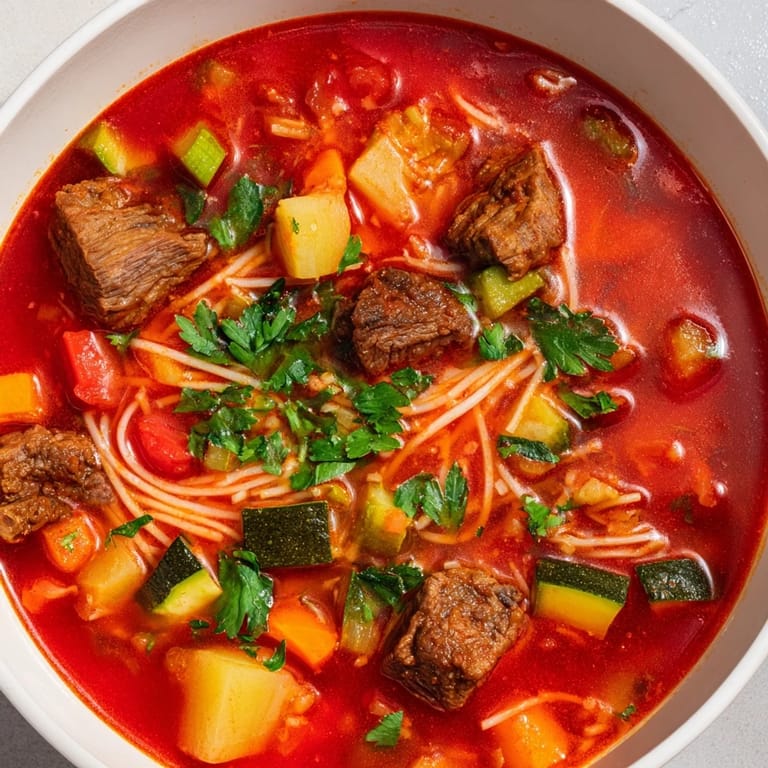
- Stir in the vermicelli or soup pasta and simmer for 10–12 minutes until the pasta is tender. In the last minute, add the chopped parsley and coriander, then taste and adjust the salt. The fresh herbs will brighten everything that's been simmering.
- Serve and garnish:
- Ladle into bowls, scatter reserved herbs on top, and serve with lemon wedges. A squeeze of lemon is not a suggestion—it's how you finish the story.
 Save
Save I learned something important the first time I made this: my mother-in-law tasted it and said it was good, but then added a squeeze of lemon and a sprinkle of coriander, and suddenly it came alive. She taught me that a recipe is sometimes just a starting point, and the real cooking happens in those final moments of tasting and adjusting.
Why This Spice Blend Works
The beauty of Algerian chorba is that none of the spices dominate. The cumin and coriander create a warm base, the paprika adds color and gentleness, and the cinnamon is the surprise that makes people pause and wonder. The turmeric and black pepper hold everything together in the background. This isn't a spice-forward soup that announces itself loudly; it's one that grows more complex with each spoonful, revealing different notes as you eat.
The Vegetable Medley
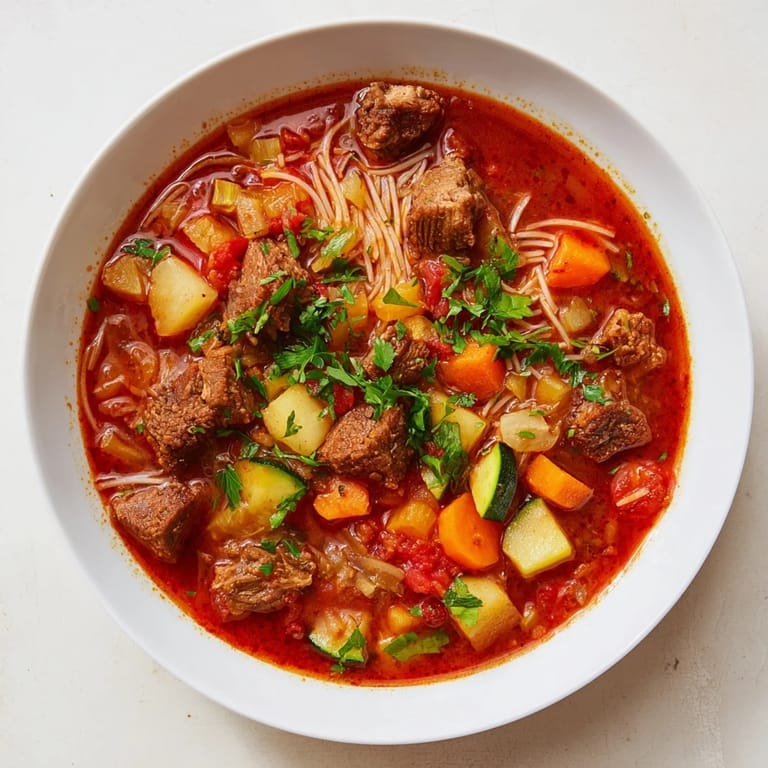
What makes chorba different from other lamb soups is the variety of vegetables. Each one serves a purpose: carrots and onions for sweetness, celery for earthiness, potato for body, zucchini for lightness. They don't all finish at the same time—some soften into the broth while others maintain texture—creating layers. The combination means that no two spoonfuls taste exactly the same, which is why you can eat this soup multiple times and still discover something new.
Making It Your Own
The foundation of this recipe is solid, but it's also flexible in ways that matter. If you prefer chicken to lamb, it will be lighter and cook faster. If you want more protein, chickpeas are a traditional addition that add earthiness and substance. Some people add a pinch of saffron if they want to be fancy, or a bay leaf for extra depth. The point is to taste as you cook and trust your instincts.
- For a lighter version, substitute chicken thighs for the lamb and reduce the simmering time to 45 minutes.
- Add a can of chickpeas in the last 15 minutes if you want more texture and protein.
- A squeeze of fresh lemon juice added just before serving brightens everything and is worth the extra step.
 Save
Save There's something deeply nourishing about a bowl of chorba that goes beyond nutrition. It's the kind of food that wraps around you on a cold evening and makes you feel seen.
Recipe Help & Answers
- → What cut of lamb is best for this dish?
Lamb shoulder cut into cubes is ideal as it becomes tender and flavorful during the slow cooking process.
- → Can I substitute beef stock for water?
Yes, using low-sodium beef stock instead of water adds depth and richness to the broth.
- → How long should the soup simmer for optimal flavor?
Simmering for about 1 hour allows the meat to tenderize and the spices to fully infuse the broth.
- → What herbs are used for garnishing?
Fresh coriander and parsley are reserved for garnish, adding bright, fresh notes to the dish.
- → Is it possible to make a lighter version?
Yes, substituting lamb with chicken will produce a lighter, yet still flavorful, dish.