 Save
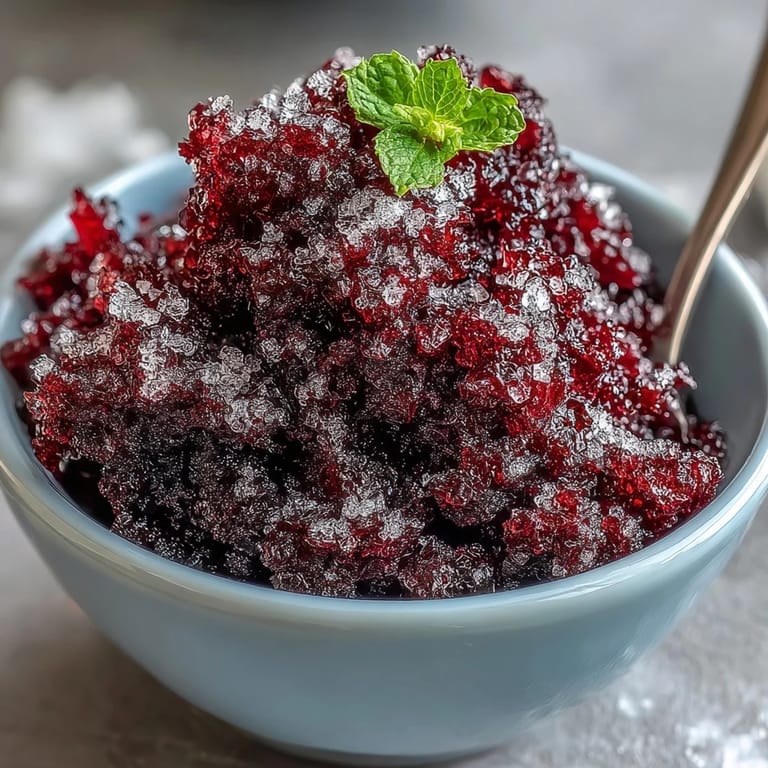
Save There's a peculiar magic that happens when you freeze something meant to be liquid—watching it transform from syrup to something you can scrape with a fork feels like a small kitchen miracle every time. Black currant granita arrived in my life during an unusually hot July when a friend brought a punnet of these jewel-like berries from a farmers market, insisting I had to taste them before summer ended. The tartness was shocking, almost electric on the tongue, and I spent the rest of that afternoon wondering how to capture that bright intensity without letting it melt away. This recipe became my answer, a frozen dessert that tastes like summer distilled into crystalline flakes.
I served this to a dinner party of eight people who were all convinced they didn't like black currants because they'd never really had them beyond a jam or cordial. Watching their expressions shift from hesitation to genuine delight as they discovered the real flavor—tart, clean, almost mineral—was worth every fork-scraping session at the freezer. One guest asked for the recipe before dessert was even finished, which is the highest compliment a cook can receive.
Ingredients
- Fresh or frozen black currants (500 g / about 3 cups): These berries are the whole show here, so don't skip them or substitute lightly—their distinctive tartness is what makes granita sing.
- Granulated sugar (150 g / 3/4 cup): This sweetens without overpowering the currant flavor; resist the urge to add more or you'll lose that bright tang.
- Water (400 ml / 1 2/3 cups): Acts as your freezing vehicle; the ratio matters because too much liquid makes it icy rather than fluffy.
- Freshly squeezed lemon juice (1 tablespoon): A small amount lifts the entire flavor profile and keeps the granita from tasting flat or one-dimensional.
Tired of Takeout? 🥡
Get 10 meals you can make faster than delivery arrives. Seriously.
One email. No spam. Unsubscribe anytime.
Instructions
- Prep your currants with intention:
- Rinse them thoroughly under cool water and remove any stems if using fresh ones. This small care sets the tone for everything that follows.
- Coax the flavors together:
- Combine currants, sugar, and water in a medium saucepan and bring to a gentle simmer over medium heat. You'll notice the berries releasing their color almost immediately—let them soften for about 10 minutes while the sugar dissolves, stirring occasionally so nothing sticks to the bottom.
- Blend into smoothness:
- Once cooled slightly, pour the mixture into a blender and puree until completely smooth. An immersion blender works beautifully here if you prefer to work directly in the pot.
- Strain with patience:
- Push the puree through a fine-mesh sieve into a large bowl, using the back of a spoon to extract every drop of juice. Don't rush this—pressing gently and steadily yields more liquid than forcing it.
- Add the brightness:
- Stir in the lemon juice once the strained mixture has cooled completely. Taste it and let yourself anticipate how good this will be frozen.
- Begin the freeze:
- Pour everything into a shallow metal baking dish (metal conducts cold better than glass) and place it flat in your freezer. The shallowness matters because it speeds up freezing and makes scraping easier.
- Scrape and fluff with rhythm:
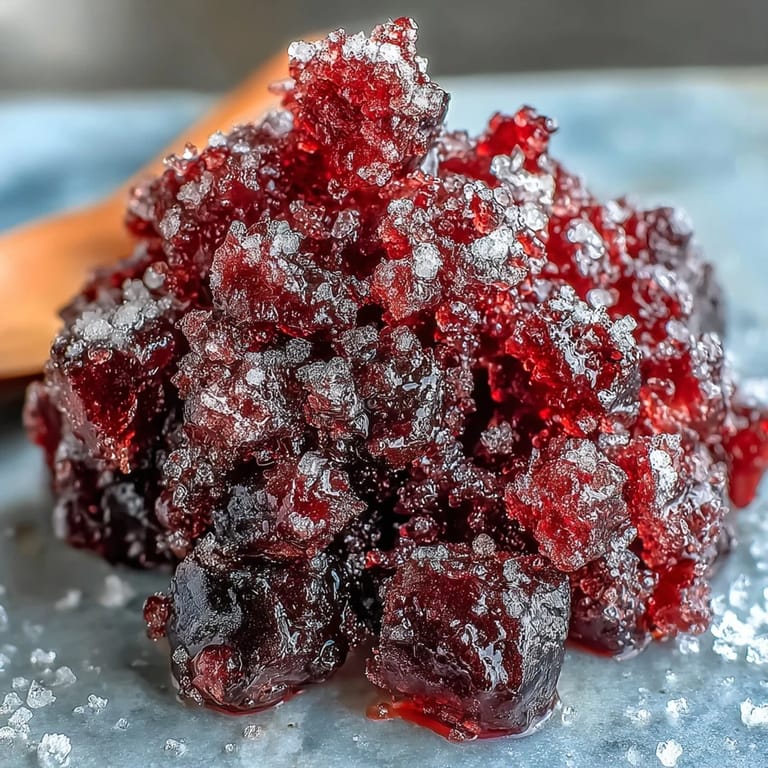
- After 45 minutes, use a fork to scrape the icy edges toward the center, breaking up any crystals. Return to the freezer and repeat this scraping every 30 to 45 minutes for about 4 hours total, until the granita has the texture of fine snow.
- Serve in the cold:
- Chill your serving glasses or bowls beforehand so they keep the granita frozen longer. Spoon it into glasses and serve immediately—this is not a dessert that waits.
 Save
Save There's a moment late on a summer evening when someone reaches for a second or third spoonful of granita and suddenly you realize they've forgotten about any other dessert you might have offered. That's when you know you've created something that feels both simple and indulgent, the kind of thing people remember and ask you to make again next July.
The Science of Freezing Right
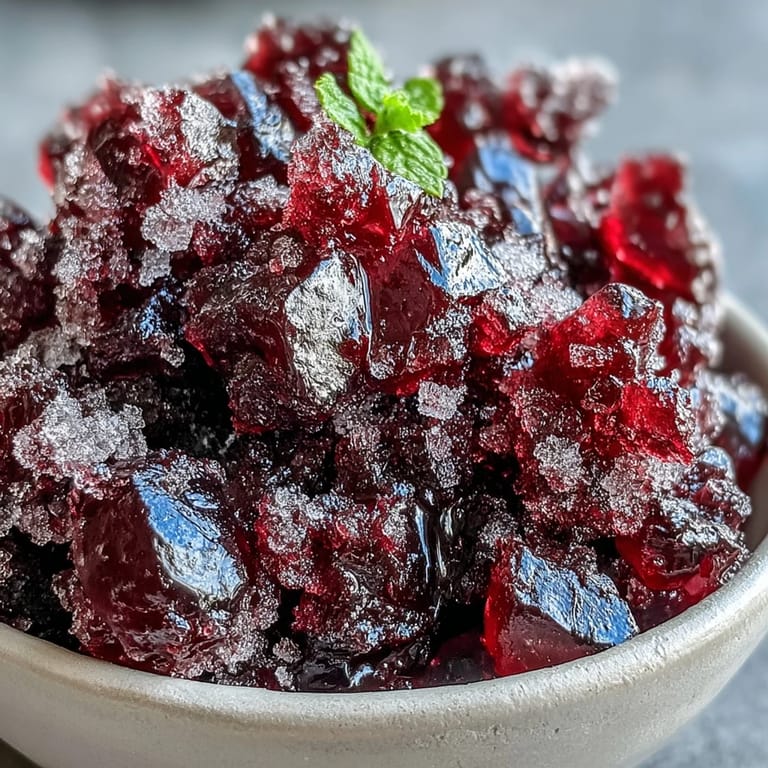
Granita's appeal lies in its texture, which is fundamentally different from ice cream because there's no fat or air being whipped in—just ice crystals forming at their own pace. The repeated scraping disrupts crystal growth, keeping everything small and delicate rather than allowing one large, hard block to form. Understanding this changed how I think about frozen desserts, making me appreciate why this Italian technique has survived centuries despite seeming almost impossibly simple.
Playing with Flavor Variations
Once you understand the basic method, the possibilities shift from limited to expansive. I've made versions with a splash of crème de cassis added just before freezing, which deepens the flavor and adds a sophisticated edge that adults absolutely love. The original berry-and-sugar foundation is strong enough to handle additions without losing its identity, which is perhaps the best compliment you can pay to any recipe.
Serving with Style
The presentation matters more with granita than you might expect, partly because of how quickly it melts and partly because it deserves to be treated as the elegant thing it is. Chill your glasses in the freezer before serving, garnish with fresh mint leaves if you have them, or scatter a few whole black currants on top for visual drama. A small, pretty spoon makes the eating experience feel more intentional, and the cold glass against your lips on a warm evening becomes part of the whole story.
- Always serve immediately after scooping to preserve the granita's delicate frozen texture.
- Fresh mint or whole black currants add visual appeal and complement the tart flavor beautifully.
- Make it ahead—it keeps perfectly for two days, and a quick fork-fluff before serving restores its texture instantly.
 Save
Save Black currant granita is proof that the simplest recipes often deliver the most memorable moments. Make it this summer while the season is still hot and the fruit is at its peak.
Recipe Help & Answers
- → What makes granita different from sorbet or ice cream?
Granita has a coarser, crystalline texture achieved by scraping the freezing mixture periodically. Unlike ice cream, it contains no dairy, and unlike sorbet, it's not churned smooth, resulting in those signature icy crystals.
- → Can I use frozen black currants instead of fresh?
Absolutely. Frozen currants work beautifully and are often available year-round. Simply add them directly to the saucepan without thawing first—they'll break down as they simmer.
- → How long can I store homemade granita?
You can keep this granita for up to 2 days in the freezer. Before serving, simply fluff it again with a fork to restore the crystalline texture.
- → Do I really need to strain the mixture?
While optional, straining removes seeds and skins for a smoother mouthfeel. If you prefer more texture and fiber, you can skip this step, though the final result will be slightly rustic.
- → Can I reduce the sugar content?
Sugar helps create the right texture and prevents the mixture from freezing into a solid block. You can reduce it slightly, but too little sugar will result in hard, icy crystals that are difficult to scrape.