 Save
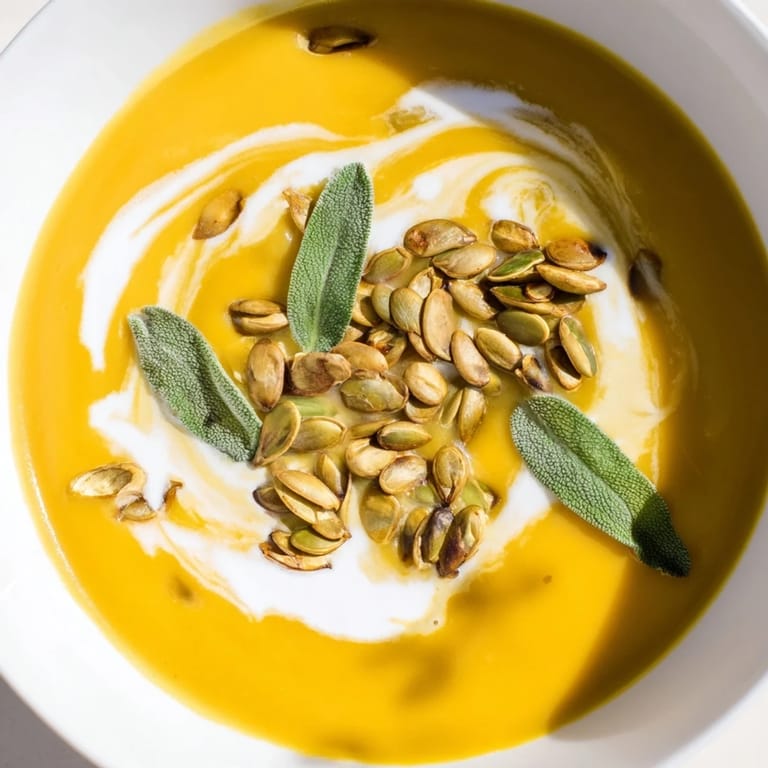
Save There's something about autumn that makes me crave butternut squash soup. Years ago, I was at a farmer's market on a crisp October morning when a vendor handed me a sample of her roasted squash bisque, and that first spoonful changed everything. The way the nutmeg and sage danced together felt like tasting a season. Now, whenever I roast a butternut squash, that same kitchen warmth fills my home.
I made this for my sister the first winter she moved into her own place. She called me halfway through saying her apartment smelled like a spice market, in the best possible way. When she tasted that first spoonful, she got this quiet look on her face, and I knew right then that this recipe would become part of her kitchen tradition too.
Ingredients
- 1 large butternut squash (about 2.5 lbs), peeled, seeded, and cubed: Buy one that feels heavy for its size—that means it's full of flavor and water content. Roasting concentrates the natural sugars, so you don't need to add honey or brown sugar later.
- 1 medium yellow onion, chopped: Yellow onions are your foundation; they'll caramelize and add subtle sweetness without overpowering the delicate squash.
- 2 cloves garlic, minced: Fresh garlic gives the soup depth without making it harsh or aggressive.
- 4 cups vegetable broth: Use a good quality broth you'd actually drink on its own—it becomes the soul of this soup.
- 2 tbsp olive oil: Split between roasting and sautéing, it coaxes out flavors at different stages.
- 1 tsp sea salt: Start conservative and taste as you go; you can always add more but you can't take it out.
- 1/4 tsp ground black pepper: Just enough to whisper in the background.
- 1/2 tsp ground nutmeg: This is the secret handshake of autumn soups—it makes people ask what the mysterious warming spice is.
- 1 tsp dried sage (or 1 tbsp fresh sage, chopped): Sage is what separates this from a generic squash soup; it adds an herbal earthiness that feels intentional and sophisticated.
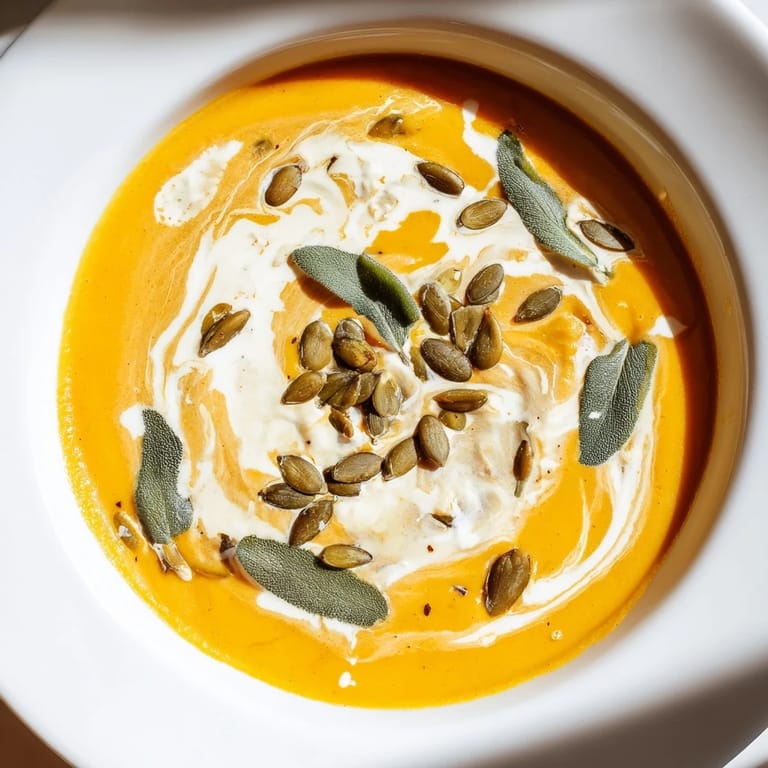
- 1/4 cup heavy cream or coconut milk (for swirling): The cream is optional but transforms the soup from good to restaurant-quality with just a few ribbons on top.
- Roasted pumpkin seeds and fresh sage leaves: These garnishes add texture and remind you why you made this in the first place.
Tired of Takeout? 🥡
Get 10 meals you can make faster than delivery arrives. Seriously.
One email. No spam. Unsubscribe anytime.
Instructions
- Heat your oven and prep the squash:
- Preheat to 400°F (200°C). Toss your cubed squash with 1 tbsp olive oil, 1/2 tsp salt, and a pinch of pepper on a parchment-lined baking sheet. The oil helps everything caramelize evenly.
- Roast until golden and tender:
- Spread the squash in a single layer and roast for 30–35 minutes, turning halfway through. You'll know it's ready when the edges turn deep golden and you can easily pierce a cube with a fork.
- Build your flavor base:
- While the squash roasts, heat the remaining 1 tbsp olive oil in a large pot over medium heat. Add your chopped onion and cook for 4–5 minutes until soft and translucent, stirring occasionally. Add the minced garlic and cook for 1 minute more until fragrant.
- Combine and simmer:
- Transfer the roasted squash to the pot with the onions and garlic. Stir in the sage and nutmeg—you'll feel the warmth of the spices wake up. Pour in your vegetable broth, bring everything to a boil, then reduce heat and let it simmer gently for 10 minutes.
- Blend into silk:
- Remove from heat and let cool slightly if using a countertop blender. Using an immersion blender, blend the soup directly in the pot in long, smooth strokes until silky and completely smooth. If using a countertop blender, work in batches and be careful with the hot liquid.
- Taste and adjust:
- This is your moment to be brave. Taste a spoonful and adjust the salt and pepper to your preference. Some soups need an extra whisper of nutmeg too.
 Save
Save I remember my grandmother saying that good soup is always about patience—not in time, but in attention. When you roast that squash and smell it turn golden, when you watch cream swirl across the surface like a painting, you're doing something that matters. That's what this soup taught me.
Why Roasting Makes All the Difference
Roasting the squash instead of boiling it is the entire reason this soup tastes like something worth making twice. Dry heat caramelizes the natural sugars in the squash, creating complexity and depth that you simply cannot achieve by simmering it in broth. The edges turn mahogany brown, the flesh becomes creamy on the inside, and every spoonful carries that subtle sweetness. It's the difference between a quick lunch and something you dream about.
Customizing to Your Taste
This recipe is your canvas. Some days I add a pinch of cayenne pepper for warmth, other times a touch of cinnamon if I'm feeling more dessert-like. I've stirred in a splash of apple cider vinegar to brighten it, whipped up the coconut milk into a luxurious foam, and once even added a handful of spinach for color and nutrition. The sage and nutmeg are your anchors—everything else is yours to play with.
Serving and Pairing Ideas
Serve this soup hot with crusty bread for soaking up every last drop, a crisp Sauvignon Blanc if you're in that mood, or simply with good company and time to actually taste what you made. A simple green salad alongside balances the richness, and if there are any roasted pumpkin seeds left over, crush them over the top for texture and a little sass. Some versions of comfort food want to be fussed over; this one just wants to be enjoyed.
- Make it ahead: this soup keeps for five days in the fridge and freezes beautifully for up to three months.
- Batch and freeze in portions so you can thaw just one bowl on a quiet Wednesday.
- A swirl of good cream or a drizzle of truffle oil transforms leftovers into something that feels brand new.
 Save
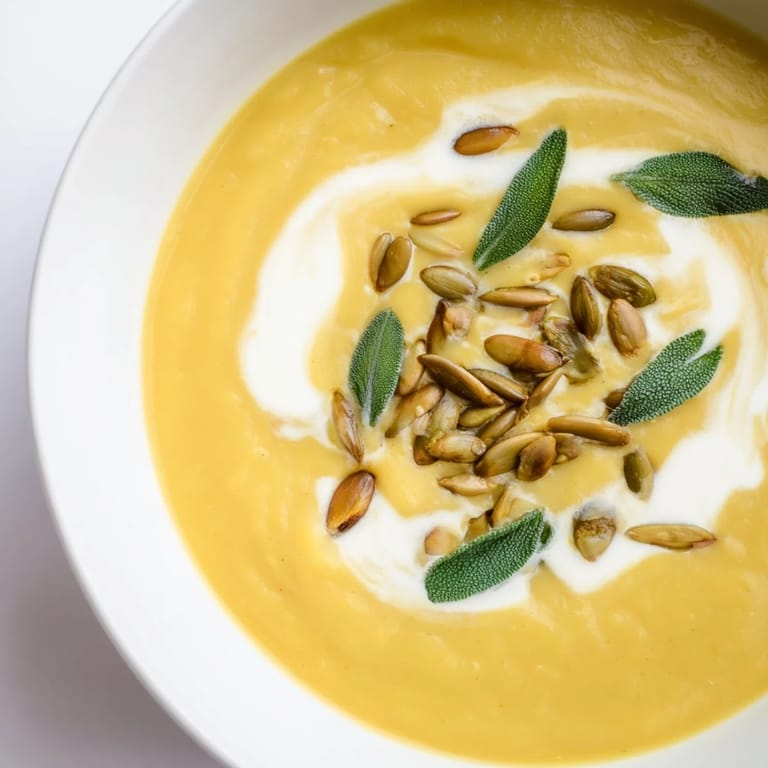
Save This soup is the kind of recipe that belongs in a kitchen that feeds people. Make it, serve it warm, and watch how something this simple can feel like an act of love.
Recipe Help & Answers
- → How do you achieve the best roasted squash flavor?
Roast butternut squash cubes with olive oil, salt, and pepper at 400°F until tender and caramelized for deep, rich flavor.
- → Can I substitute fresh sage with dried sage?
Yes, dried sage can be used; however, fresh sage offers a brighter, more aromatic note to enhance the dish.
- → What alternatives to cream can be used for garnishing?
Coconut milk provides a creamy, dairy-free option that complements the flavors without overpowering.
- → How can the dish be made spicier?
Add a pinch of cayenne pepper when seasoning the squash or stir it into the broth before blending for a gentle heat.
- → What tools are helpful for blending the mixture smoothly?
Use an immersion blender directly in the pot or transfer portions to a countertop blender to achieve a silky texture.