 Save
Save The first time I made hummus from scratch, I was sitting in a small apartment with a friend who'd just returned from Beirut, and she casually mentioned that real hummus should feel like silk on your tongue. I'd always bought it from jars, but watching her describe the way her grandmother would blend chickpeas until they transformed into something almost creamy made me want to try it myself that very afternoon. What surprised me most wasn't how simple the ingredients were, but how the technique mattered more than I expected.
I remember bringing a bowl of this to a dinner party once, nervous because it was homemade, and someone asked for the recipe before they'd even finished their first bite. That moment made me realize hummus isn't just about the food—it's about creating something that makes people slow down and taste carefully, the way my friend's grandmother probably intended.
Ingredients
- Chickpeas: The foundation of everything; canned and drained works perfectly well, though cooking dried ones gives you slightly more control over texture.
- Tahini: This sesame paste is what transforms chickpeas into silk, so find a good quality one that tastes nutty, not bitter.
- Lemon juice: Freshly squeezed makes all the difference—bottled tastes one-note and flat by comparison.
- Garlic: One small clove is enough; more will overpower the delicate flavors you're building.
- Cold water: Add it gradually to reach that perfect creamy consistency without making it soupy.
- Cumin: A whisper of this spice deepens everything without announcing itself.
- Sea salt: Fine salt dissolves evenly and tastes cleaner than table salt.
- Extra virgin olive oil: The final drizzle is where olive oil shines, so don't skimp here.
- Paprika or sumac: Choose paprika for warmth or sumac for a bright, slightly tangy pop.
- Fresh parsley: A handful of green at the end lifts the whole dish.
Tired of Takeout? 🥡
Get 10 meals you can make faster than delivery arrives. Seriously.
One email. No spam. Unsubscribe anytime.
Instructions
- Build your base:
- Add chickpeas, tahini, lemon juice, minced garlic, cold water, cumin, and salt into your food processor. Start with the amounts as written—you can always adjust once you taste it.
- Blend with patience:
- Turn the processor on and let it work for several minutes, stopping every 30 seconds or so to scrape down the sides with a spatula. The hummus will go from chunky to creamy to silky if you keep going.
- Find your texture:
- If it feels too thick and stiff, add cold water one tablespoon at a time and pulse until it loosens. You're aiming for something that moves slightly when you tilt the bowl, almost cloud-like.
- Taste and balance:
- Take a spoonful and really taste it—does it need more salt, more lemon, or more garlic? These adjustments happen one pinch or squeeze at a time, not all at once.
- Make it beautiful:
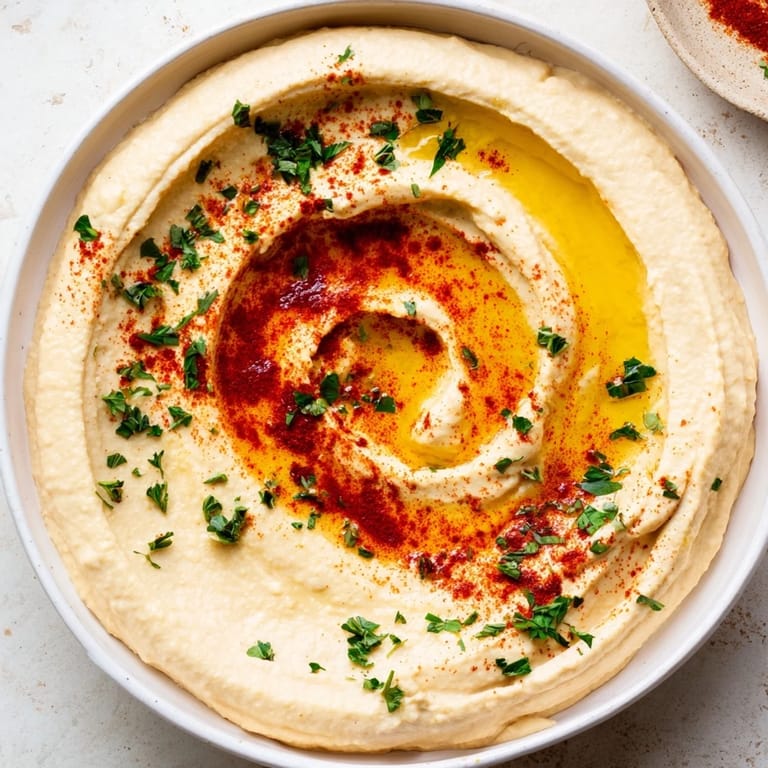
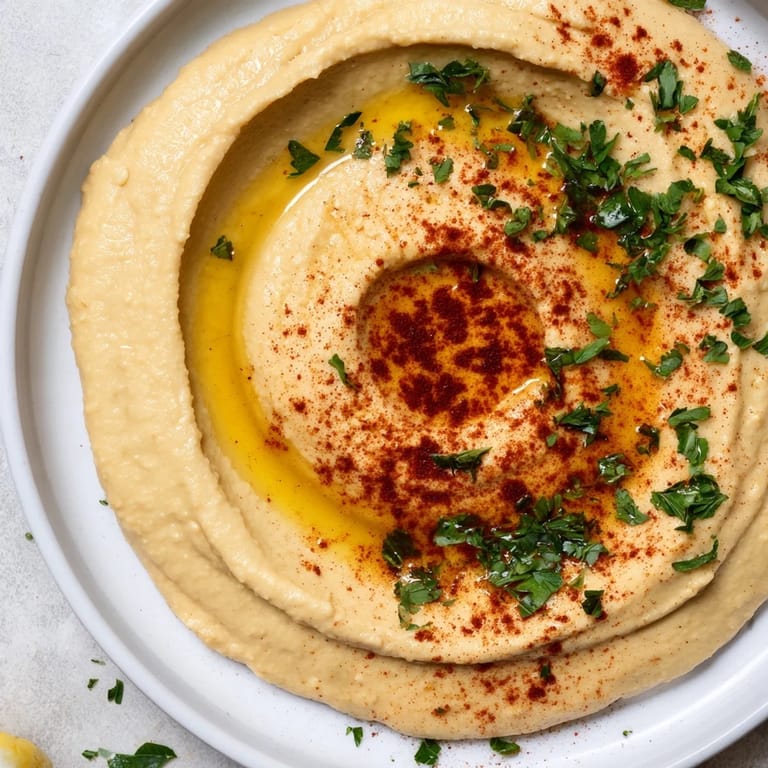
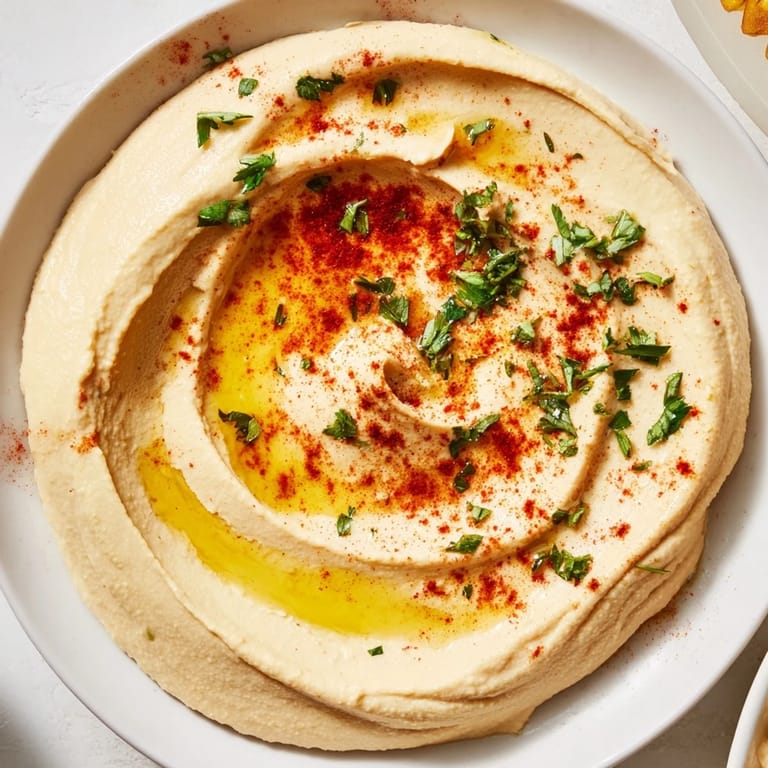
- Scoop the hummus into a shallow dish and use the back of a spoon to create a gentle well or swirl in the center. This catches the olive oil you're about to drizzle.
- Garnish with intention:
- Drizzle olive oil into that well, sprinkle paprika or sumac across the surface, and scatter parsley on top. Serve it while you're still admiring how good it looks.
 Save
Save The hummus became a regular on my table when I realized my kids would actually eat vegetables dipped in it without complaint. What made me happiest wasn't the victory of sneaking nutrition into snack time, but the quiet moment of watching everyone gathered around the same bowl, tasting something I'd made with my own hands.
The Secret to Silky Hummus
The difference between hummus that feels like wet sand and hummus that feels like velvet comes down to two things: blending time and water balance. Most people don't blend long enough, stopping when it's still grainy or lumpy, then compensate by adding too much water. If you let the food processor do its job for a full few minutes, the oils from the tahini and chickpeas naturally emulsify into something creamy without extra liquid. The magic happens in those extra minutes of patience.
Making It Your Own
Once you've made the basic version a few times and understand how it should taste and feel, you can start experimenting. A tiny pinch of cayenne brings heat, roasted garlic mellows things out, or a splash of pomegranate molasses adds complexity. I've also added a tablespoon of Greek yogurt when I want something slightly richer, though traditionalists might object. The beauty of making it from scratch is that you can adjust everything to match exactly what you love.
Serving and Storing
Hummus is best served at room temperature or slightly cool, with the olive oil and garnishes added just before people eat it. If you make it ahead, store it in an airtight container in the fridge and it will keep for up to four days, though the flavor sharpens slightly as it sits. You can also freeze hummus for up to three months if you want to make a double batch and have some ready to go.
- Always re-drizzle olive oil and add fresh garnish after storing, as it makes the dish taste alive again.
- Serve with warm pita that you've heated in a dry skillet, which makes the whole experience feel more intentional.
- Set out plenty of fresh vegetables—crisp cucumber, sweet carrot, red pepper—so people have options beyond bread.
 Save
Save There's something deeply satisfying about serving hummus you've made yourself, knowing exactly what's in it and why. It's the kind of simple dish that reminds you why cooking matters.
Recipe Help & Answers
- → What gives hummus its creamy texture?
The creamy texture comes from blending cooked chickpeas with tahini, lemon juice, garlic, and water until smooth.
- → Can I adjust the thickness of this spread?
Yes, adding cold water gradually during blending helps achieve the desired consistency, making it creamier or thicker.
- → What spices enhance the flavor of Levantine hummus?
Ground cumin and a pinch of salt add warmth and depth, while paprika or sumac sprinkled on top adds a subtle tang and color.
- → How should this dish be served for best taste?
Serve it drizzled with extra virgin olive oil and garnished with fresh parsley alongside pita, fresh vegetables, or as part of a mezze spread.
- → Are there ways to make the spread extra smooth?
Yes, peeling the chickpeas before blending can create a silkier texture.