 Save
Save I'll never forget the year I decided to stop bringing the same old baked ham to our holiday gathering and instead created something that looked like it belonged in a fancy magazine. My neighbor had just returned from a trip to Provence, and she described these beautiful charcuterie boards she'd seen everywhere—and suddenly I thought, why not do that with ham? That night, I spent hours arranging and rearranging cheeses, fruits, and golden slices of ham on my grandmother's old wooden board. When everyone walked in and saw it sitting there in the center of the table, the room just went quiet for a moment. Then someone said, "Wow, you made this?" and I knew I'd discovered something special.
I made this board last spring for my daughter's brunch, and watching her friends gather around it like it was edible art made me realize that food is really about creating moments. Someone took a photo and sent it to me later, saying it was the most beautiful thing they'd eaten all year. That's when I understood—this isn't just a ham board. It's a centerpiece, a conversation starter, and somehow, it tastes even better when it's beautiful.
Ingredients
- Boneless ham (3–4 lbs): Choose one that's already fully cooked—you're just warming and glazing it. I learned the hard way that a quality ham makes all the difference; it should smell slightly sweet and have a nice rosy color.
- Brown sugar: This is your base sweetness. I use dark brown sugar because it has more molasses and creates a deeper, more complex glaze than the light kind.
- Honey: This adds shine and helps the glaze caramelize beautifully in the oven. Real honey matters here.
- Dijon mustard: The secret weapon that keeps this from being just sweet. It adds a subtle tang that makes people say, "What is that amazing flavor?"
- Apple cider vinegar: This brightens everything and cuts through the richness. A little goes a long way.
- Ground cloves: Optional, but if you use them, they whisper a hint of warmth and spice. Start with less than you think—you can always add more.
- Aged cheddar: Its sharpness plays beautifully against the sweet glaze. Look for one with some crystalline texture.
- Brie: Creamy, elegant, and it melts slightly at room temperature, which somehow makes everything taste better.
- Blue cheese: A bold choice that someone always gravitates toward. It's the dramatic friend at the party.
- Gouda: Slightly sweet and nutty—it bridges the gap between the sharp cheddar and the mild brie.
- Red and green grapes on the vine: Keep them on the vine for that beautiful cascading look. They add natural sweetness and color contrast.
- Fresh strawberries: Halved and arranged cut-side up so you see that jewel-like interior. They say spring, even in winter.
- Apple slices: Toss them in a little lemon juice so they don't oxidize and turn brown. The tartness complements the ham.
- Cherry tomatoes: Their acidity brightens every bite. They're small enough to pop in your mouth whole.
- Mini cucumbers, sliced: Refreshing and crisp. They look elegant in thin, even slices.
- Dried apricots: Their concentrated sweetness echoes the glaze and adds chewy texture.
- Baguette slices: Toast them lightly if you want them crispy, or leave them soft for soaking up glaze. Either way, slice them thin.
- Assorted crackers: Mix shapes, textures, and colors. Include at least one hearty whole grain option.
- Breadsticks: They're architectural—they stand up and look beautiful fanned across the board.
- Whole grain mustard: Serve it on the side for spreading. It's coarser and more rustic than Dijon.
- Fig jam: Luxurious and pairs unexpectedly well with the salty ham and creamy cheeses.
- Mixed olives: A salty anchor point. I prefer Castelvetrano olives for their buttery quality, but use what you love.
- Cornichons: Their vinegary crunch is essential for cutting through richness and refreshing the palate.
- Roasted nuts: I use a mix of almonds and pecans for texture variety. Toast them yourself if you have time—they taste fresher.
- Fresh herbs: Sprigs of rosemary and thyme scattered across the board aren't just garnish; they perfume the whole thing and show you care about details.
Tired of Takeout? 🥡
Get 10 meals you can make faster than delivery arrives. Seriously.
One email. No spam. Unsubscribe anytime.
Instructions
- Make the glaze while the oven preheats:
- Set your oven to 350°F and let it warm up. In a small saucepan, combine the brown sugar, honey, Dijon mustard, apple cider vinegar, and cloves if using. Heat gently, stirring occasionally, until the sugar fully dissolves and the mixture becomes syrupy—it should take about 5 minutes. You want it smooth and pourable, not grainy. Let it cool slightly while you prep the ham.
- Score and glaze the ham:
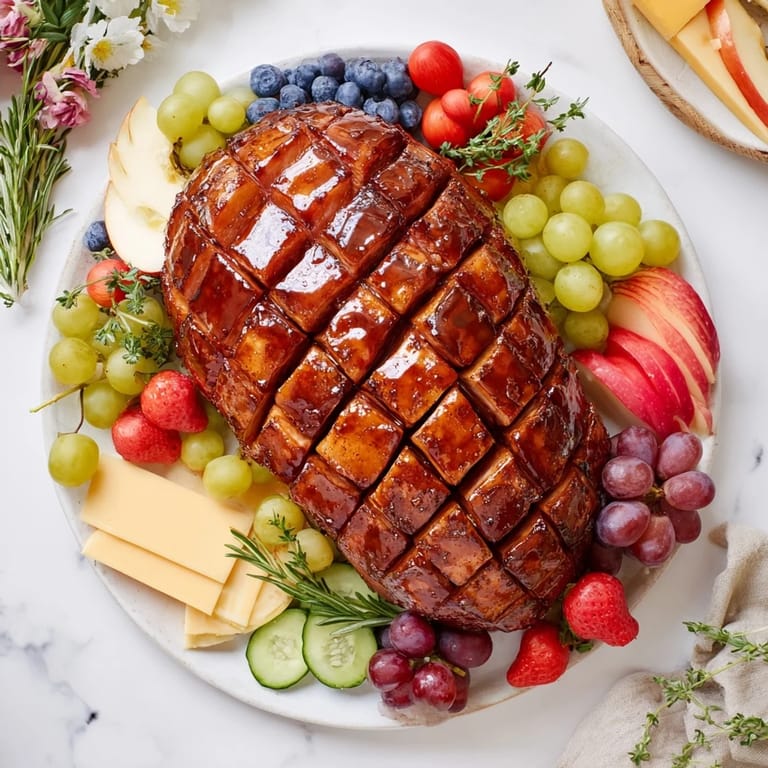
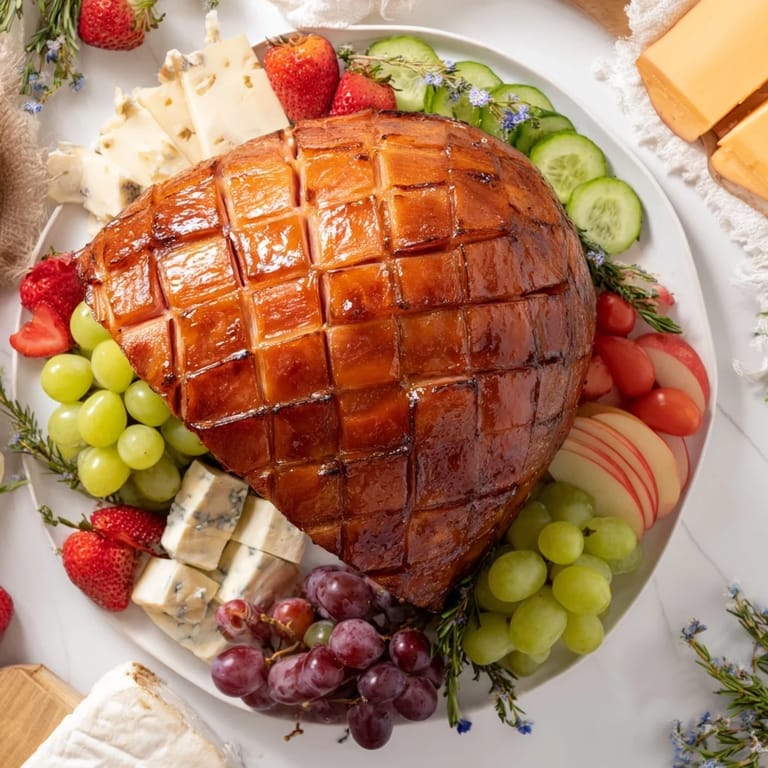
- Take your ham and place it in a roasting pan. Using a sharp knife, score the surface in a diamond pattern—not too deep, just enough to cut through the outer layer. This helps the glaze penetrate and look beautiful. Brush the ham generously with your glaze, getting into those scored lines. This is therapeutic, actually. Take your time.
- Roast with intention:
- Put the ham in the oven and set a timer for 20 minutes. When it goes off, take the pan out, baste the ham with more glaze from the bottom of the pan, and return it. Repeat this every 20 minutes for a total of 1 to 1.5 hours. You'll see the glaze deepen in color and start to caramelize—that's when you know it's working. The ham is done when it's heated through and glistening. Trust your senses; if it smells incredible, you're there.
- Let it rest and decide your presentation:
- Remove the ham from the oven and let it rest for 15 minutes. This is important—it keeps the juices in. Now you have a choice: serve it whole and gorgeous at the center, or slice it and arrange the slices, or go fancy and fold them into roses. I typically do a mix—slice some, fold a few into roses—it looks more dimensional.
- Build your board like you're painting:
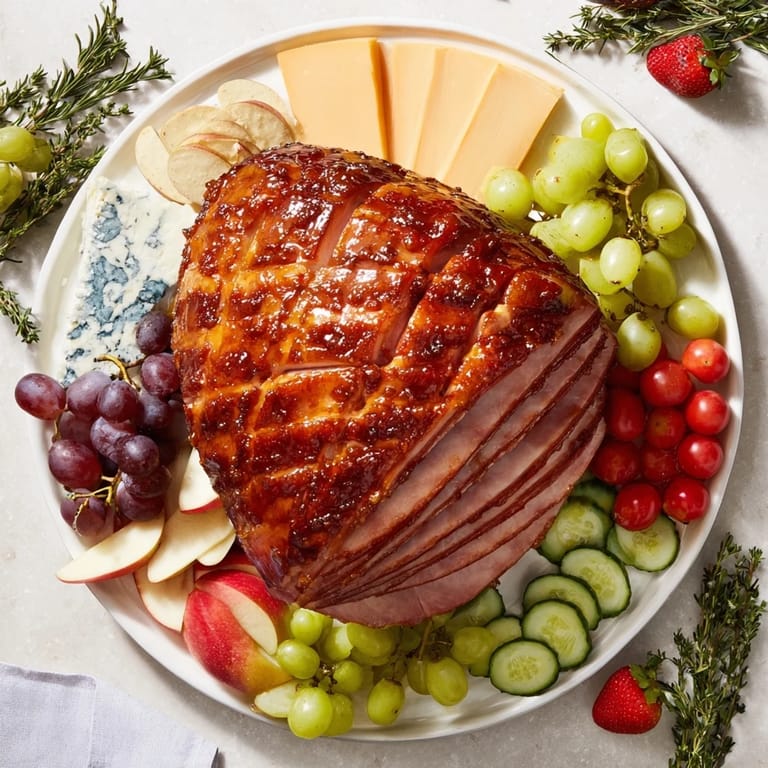
- On your large board or platter, position the ham or ham slices at the center. This is your focal point. Now, start arranging everything else around it in a radiating pattern. Put all the cheeses together on one section, all the fruits together on another, keeping the breads and crackers grouped. This creates visual harmony and makes it easy for guests to navigate. Fill in gaps with nuts, olives, cornichons, and herbs. Step back and look. Does it look balanced? Are there interesting color contrasts? Add more herbs, a few extra berries, maybe a swirl of fig jam. Make it look like a painting.
- Finish with fresh herbs and serve:
- Scatter fresh rosemary and thyme sprigs across the board, tucking them into empty spaces. This adds color, fragrance, and shows you care about the details. Set out small cheese knives and serve spoons, and bring it right to the table. Serve immediately, and watch the magic happen.
 Save
Save I think the real magic of this board happened at my best friend's wedding brunch. Her mom, who's usually formal and reserved, literally gasped when she saw it, then she picked up a slice of ham with blue cheese and honey ham and closed her eyes like she was tasting it for the first time. She said, "This is what celebration looks like on a plate." I'll never forget that.
Creating Visual Harmony on Your Board
The secret to a board that's not just delicious but actually beautiful is thinking about color, shape, and texture. Picture this: your golden, caramelized ham in the center is warm toned, so surround it with cool greens from the grapes and cucumber slices. Use the bright red of strawberries and cherry tomatoes to create focal points. Arrange crackers in neat rows, stand breadsticks at angles, and let cheese wedges overlap like they're cascading. The white of brie, the yellow of gouda, the deep blue of blue cheese—they should dance together. Leave some breathing room; a board that's too packed feels chaotic. Your eye should be able to rest on the ham, then travel outward discovering surprises.
Timing and Make-Ahead Strategy
Here's how to make this look effortless even though you're coordinating timing carefully: make your glaze up to two days ahead and store it in the fridge. The ham can be cooked the morning of, then left at room temperature until an hour before serving (when you can warm it gently if needed). Arrange cheeses and breads on the board 30 minutes before guests arrive. Add fruits and vegetables last—within 15 minutes of serving—so they stay fresh and crisp. The whole thing should go from kitchen to table in one stunning moment.
Pairing Wine and Drinks
The beauty of this board is that it's forgiving with beverages. A crisp, dry cider plays beautifully with the ham's sweetness and the cheese's complexity. Sparkling wine—whether it's Champagne, Prosecco, or a good domestic option—adds celebration and cuts through the richness with its bubbles. If someone prefers wine, a light-bodied red like Pinot Noir won't overpower the delicate flavors. Coffee or fresh juice work too, especially at brunch. The key is having options because different people will want different things, and this board is generous enough to dance with anything you pour beside it.
- Sparkling wine is your safest bet; its acidity and bubbles complement everything on the board
- Keep drinks cold and let people help themselves, which creates a relaxed, self-serve feel
- If serving alcohol-free options, a cucumber mint water or fresh citrus punch mirrors the board's bright, fresh aesthetic
 Save
Save This board has become my go-to for any gathering where I want to feel like I've done something special without spending all day in the kitchen. It's one of those recipes that tastes like love and generosity, and honestly, your guests will remember it long after the last crumb is gone.