 Save
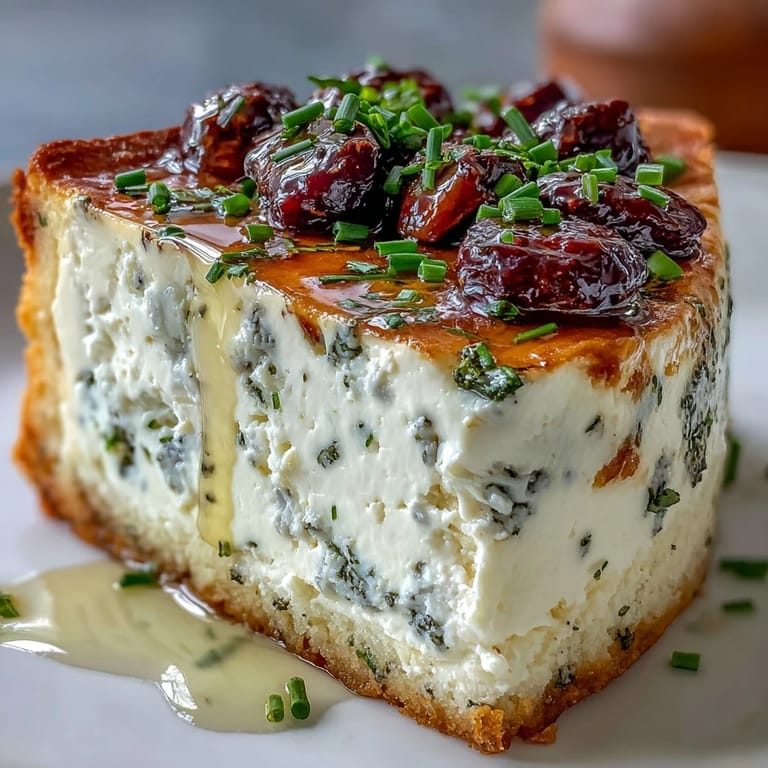
Save My neighbor brought this to a potluck, and I spent half the evening hovering near the appetizer table. I kept thinking it was some fancy imported thing until she laughed and said she'd made it that morning. The salty punch of Kalamata olives against creamy cheese was so unexpected, I asked for the recipe before I even finished my second slice. Now it's my go-to when I want to look like I tried harder than I actually did.
I made this for a book club meeting where I was supposed to bring something Greek-themed. Everyone expected hummus or spanakopita, so when I set down a cheesecake, they looked confused. Then they tasted it. The room went quiet except for the sound of crackers breaking and someone asking if there was a hidden second pan somewhere. I felt smug the rest of the night.
Ingredients
- Plain breadcrumbs: These form a sturdy, savory base that holds up under the creamy filling without getting soggy, and toasting them with butter adds a subtle richness.
- Unsalted butter: Melted butter binds the breadcrumbs into a press-able crust and keeps the seasoning under your control.
- Dried oregano: A tiny amount in the crust gives a whisper of Mediterranean warmth without overpowering the olives later.
- Ground black pepper: Just enough to add a gentle bite that wakes up the buttery crumbs.
- Cream cheese, softened: The backbone of the filling, it needs to be room temperature or you will fight lumps for ten frustrating minutes.
- Ricotta cheese: This lightens the texture and adds a mild tang that balances the sharpness of Parmesan.
- Grated Parmesan cheese: It brings a salty, nutty depth that makes the filling taste more complex than the effort required.
- Large eggs: They set the cheesecake into a sliceable texture, so don't skip them or use substitutes unless you want soup.
- Dried thyme: Earthy and subtle, thyme plays well with olives and lemon without stealing the spotlight.
- Lemon zest: Freshly grated zest cuts through the richness and makes everything taste brighter and more alive.
- Whole milk: A splash loosens the batter just enough to pour smoothly without making it runny.
- Pitted Kalamata olives, chopped: The star ingredient, briny and bold, they dot the filling with bursts of salty flavor.
- Fresh chives, finely chopped: They add a delicate oniony note and little green flecks that make it look intentional.
- Salt and black pepper: Adjust these carefully since the olives and Parmesan already bring plenty of salt.
- Kalamata olives, sliced for garnish: A few on top signal what's inside and make the whole thing look finished.
- Fresh parsley, chopped: A sprinkle of green freshness that brightens the plate and balances the rich flavors.
- Extra virgin olive oil: A light drizzle before serving adds gloss and a fruity finish that ties the Greek theme together.
Tired of Takeout? 🥡
Get 10 meals you can make faster than delivery arrives. Seriously.
One email. No spam. Unsubscribe anytime.
Instructions
- Preheat and Prep the Pan:
- Set your oven to 325°F and lightly grease a 9-inch springform pan or line the bottom with parchment paper. This step matters because a stuck crust will ruin your day when you try to serve it.
- Make the Crust:
- Stir together breadcrumbs, melted butter, oregano, and pepper in a small bowl until the mixture looks like wet sand. Press it firmly and evenly into the bottom of the pan, using the back of a spoon or your fingers to pack it down.
- Bake the Crust:
- Slide the pan into the oven for 8 minutes to set the crust and toast it lightly. Pull it out and let it cool a bit while you make the filling so the heat doesn't scramble your eggs.
- Beat the Cheeses:
- In a large bowl, use an electric mixer or a strong arm and whisk to beat the cream cheese, ricotta, and Parmesan until the mixture is smooth and creamy with no lumps. Scrape down the sides of the bowl so nothing hides.
- Add the Eggs:
- Crack in the eggs one at a time, beating well after each addition to fully incorporate them. This keeps the texture even and prevents streaks.
- Stir in the Flavorings:
- Add thyme, lemon zest, milk, chopped olives, chives, salt, and pepper, then mix just until everything is evenly distributed. Don't overmix or the filling can become dense.
- Assemble and Bake:
- Pour the filling over the cooled crust and smooth the top with a spatula. Bake for 25 to 28 minutes, until the edges are set but the center still has a slight jiggle when you gently shake the pan.
- Cool Completely:
- Remove the cheesecake from the oven and let it cool to room temperature on the counter. Then cover it and refrigerate for at least 2 hours so it firms up and the flavors settle.
- Garnish and Serve:
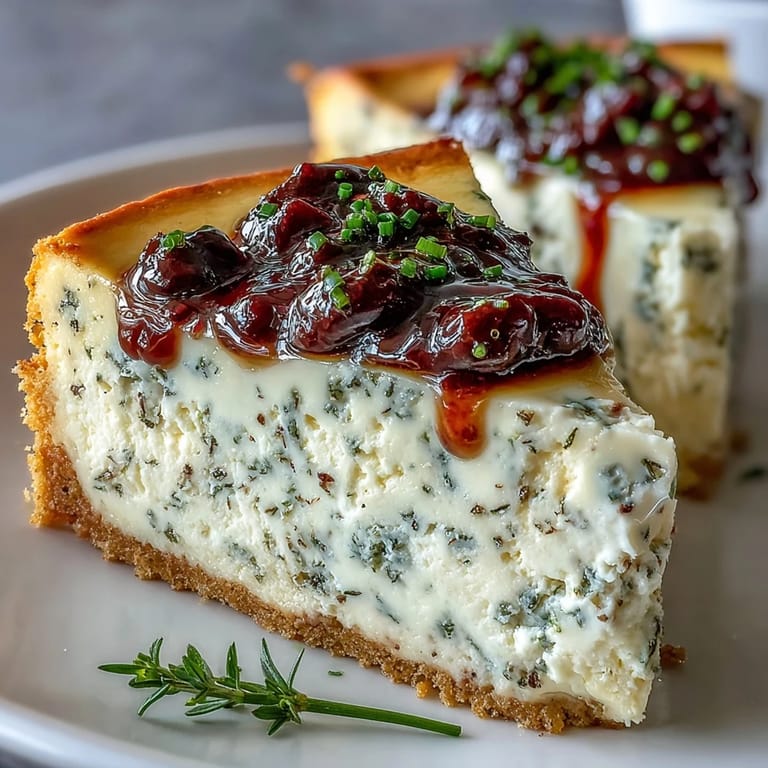
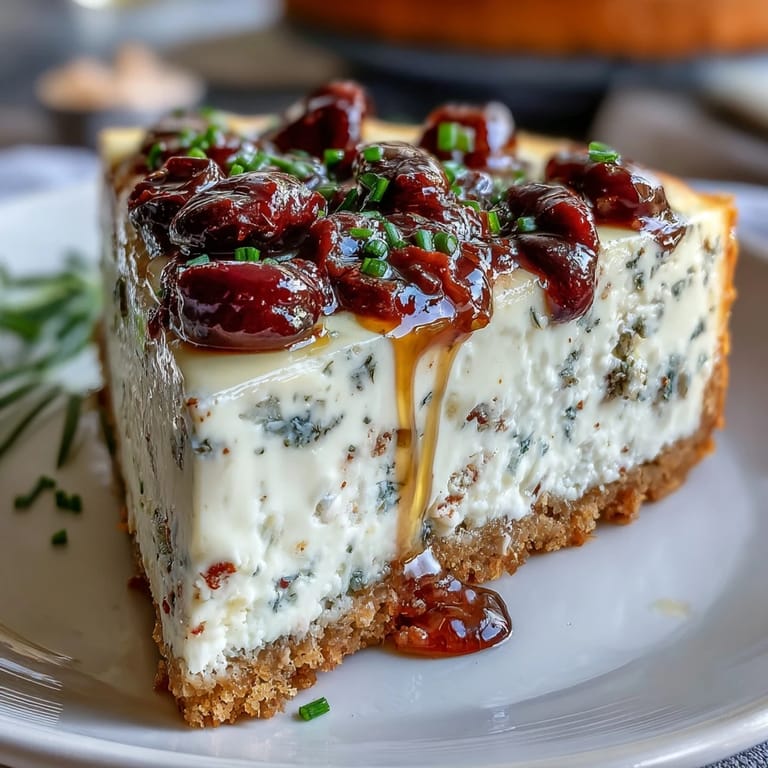
- Right before serving, top with sliced olives, a sprinkle of fresh parsley, and a drizzle of olive oil. Slice into small wedges or squares and serve with crackers or crostini.
 Save
Save The first time I served this, my friend who claims to hate olives ate three pieces before realizing what was in it. She stood there holding a fourth slice, looking betrayed and amazed at the same time. I didn't gloat out loud, but I did mentally high-five myself. Sometimes the best cooking moments are the quiet victories where you sneak something past a picky eater and watch their assumptions crumble.
How to Store and Serve Leftovers
Cover the cheesecake tightly with plastic wrap or foil and keep it in the fridge for up to 4 days. The flavors actually deepen after a day, so leftovers can taste even better than the first slice. If you want to freeze it, wrap individual slices in plastic wrap and then foil, and they'll keep for about a month. Thaw them in the fridge overnight and let them come to cool room temperature before serving so the texture softens back up.
Swaps and Variations to Try
If you don't have ricotta, you can use all cream cheese and add a tablespoon of sour cream for tanginess. Sun-dried tomatoes or roasted red peppers folded into the filling add sweetness and color that play nicely with the olives. For a gluten-free version, swap in gluten-free breadcrumbs or use finely crushed gluten-free crackers in the crust. You could also try feta instead of Parmesan for a sharper, saltier punch, but cut back on the added salt if you do.
What to Serve Alongside
This pairs beautifully with crisp crackers, toasted baguette slices, or crostini that can scoop up every creamy bite. A light arugula salad with lemon vinaigrette balances the richness, and a chilled white wine or sparkling water with lemon keeps things refreshing. If you're building a full appetizer spread, add some marinated artichokes, roasted red peppers, and a bowl of mixed nuts.
- Keep a small offset spatula nearby to help lift the first slice cleanly out of the pan.
- If the edges brown too fast, tent the pan loosely with foil halfway through baking.
- Letting it come to cool room temperature before serving brings out the flavors better than serving it fridge-cold.
 Save
Save This savory cheesecake has become my secret weapon for gatherings where I want to impress without spending all day in the kitchen. It's proof that a little creativity and some good olives can turn a simple idea into something people remember long after the party ends.
Recipe Help & Answers
- → Can I make this cheesecake ahead of time?
Yes, this savory cheesecake can be made up to 2 days in advance. Store it covered in the refrigerator and add the garnish just before serving for the freshest presentation.
- → What can I substitute for Kalamata olives?
You can use other brined olives like Castelvetrano or black olives. For a milder flavor, try green olives, though the distinct Kalamata taste will be different.
- → How do I prevent cracks in the cheesecake?
Bake at the lower temperature of 325°F and avoid overmixing the batter. Remove it from the oven when the center still has a slight wobble, as it will continue to set while cooling.
- → Can I freeze this appetizer?
Yes, you can freeze it for up to 1 month. Wrap tightly in plastic wrap and aluminum foil. Thaw overnight in the refrigerator before serving and add fresh garnishes.
- → What should I serve with this savory cheesecake?
Serve with crackers, toasted baguette slices, crostini, or fresh vegetables like cucumber rounds and bell pepper strips. It pairs beautifully with a crisp white wine.
- → How do I know when the cheesecake is done baking?
The edges should be set and slightly puffed, while the center remains slightly wobbly. It will firm up as it cools. Overbaking can lead to a dry texture.