 Save
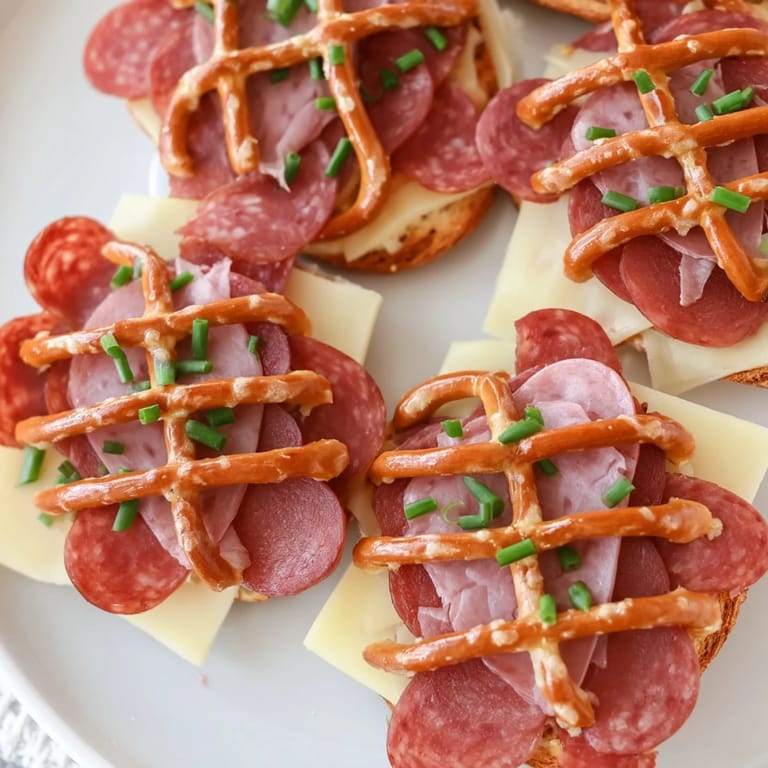
Save I discovered this dish at a dinner party where someone had arranged cured meats and cheese on a board, then topped it all with a careful lattice of pretzel sticks. It was such a simple idea, but watching guests lean in to break through that crispy crosshatch before tasting the layers beneath felt like unlocking something special. The combination of textures—the snap of the pretzels against soft cheese and tender meat—stayed with me long after the evening ended. I went home determined to master it, and now it's become my go-to move when I want to impress without spending hours in the kitchen.
I brought this to a potluck once where half the spread was sad casseroles, and people genuinely gathered around this board like it was the most exciting thing there. Someone asked if I'd bought it from a fancy caterer, which made me laugh—but also made me realize how much impact thoughtful presentation has. That moment taught me that sometimes the easiest recipes are the ones that land the hardest.
Ingredients
- Prosciutto (100 g, thinly sliced): The saltiness and delicate texture anchor the whole composition; ask your deli counter to slice it paper-thin so it drapes gracefully across the cheese.
- Salami (100 g, sliced): Choose a variety with good flavor—this isn't the time for bland cold cuts.
- Swiss cheese (100 g, sliced): The holes and mild nuttiness balance the saltier meats beautifully.
- Sharp cheddar cheese (100 g, sliced): This brings welcome sharpness and color contrast to the board.
- Baguette slices (1 small baguette, thinly sliced): The foundation needs to be sturdy enough to hold weight without crumbling; slice it just before assembling so it stays fresh.
- Whole grain mustard (2 tbsp): This adds subtle complexity and keeps everything from feeling too rich.
- Fresh chives (1 tbsp, chopped): Don't skip this—the green and the bright onion flavor are what make it feel intentional rather than accidental.
- Pretzel sticks (40–50, regular length and unbroken): Count these before you start so you're not scrambling mid-lattice; slightly stale pretzels actually work better because they're less likely to shatter.
Tired of Takeout? 🥡
Get 10 meals you can make faster than delivery arrives. Seriously.
One email. No spam. Unsubscribe anytime.
Instructions
- Lay your foundation:
- Arrange the baguette slices in a single layer on your platter, fitting them close together like a puzzle. This is your canvas, so take a moment to make it feel intentional rather than haphazard.
- Add the mustard layer:
- Spread a small amount of whole grain mustard on each slice—just enough to catch your tongue when you bite down. It acts as both flavor and glue for what comes next.
- Stack the meats and cheeses:
- Layer the prosciutto first, then salami, then alternate your cheeses, slightly overlapping each layer to create that rustic abundance. This is where the board goes from functional to irresistible.
- Build the lattice (horizontal):
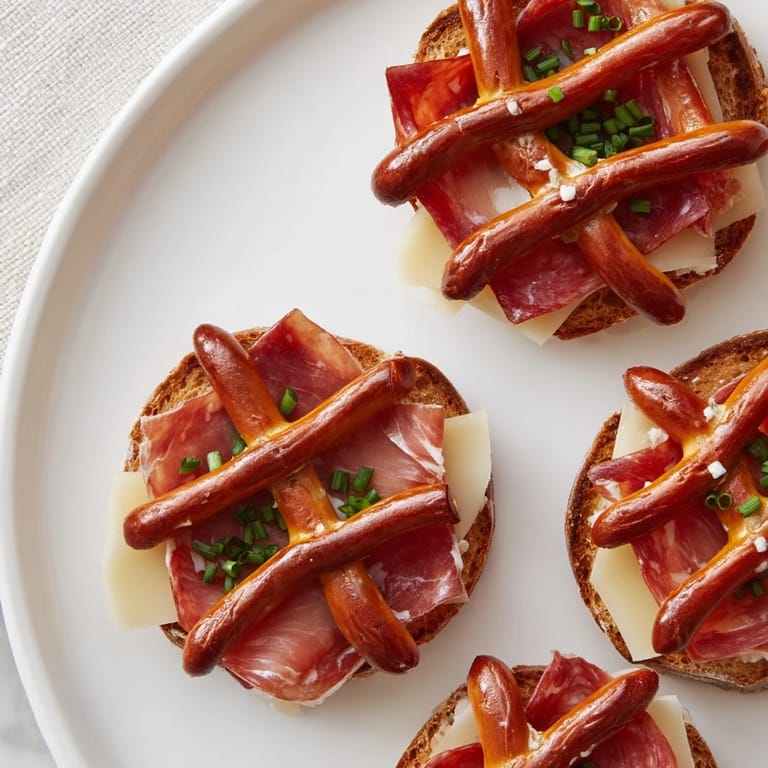
- Carefully lay pretzel sticks horizontally across the entire top, spacing them about 1 cm apart. Move slowly and steady your hand—this is the moment where everything becomes a visual statement.
- Weave the lattice (vertical):
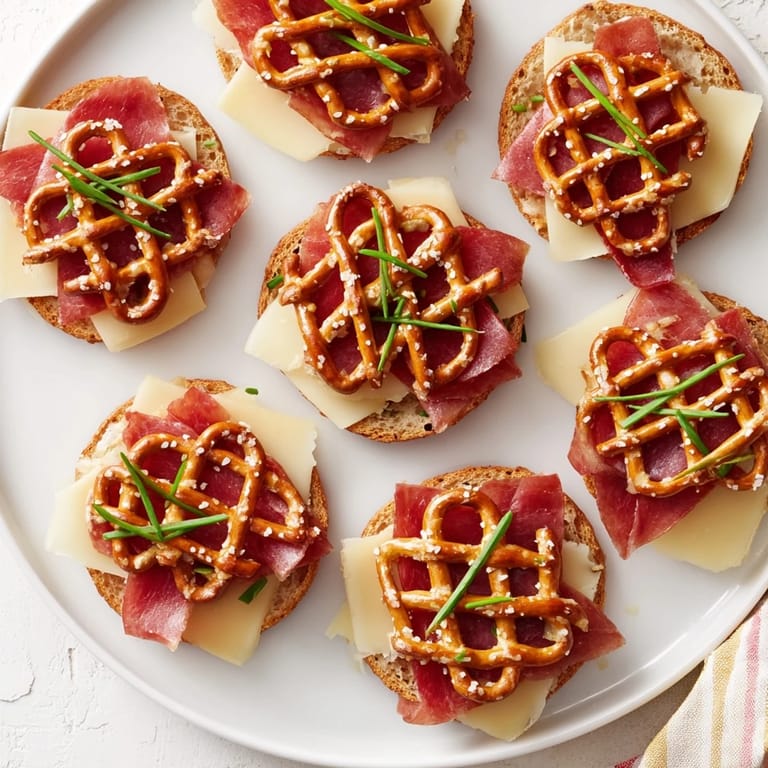
- Now lay pretzel sticks vertically, weaving them over and under the horizontal ones to create that crisscross pattern. It sounds fussy but becomes meditative once you find your rhythm.
- Garnish and serve:
- Sprinkle the chopped chives over the lattice for a pop of color, then bring it straight to the table. Watching people break through that first pretzel stick is the real payoff.
 Save
Save The real magic happens when someone sees this board, hesitates for a second because it looks too beautiful to eat, then gives in to breaking that first pretzel stick. That's when it stops being just an appetizer and becomes an experience—a moment of permission to enjoy something both beautiful and indulgent at once.
Making It Vegetarian
Skip the meats entirely and double down on cheese varieties, or add roasted vegetables like red peppers and zucchini, marinated artichokes, or even thin slices of cucumber for crunch. The lattice and presentation work just as well, and honestly, a board of quality cheeses with that pretzel topping becomes its own kind of showstopper.
Playing with Flavors
Once you nail the basic formula, it becomes a playground for what's in your pantry. I've swapped the sharp cheddar for creamy gouda, added honey drizzled over the top, or gone spicy with pepper jack cheese and sliced jalapeños tucked between the layers. The structure stays the same; only the flavors change.
Pairing and Presentation
This board pairs beautifully with a crisp white wine or a light lager—something that won't overwhelm the delicate balance of salty and savory you've built. The real secret to serving it is confidence: bring it to the table like you spent all afternoon on it, even though you didn't.
- Chill your platter for 5 minutes before assembling so the cheese stays firm while you work.
- If you're taking this to a party, assemble it on a board you can transport easily, then arrange the lattice right before serving.
- Have small napkins nearby—the pretzel lattice creates a delightful but slightly messy eating experience, and that's part of the fun.
 Save
Save This dish proves that sometimes the most impressive food is also the easiest—and that's exactly why it works. Serve it with confidence and watch it disappear.
Recipe Help & Answers
- → What type of pretzel sticks work best?
Regular length, unbroken pretzel sticks provide the best structure for the lattice without breaking, ensuring a crisp texture.
- → Can I substitute the meats and cheeses?
Yes, try variations like coppa, bresaola, gouda, or pepper jack to customize flavors and textures.
- → How do I create the lattice pattern?
Lay pretzel sticks horizontally first, spaced about 1 cm apart, then weave vertical sticks over and under horizontally to form the lattice.
- → Is this appetizer suitable for vegetarians?
Omit the meats and add extra cheese, roasted vegetables, or marinated artichokes for a satisfying vegetarian version.
- → What pairs well with this appetizer?
Light drinks like crisp white wine or a refreshing lager complement the savory and crunchy elements nicely.