 Save
Save My neighbor's kitchen smelled like warm spices the afternoon she taught me to make proper falafel—not the dense, heavy kind I'd attempted before, but something that shattered when you bit into it, revealing bright green flecks of herbs inside. She moved her hands with practiced speed, showing me how to pulse the soaked chickpeas just until they clung together in a rough, slightly damp mixture. That moment changed everything about how I approached this humble appetizer. Now, whenever I make a batch, that specific smell—the cumin and fresh cilantro meeting hot oil—brings me right back to her kitchen.
I remember making these for my sister's surprise dinner party years ago, panicking slightly because I'd forgotten to soak the chickpeas the night before. I grabbed a can of chickpeas in a moment of desperation, but the result was mushy and didn't hold together properly—it taught me that soaking matters deeply. Now I've learned to plan ahead, and the ritual of soaking chickpeas overnight feels like part of the dish itself, like I'm already cooking before I even touch the food processor.
Ingredients
- Dried chickpeas (1 cup): Soaking them overnight makes all the difference—they absorb water and become tender enough to hold together when pulsed, which canned chickpeas simply won't do with the same texture.
- Fresh parsley and cilantro (1 cup parsley, 1/2 cup cilantro): These aren't optional flavoring; they're the soul of the falafel, giving it that bright, herbaceous color and taste that defines Levantine style.
- Onion and garlic (1 small onion, 3 cloves): They soften slightly when raw but add a peppery sharpness that gets muted by the heat of frying, creating depth.
- Ground cumin and coriander (2 tsp and 1 tsp): These two spices do the heavy lifting for flavor; toast them in your palm first if you want to wake up their oils before adding them.
- Cayenne pepper (1/2 tsp, optional): Use this if you like heat, but honestly, the warmth of the spices alone is enough for most people.
- Baking powder (1 tsp): This is the secret that makes them fluffy inside instead of dense—don't skip it, and use fresh baking powder or they won't rise properly.
- All-purpose flour or chickpea flour (3 tbsp): This binds everything together; chickpea flour keeps it gluten-free and adds a subtle nuttiness.
- Vegetable oil for frying: You need enough to submerge the balls completely; the temperature matters more than the amount, so invest in a thermometer.
Tired of Takeout? 🥡
Get 10 meals you can make faster than delivery arrives. Seriously.
One email. No spam. Unsubscribe anytime.
Instructions
- Soak and prepare the chickpeas:
- Rinse your dried chickpeas under cold water, pick through them quickly for any small stones, then cover generously with cold water in a large bowl—they'll double in size as they soak overnight. In the morning, drain and pat them completely dry with paper towels; excess moisture will make your falafel mixture too wet.
- Pulse the mixture:
- Combine the drained chickpeas, chopped onion, garlic, parsley, and cilantro in your food processor and pulse until the mixture is coarse and crumbly, holding together only when you squeeze it—this usually takes 10-15 pulses. If you over-process, you'll end up with falafel that's dense and heavy, so stop and check frequently.
- Season and bind:
- Add the cumin, coriander, cayenne, baking powder, salt, pepper, and flour, then pulse just two or three times to combine evenly. Scrape the bowl down and give it one more gentle stir by hand to make sure the baking powder is distributed and nothing's hidden in the bottom.
- Shape the balls:
- Wet your hands slightly with cool water to prevent sticking, then gently form the mixture into balls about the size of walnuts—roughly 1½ inches across. If the mixture feels too loose and balls won't hold their shape, sprinkle another tablespoon of flour over the whole batch and mix again.
- Heat your oil:
- Pour vegetable oil into a deep pot until it's about 2 inches deep, then heat it slowly to 350°F using a thermometer—this step is worth taking seriously because oil that's too hot will brown the outside before the inside cooks. Let it reach temperature fully before you start frying.
- Fry until golden:
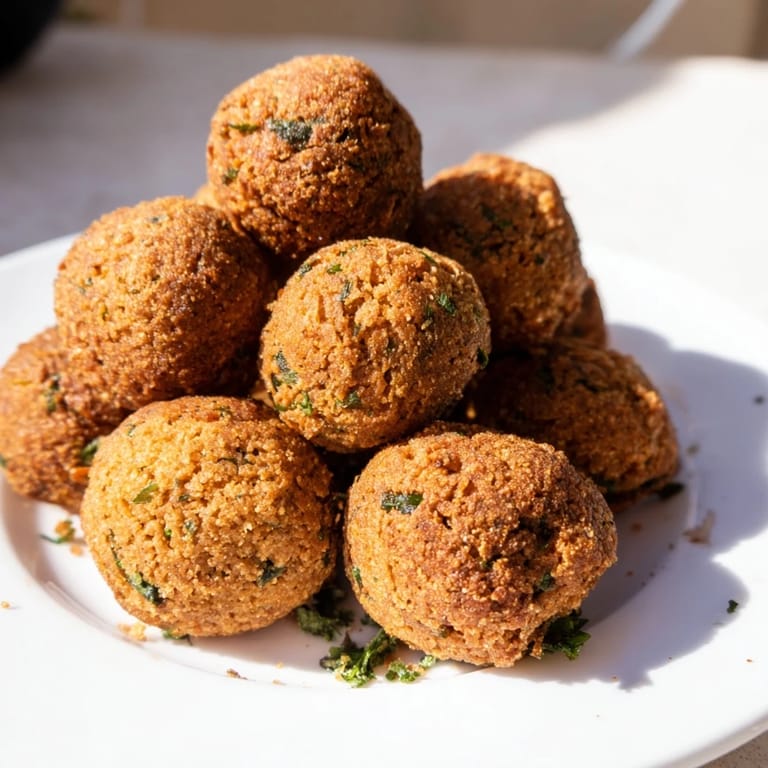
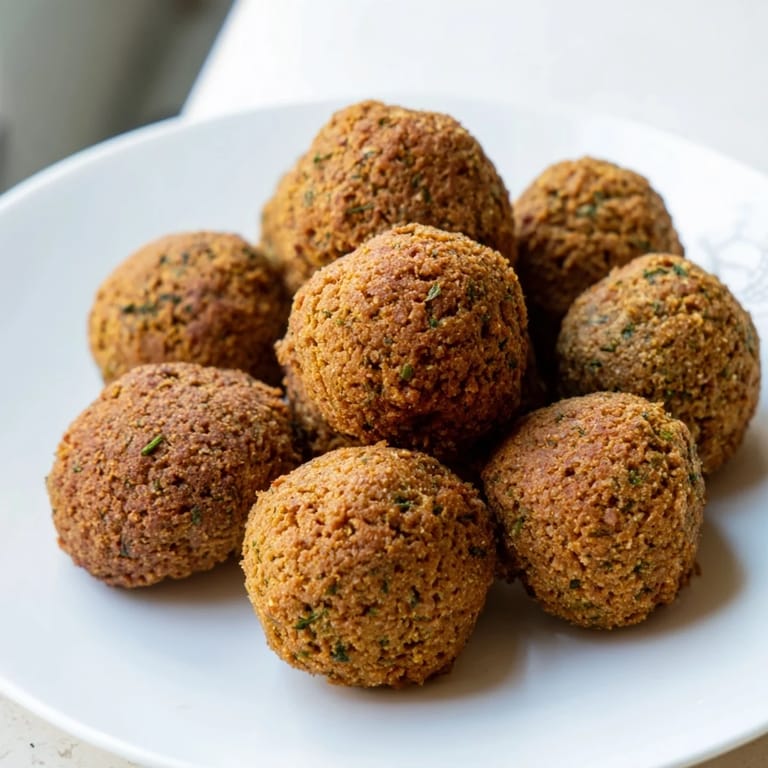
- Working in batches so you don't crowd the pot, carefully slide your falafel balls into the hot oil and let them fry for 3-4 minutes total, gently turning them about halfway through with a slotted spoon so they brown evenly on all sides. They're done when they're a deep golden brown and feel firm when gently pressed.
- Drain and serve:
- Transfer the finished falafel to a paper towel-lined plate to drain any excess oil, and serve them warm in pita bread with tahini sauce, fresh salad, pickles, and whatever else makes you happy.
 Save
Save The first time I served these to my friend who'd lived in Lebanon as a child, she took one bite and got quiet in that way that meant something mattered. She didn't say much except that they tasted right, like home, and I realized that falafel isn't just food—it's a small edible memory that connects people to places they've been and moments they've lived.
Why Temperature and Oil Matter
I learned this the hard way by frying one batch in oil that felt hot but wasn't quite there yet, and my falafel came out looking beautiful but tasting heavy and greasy. The oil needs to be truly 350°F for the outside to crisp while the inside stays tender and light; if it's cooler, the ball absorbs oil as it cooks and you end up with something that feels heavy in your mouth. Test your thermometer against boiling water first if you're not sure it's accurate—sometimes that small step prevents an entire batch from being wasted.
Variations and Flavor Additions
Once you've made these a few times and feel confident in the base recipe, there's real joy in adjusting the flavors slightly to match whatever mood you're in. I've added ground cardamom for a slightly floral warmth, or sumac for a subtle lemon brightness without any actual lemon, and both changed the character of the batch in ways that felt exciting rather than wrong. A pinch of ground cinnamon leans toward Middle Eastern bakery spices, while extra cilantro makes them taste fresher and more herbaceous.
Serving Ideas and Pairings
Falafel tastes most like itself when you build around it rather than eat it alone; the creamy tahini sauce and crisp cucumber pickles do something magical together. I love them stuffed into warm pita with shredded tomato and lettuce, or crumbled over a plate of hummus and labneh for a more leisurely meal. Sometimes I arrange them on a big platter with other things—some roasted eggplant, olives, fresh herbs, bread—and let people assemble what they want.
- Tahini sauce, hummus, or yogurt-tahini sauce transforms them into something that feels more substantial.
- Pickled turnips or pickled vegetables add sharpness and brightness that cuts through the richness of the frying oil.
- Serve them warm or at room temperature, but never straight from the fridge.
 Save
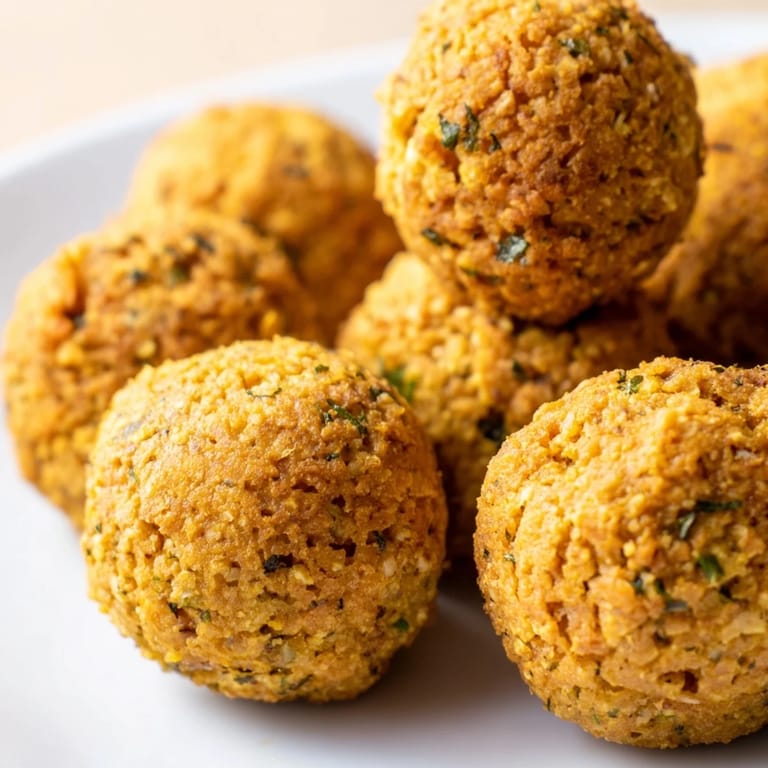
Save These falafel balls have become my answer to the question of what to make when I want something that tastes like care and tastes like travel, all from ingredients sitting in my pantry. There's something grounding about the ritual of them.
Recipe Help & Answers
- → What gives falafel its crispy texture?
Deep frying at the right temperature (around 350°F) creates a golden, crisp exterior while keeping the inside tender.
- → Can soaked chickpeas be blended too finely?
No, the mixture should be coarse and should hold together, not pureed, to maintain the desired texture.
- → How long should chickpeas be soaked for best results?
Soaking chickpeas for 8 to 12 hours softens them and helps create the perfect falafel texture.
- → What herbs enhance the flavor of these balls?
Fresh parsley and cilantro add bright, fresh notes complementing the spices.
- → Are there alternatives to frying these balls?
Yes, brushing with oil and baking at 400°F for 20–25 minutes offers a healthier option with good texture.
- → How can spice levels be adjusted?
Modify cayenne pepper amounts or omit it for milder flavors, while cumin and coriander provide aromatic warmth.