 Save
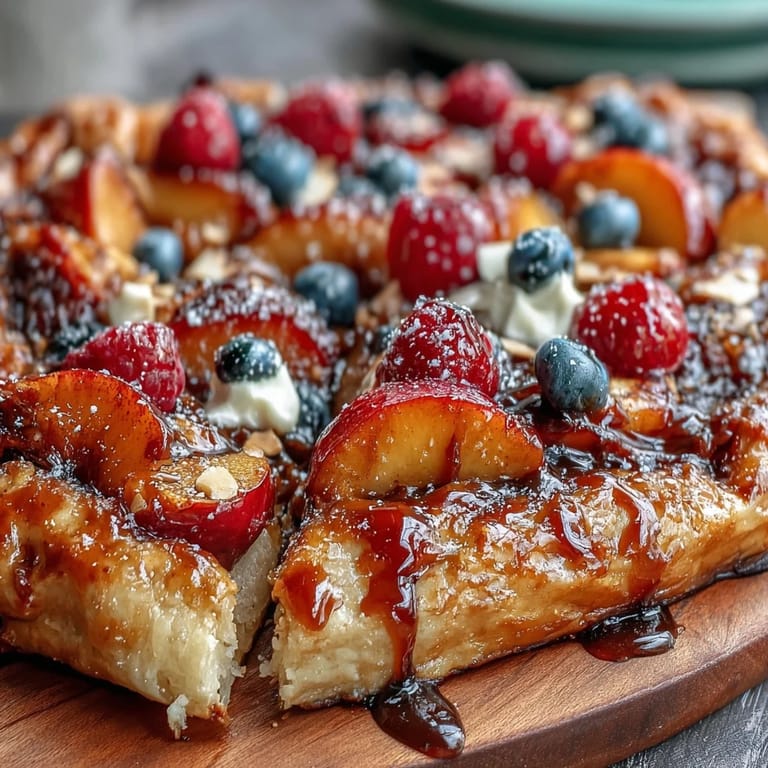
Save There's a particular magic that happens when summer fruit hits its peak and you realize you have just enough of it scattered across your kitchen counter to justify making something spectacular. One August afternoon, I stood there with a mix of peaches, plums, and nectarines that were almost too soft to eat raw, and instead of watching them brown in the fruit bowl, I decided to build a galette. The whole thing came together in a surprisingly honest way—rustic, not fussy, with a buttery pastry doing the heavy lifting and this silky almond filling acting as the glue between crispy and juicy.
I made this for a dinner party where everyone was supposed to bring something, and I showed up with this warm galette wrapped loosely in foil, nervous the pastry had lost its crispness on the drive over. The moment I unwrapped it and cut into it at the table, the kitchen filled with this bright stone fruit aroma mixed with buttery caramel notes, and suddenly no one was eating anything else for the next twenty minutes. That's when I knew this recipe had staying power.
Ingredients
- All-purpose flour: The base of your pastry, and keeping it cold and handling it minimally is what gives you those delicate layers.
- Unsalted butter, cold and cubed: The soul of the pastry—those little pockets of cold butter steam during baking and create flakiness, so don't let it soften.
- Ice water: Add it gradually and you'll know when to stop because the dough will just barely hold together.
- Almond flour: This creates the frangipane, a custard-like layer that's richer than jam but lighter than pudding.
- Granulated sugar: Used across three components here, and it brings sweetness while the cornstarch keeps the fruit from turning the pastry soggy.
- Egg: Binds the frangipane and doubles as your egg wash for that burnished golden color.
- Mixed ripe stone fruits: Peaches, plums, nectarines, apricots—whatever looks best at your market, because ripeness is your real ingredient here.
- Vanilla and almond extracts: Small amounts that whisper rather than shout, deepening the flavor without making anything taste artificial.
- Cornstarch: The unsung hero that soaks up excess juices from the fruit so your pastry stays crisp.
Tired of Takeout? 🥡
Get 10 meals you can make faster than delivery arrives. Seriously.
One email. No spam. Unsubscribe anytime.
Instructions
- Make the pastry dough:
- Whisk together flour, sugar, and salt in a bowl, then add your cold cubed butter and work it in with a pastry blender or your fingertips until the mixture looks like coarse breadcrumbs with some pea-sized pieces of butter still visible. Gradually drizzle in ice water while mixing with a fork, and stop as soon as the dough just barely holds together—it should look shaggy and rough, not smooth.
- Chill the dough:
- Flatten your dough into a disk, wrap it tightly in plastic wrap, and refrigerate for at least 30 minutes while you prepare everything else. This resting time lets the gluten relax so the pastry will be tender, not tough.
- Blend the frangipane:
- In a separate bowl, cream softened butter with sugar until the mixture is pale and fluffy, about 2 minutes of mixing. Beat in the egg, then fold in almond flour, vanilla, almond extract if using, and a pinch of salt until smooth and glossy.
- Toss the fruit:
- Gently combine your sliced stone fruits in a bowl with granulated sugar, cornstarch, and lemon juice, being careful not to bruise them. The cornstarch will absorb the juices that release as the fruit sits, creating a thicker filling.
- Roll out the pastry:
- On a lightly floured surface, roll your chilled dough into a rough 12-inch circle about 1/8 inch thick, then transfer it carefully to a parchment-lined baking sheet. If it tears, just pinch it back together—nobody will judge a rustic galette for a seam.
- Assemble the galette:
- Spread the frangipane over the dough in an even layer, leaving about a 2-inch border all the way around. Arrange your fruit on top in a casual, overlapping pattern, then fold the pastry edges up and over the fruit, pleating as you go and letting it gather naturally.
- Finish and bake:
- Brush the exposed pastry with beaten egg wash and sprinkle generously with coarse sugar for texture and shine. Bake at 400°F for 35 to 40 minutes until the pastry is deeply golden and you see fruit juices bubbling gently at the edges, then let it cool for 10 minutes before slicing.
 Save
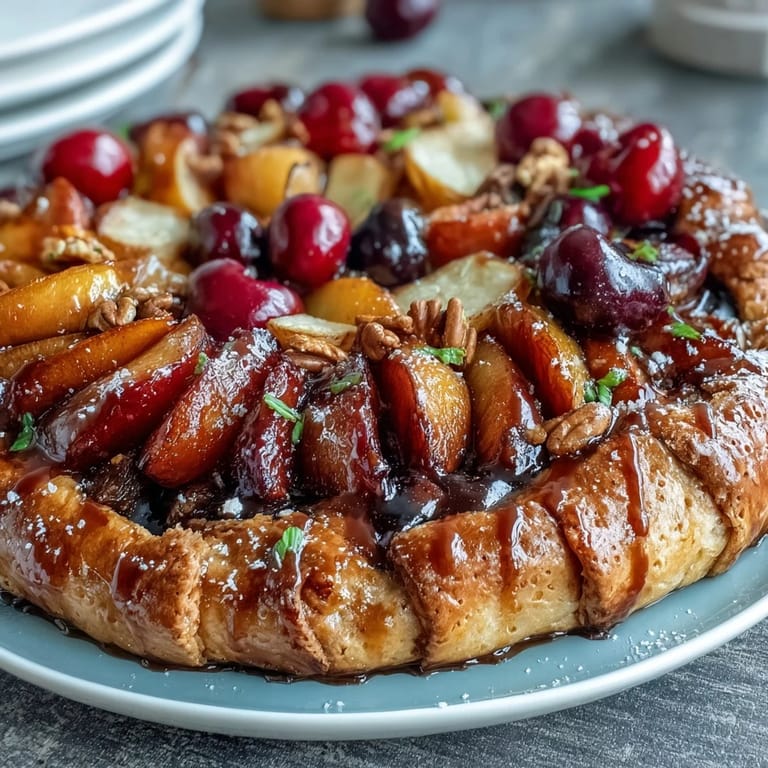
Save There's a quiet moment when you pull this out of the oven and the kitchen smells like caramelized fruit and toasted almond, and you realize you made something that looks and tastes like it came from a proper French pâtisserie, except with your hands and your oven. That feeling never gets old.
Why This Works as a Summer Dessert
Stone fruits are at their sweetest and juiciest in summer, so the galette format celebrates them rather than hiding them under layers. The pastry comes together quickly without overnight rests, and since it's baked on one level rather than shaped into a pan, it cooks evenly and browns beautifully all over. Served warm with a melting scoop of vanilla ice cream or cool whipped cream, it becomes the kind of dessert that people eat and then quietly ask for the recipe.
Make-Ahead Wisdom
Both the dough and frangipane can be made a full day ahead and stored in the refrigerator, which means on the day you want to bake, you're really just rolling, assembling, and baking. The fruit should be prepared no more than a few hours before baking so it doesn't lose its texture, but having the foundation ready takes the stress out of the whole project.
Flavor Variations to Try
The beauty of a galette is how flexible it is once you understand the structure. A pinch of cinnamon or cardamom added to the fruit brings warmth without overwhelming the delicate stone fruit flavor, and if you want to push it further, a tiny splash of bourbon or brandy adds sophistication. You could also swap half the almond flour for hazelnut flour in the frangipane, or add a tablespoon of honey to the fruit for extra depth.
- Almond extract is optional but it deepens the frangipane flavor, so if you have it, use it.
- Don't worry if your galette edges look rough or uneven—the rusticity is exactly the point.
- Serve it the day it's baked for the crispest pastry, but it reheats gently in a 300°F oven if needed.
 Save
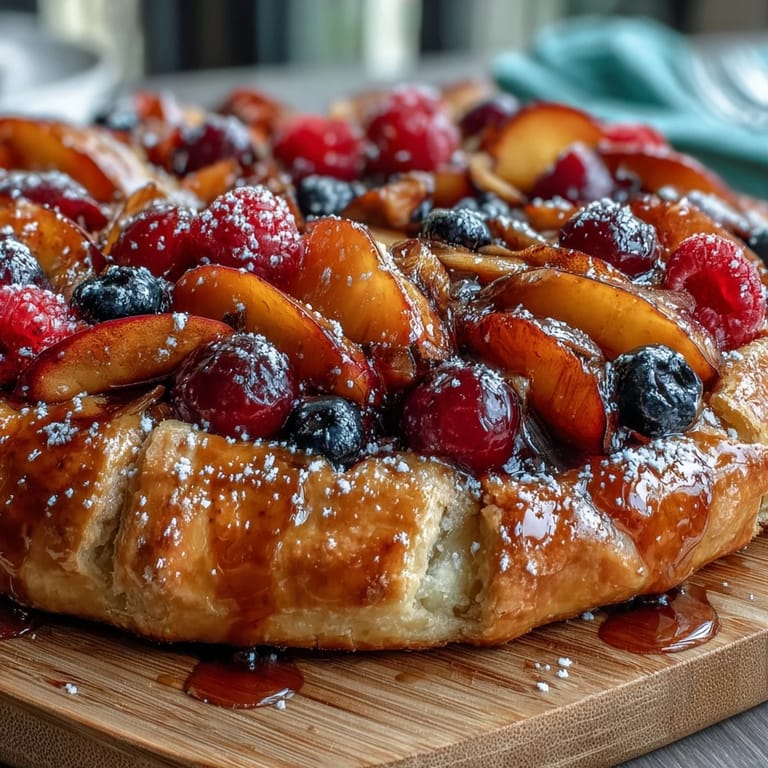
Save This galette sits at the perfect place between seeming impressive and actually being straightforward to make, which is exactly where the best recipes live. Bake one on a summer afternoon and you'll understand why people have been making them for centuries.
Recipe Help & Answers
- → What types of stone fruits work best?
Use ripe peaches, plums, nectarines, apricots, and cherries. Choose fresh, flavorful fruits for optimal taste and texture.
- → Can I prepare the galette components in advance?
Yes, the dough and almond frangipane can be made ahead and refrigerated overnight to save time.
- → How do I achieve a flaky pastry crust?
Keep the butter cold while mixing, handle the dough minimally, and chill it well before rolling out.
- → What is the purpose of the almond frangipane?
The frangipane adds a creamy, nutty layer that complements the stone fruits, enhancing both texture and flavor.
- → How should I serve the galette?
Serve warm or at room temperature, optionally accompanied by vanilla ice cream or whipped cream for extra indulgence.