 Save
Save There's something magical about the moment when you first taste a pancake that tastes like a cinnamon roll. It happened to me on a lazy Sunday when I'd promised myself a simple breakfast but ended up with a piping bag in one hand and a spatula in the other. The butter and brown sugar hit the skillet before the flour even set, releasing this warm amber-colored steam that filled my tiny kitchen. My roommate stumbled in, half-asleep, and just stood there breathing it in. That's when I knew this wasn't just breakfast anymore—it was an experience worth perfecting.
I made these for my sister's birthday morning, and she sat at the kitchen counter with her coffee just watching me pipe the swirls. She said it looked like I was doing something fancy, and I had to laugh because the fancy part was actually just squeezing a piping bag. But when that golden pancake flipped and the cinnamon had caramelized on the edges—she got it. We both did. That's the exact moment when a recipe becomes a tradition.
Ingredients
- All-purpose flour: The foundation—make sure you're measuring by weight if you can, because a tightly packed cup measures different than a gently spooned one.
- Granulated sugar: Just a touch sweetness in the batter itself, keeping it subtle so the swirl and glaze can shine.
- Baking powder: This is your lift, your rise—don't skip it or you'll have dense, sad pancakes.
- Salt: A tiny guardian that makes everything taste more like itself.
- Milk: Room temperature works best if you remember, but cold works too—it just means the batter takes a minute longer to come together.
- Eggs: They bind everything while adding richness that turns these from ordinary into velvet-textured luxurious.
- Unsalted butter, melted: For the batter, this adds a whisper of richness without competing with the other flavors.
- Vanilla extract: A single teaspoon that somehow makes people ask if there's something special in here.
- Brown sugar for the swirl: Packed light or dark—the moist crystals melt into gooey gold when they hit the hot pan.
- Ground cinnamon: The heart of everything—use fresh if you can, because old cinnamon has already lost its warmth.
- Cream cheese: Softened is non-negotiable here, or you'll be mixing for ten minutes trying to break it down.
- Powdered sugar: It dissolves into silky glaze without the grittiness that granulated sugar would leave behind.
Tired of Takeout? 🥡
Get 10 meals you can make faster than delivery arrives. Seriously.
One email. No spam. Unsubscribe anytime.
Instructions
- Gather and whisk the dry team:
- In a medium bowl, combine flour, sugar, baking powder, and salt. Keep this simple and don't overthink it—you're just distributing the leavening evenly.
- Whisk the wet ingredients:
- In another bowl, whisk milk, eggs, melted butter, and vanilla until they're loose and ready. Pour this into your dry ingredients and whisk until the streaks of flour just barely disappear—lumpy is your friend here, smooth is the enemy.
- Make the cinnamon swirl paste:
- In a small bowl, stir together melted butter, brown sugar, and cinnamon until it looks like wet sand. Transfer it to a piping bag or zip-top bag and snip a small corner—this is where the piping magic happens.
- Create the glaze:
- Beat softened cream cheese and butter together until they're completely smooth and no streaks remain. Sift in powdered sugar, add vanilla, and slowly whisk in milk until you have something that pours like heavy cream, not like icing.
- Heat and grease your cooking surface:
- Set your skillet or griddle to medium-low heat—too hot and your bottoms burn before the insides cook through. A light grease with butter or oil is all you need.
- Pour and swirl:
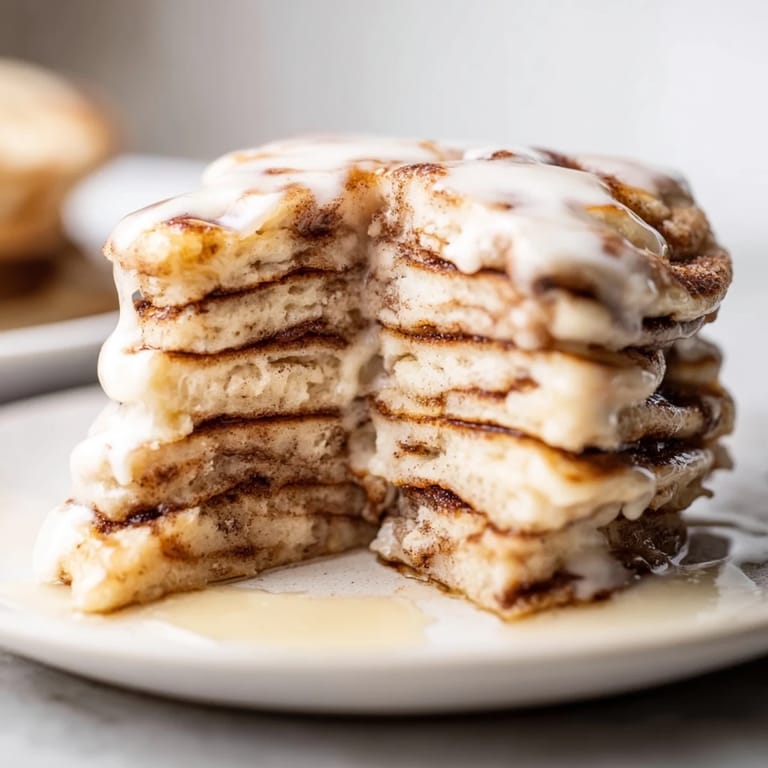
- Pour 1/4 cup batter onto the hot surface and watch it settle for just a second, then pipe a spiral of cinnamon mixture across the top. The batter will start to set around it, creating pockets where the swirl can get a little crispy.
- Flip with confidence:
- When bubbles form on the surface and the edges look set (about 2 to 3 minutes), slip your spatula underneath and flip. The second side only needs about 2 minutes—you're just setting the bottom, not cooking it twice.
- Plate and drizzle:
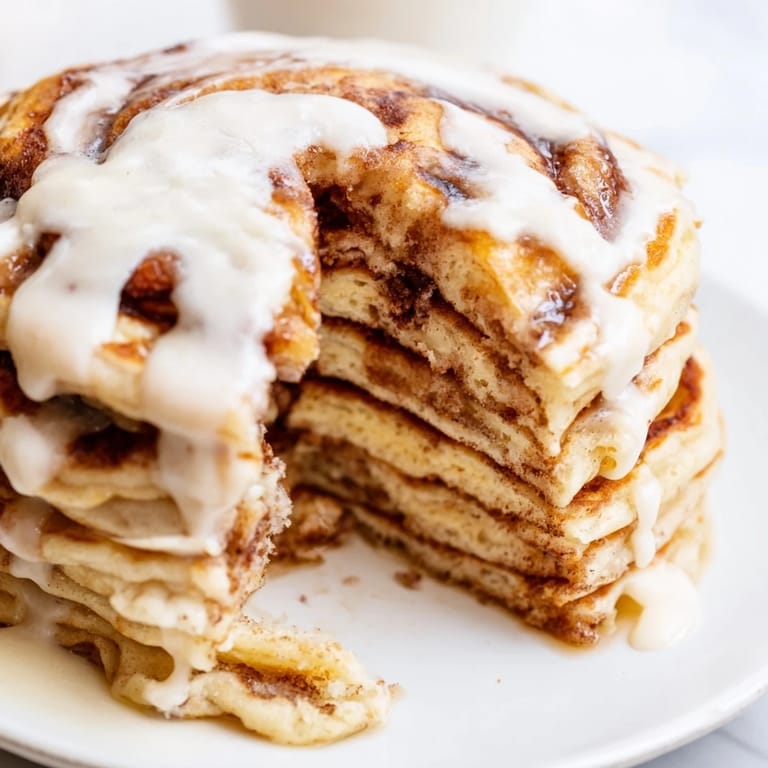
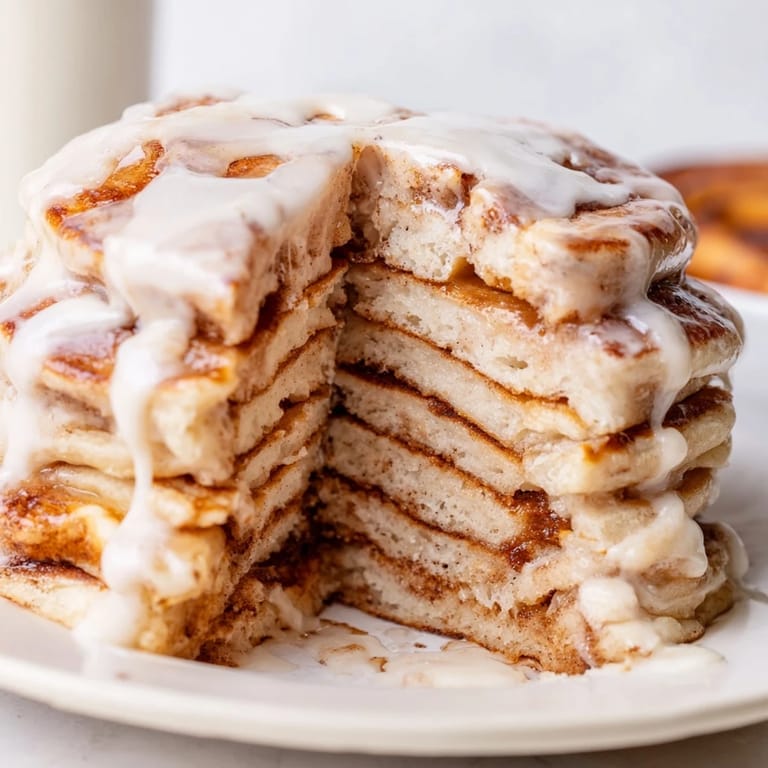
- Stack your warm pancakes and drizzle that cream cheese glaze over the top while they're still hot. Watch it melt into all the crevices, pooling in pockets where it's meant to be.
 Save
Save These pancakes became the thing I make when someone's had a rough week. There's something about sitting down to something this indulgent on a Tuesday morning that shifts something. It's not just breakfast—it's a small kindness you give yourself or someone else, served warm with steam rising off the plate.
The Science of the Swirl
The magic of piping the cinnamon mixture directly onto the batter is that it starts cooking immediately when it hits the hot surface. The brown sugar caramelizes at the edges, creating these little pockets of crispy sweetness that contrast perfectly with the fluffy interior. I learned this the hard way the first time I tried stirring it into the batter itself—everything turned muddy brown and the flavor got lost. Now I understand that the swirl needs to stay distinct, needs to keep its own identity while the pancake cooks around it.
Why Cream Cheese Changes Everything
A regular glaze is fine. A cream cheese glaze is an upgrade that whispers instead of shouts. The tanginess of the cream cheese against the sweetness of powdered sugar creates this balance that makes you want another bite. I've tried making this with just butter and powdered sugar, and it's competent, but it's missing that little something that makes people close their eyes on the first bite. The acid in cream cheese does that—it wakes up your taste buds and makes the warm pancake against the cool glaze feel like a conversation.
Timing and Temperature Tricks
The resting period after you mix the wet and dry ingredients matters more than you'd think. It gives the flour time to fully hydrate, which means you'll get a more tender pancake without having to overmix. Medium-low heat is also crucial because these pancakes have sugar in them—in the batter and especially in the swirl—which means they can brown fast. You want that golden exterior, not a dark brown one that suggests the inside might still be raw. If you're making these for a crowd, keep a baking sheet in a 200-degree oven and transfer finished pancakes there to stay warm without drying out.
- Let your batter rest for a couple of minutes if you have the patience—it makes a difference in texture.
- If you're worried about the bottoms burning, lower the heat even more and add a minute or two to your cooking time.
- Taste your cinnamon before you add it to the swirl—old spices won't bring the warmth you're after.
 Save
Save Make these on a morning when you have time to linger over breakfast. They're worth the extra ten minutes of attention, and that's the real secret ingredient anyway.
Recipe Help & Answers
- → How do I create the cinnamon swirl?
Mix melted butter, packed brown sugar, and ground cinnamon until smooth. Transfer to a piping bag and pipe onto batter before cooking.
- → What makes the pancakes fluffy?
Using baking powder along with the right ratio of flour, eggs, and milk ensures a light, airy texture in the pancakes.
- → How is the cream cheese glaze prepared?
Beat softened cream cheese with butter until creamy, then add powdered sugar, vanilla extract, and milk, whisking to a smooth consistency.
- → Can I make the cinnamon swirls ahead of time?
Yes, the swirl mixture can be prepared in advance and stored briefly before piping onto the batter.
- → What is the best way to keep pancakes warm before serving?
Store cooked pancakes in a 200°F (95°C) oven to maintain warmth and texture until ready to serve.