 Save
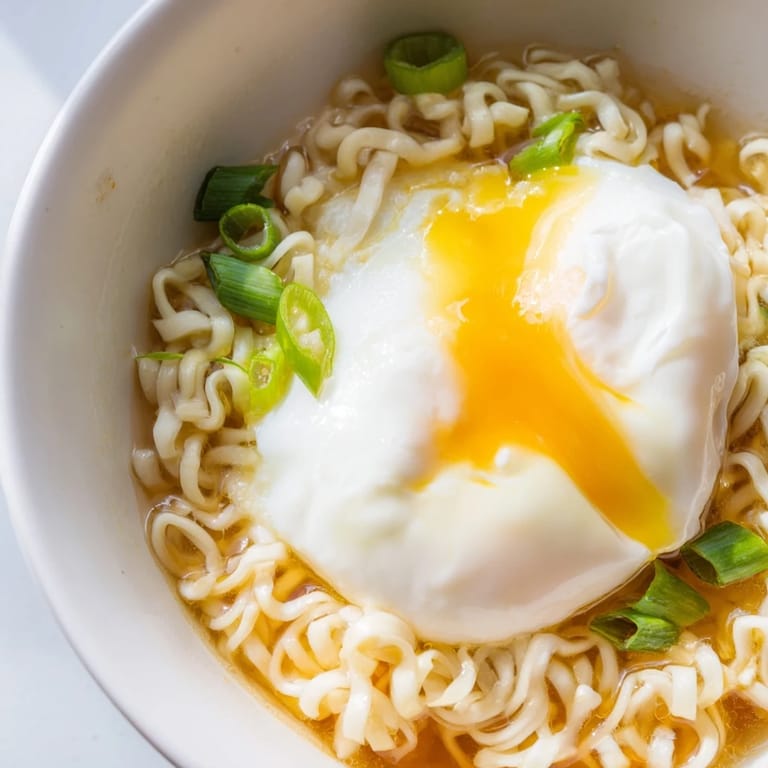
Save There's something magical about watching an egg slowly cook in barely simmering broth—the white turns opaque while the yolk stays golden and runny, ready to cascade into your noodles. I discovered this technique by accident one weeknight when I was too hungry to wait for a proper meal and too tired to cook anything ambitious. The result was so good that instant ramen stopped feeling like a compromise and started feeling like a treat.
My roommate wandered into the kitchen one rainy evening and caught the aroma of butter and hot broth. She watched me crack the egg into the simmering water with skepticism until that moment when the yolk broke and turned the whole bowl into something she'd never seen in instant ramen before. She made this same bowl three nights in a row after that.
Ingredients
- Instant Noodles: One package of whatever flavor you're craving—the seasoning packet is essential, so don't toss it.
- Water: Two cups creates the perfect ratio of noodles to broth; too little and you'll have a paste, too much and it's soup.
- Unsalted Butter: One tablespoon is non-negotiable; it's what turns this from noodles in broth into something creamy and craveable.
- Large Egg: Room temperature eggs work best because they cook more gently than cold ones straight from the fridge.
- Scallion: Fresh and thinly sliced, it adds brightness and prevents this from feeling heavy even though it's pure comfort.
- Chili Flakes or Chili Oil: Optional but recommended; they cut through the richness and add a pleasant heat that keeps you wanting another bite.
- Soy Sauce: A splash adds depth without overpowering the delicate egg yolk.
Tired of Takeout? 🥡
Get 10 meals you can make faster than delivery arrives. Seriously.
One email. No spam. Unsubscribe anytime.
Instructions
- Boil Your Water:
- Fill a small saucepan with two cups of water and bring it to a rolling boil—you want it active and bubbling so the noodles cook evenly.
- Cook the Noodles:
- Add the ramen noodles straight to the boiling water and follow the package instructions, usually about two to three minutes. They should soften but still have a slight chew to them.
- Lower the Heat and Crack the Egg:
- When the noodles are almost done, reduce the heat to low so the broth is just barely simmering. Crack your egg directly into the water—don't stir it yet, just let it sit there looking vulnerable and raw.
- Cover and Wait:
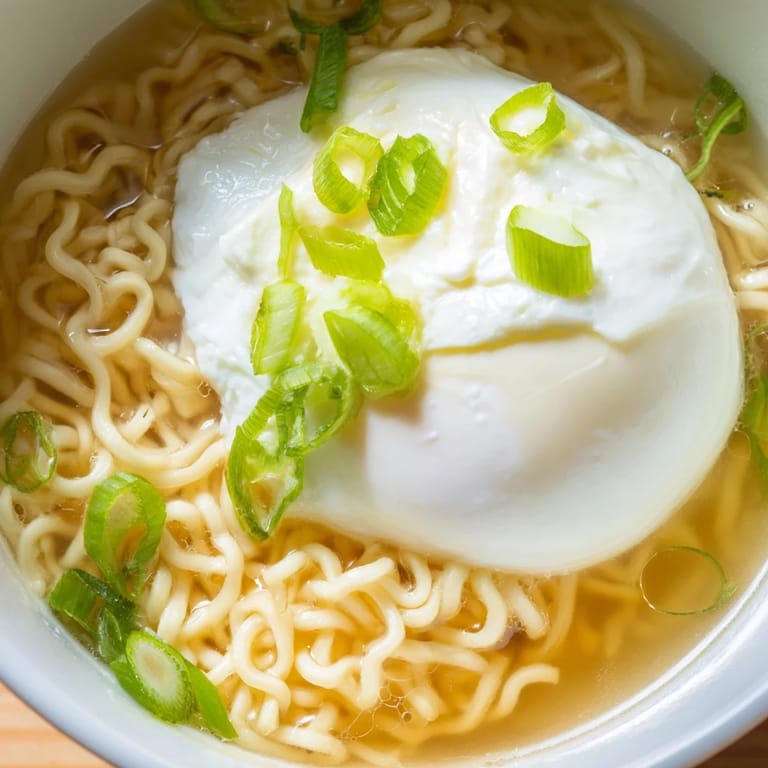
- Cover the saucepan with a lid or even a plate and let it cook for one to two minutes until the white sets but the yolk stays soft and jiggly. You can peek after one minute to check the white is opaque.
- Finish the Broth:
- Stir in the seasoning packet and butter, letting the heat melt everything together into a glossy, flavorful liquid that coats the noodles beautifully.
- Bowl and Top:
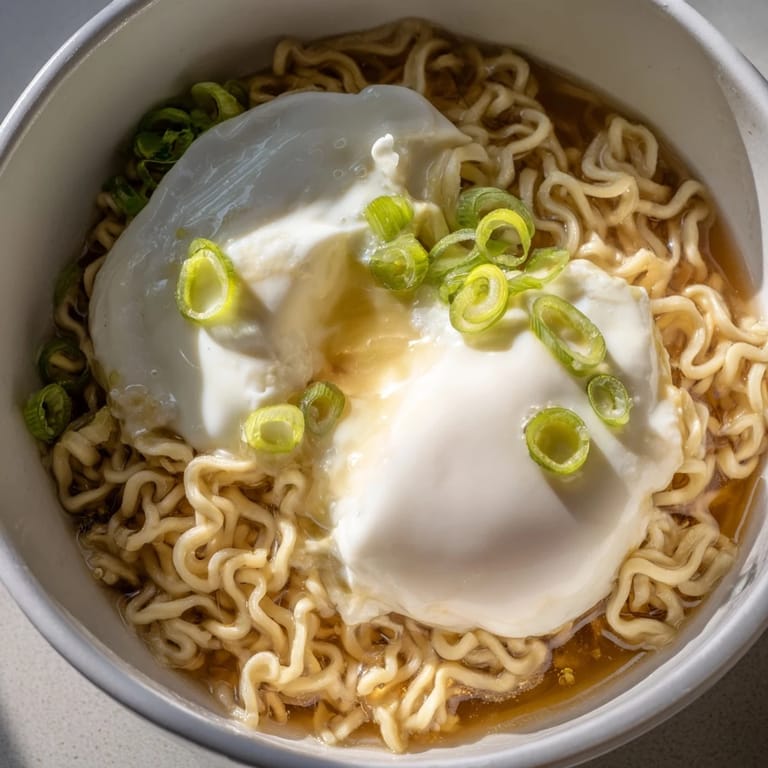
- Transfer everything to a bowl carefully so the egg yolk stays intact, then scatter the scallions on top and add chili flakes or a splash of soy sauce if you like heat and depth.
 Save
Save I remember feeding this to a friend who swore they hated instant ramen, and watching their face light up when they broke that yolk and it ran into every corner of the bowl. That's when I realized this isn't just a quick fix—it's genuinely delicious, the kind of meal that stays with you.
The Egg Is Everything
The egg is the whole point of this upgrade, so treat it with care. A soft yolk creates a sauce that no seasoning packet could ever produce on its own, enriching every bite with a silky richness. When you break it open at the table, it should ooze slightly and blend into the broth like it was meant to be there all along.
Why Butter Matters Here
Butter feels like a small addition, but it's the difference between a hot bowl of noodles and something you'd actually pay for at a restaurant. It rounds out the seasoning packet and adds a luxury that feels undeserved for something this quick and simple. The salt in the butter also enhances the egg, creating a harmony that plain broth can't achieve alone.
Variations and Extra Touches
This base is just the beginning—you can layer in whatever you have on hand and whatever you're in the mood for. Spinach adds color and nutrition without changing the character of the dish, while corn brings a subtle sweetness. A drizzle of toasted sesame oil at the end adds an aroma that makes this feel like a deliberate choice rather than a desperate weeknight meal.
- Soft-boiled eggs can be cooked for three to four minutes if you prefer a firmer yolk, though I'd argue you'd be missing the point.
- A squeeze of fresh lime juice or a splash of rice vinegar adds brightness and prevents the richness from feeling heavy.
- Leftover vegetables, a handful of mushrooms, or even frozen peas will cook in the residual heat while everything else is coming together.
 Save
Save This recipe taught me that the best meals don't require fancy ingredients or hours of work—they just need attention and respect for what you're making. Ten minutes and seven ingredients later, you'll understand why this bowl stopped being a shortcut and became something people actually crave.
Recipe Help & Answers
- → How do I achieve a silky soft egg?
Crack the egg directly into the simmering broth and cover the pan, cooking for 1-2 minutes until the white is set but yolk remains soft.
- → Can I add vegetables to enhance nutrition?
Yes, ingredients like spinach, corn, or mushrooms can be added for extra flavor and nutrients.
- → What is the role of butter in this dish?
Butter melts into the broth, providing a creamy texture and richer taste to the noodles.
- → Is it possible to adjust the spice level?
Yes, add chili flakes or chili oil to taste for a spicy kick.
- → Can I substitute scallions if unavailable?
Green onions or chives are good alternatives that add a similar fresh flavor and crunch.