 Save
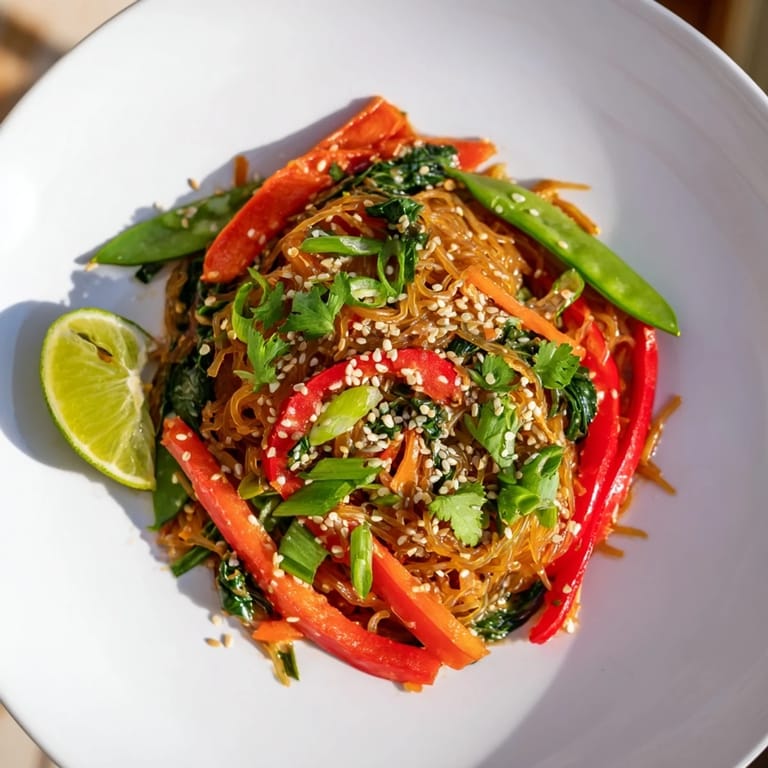
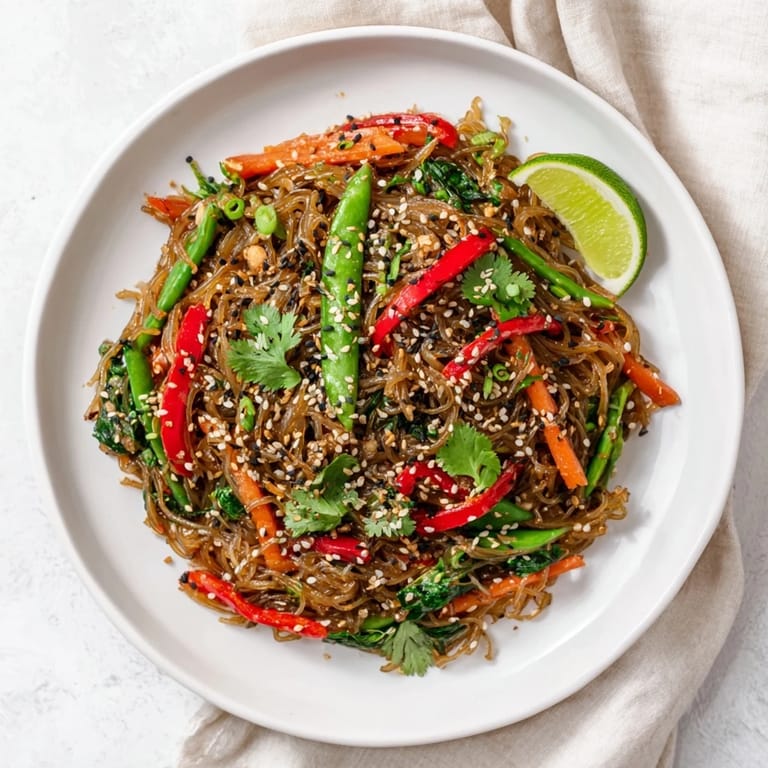
Save I discovered kelp noodles completely by accident while wandering through an Asian market during what I called my 'crunch phase'—that time when everything you eat needs to snap and crackle. The clerk laughed when I asked what to do with them, pointing to a simple stir-fry, and that night my kitchen smelled like ginger and possibility. These translucent noodles have almost no calories but deliver this incredible ocean-fresh crunch that regular noodles just can't match.
Last summer my sister came over skeptical about 'sea vegetables in pasta form' as she called it, hovering near the door ready to suggest ordering pizza instead. One bite in and she was literally eating straight from the pan, asking if I had enough kelp noodles stashed to make it for her birthday dinner. Now it's our default when we want something that feels indulgent but leaves us feeling energized instead of heavy.
Ingredients
- 12 oz kelp noodles: These need a warm water soak to soften from their factory crunch into something perfectly chewy
- 1 red bell pepper: Thin slices add sweetness and that gorgeous red contrast against the pale noodles
- 1 cup snap peas: Leave them halved so they keep their fresh pop even after quick cooking
- 1 medium carrot: Julienned into matchsticks for texture and color that makes the dish vibrant
- 2 cups baby spinach: Added at the very end so it wilts just enough without disappearing completely
- 2 green onions: Both white and green parts bring mild onion flavor and fresh color
- 2 tbsp tamari: Use gluten-free if needed, this provides the salty umami foundation
- 1 tbsp toasted sesame oil: Don't skip the toasted version, regular sesame oil lacks that deep nutty aroma
- 1 tbsp rice vinegar: Brightens everything and cuts through the rich sesame notes
- 1 tbsp fresh ginger: Grate it finely so it disperses evenly without any fibrous bits
- 2 tsp maple syrup: Just enough to round out the salty elements and help the sauce cling
- 2 cloves garlic: Minced fresh, never jarred, for that sharp aromatic punch
- 1/2 tsp chili flakes: Optional but recommended if you like subtle warmth that builds
- 1 tbsp toasted sesame seeds: The final flourish that adds nutty crunch on top
- Fresh cilantro and lime wedges: These aren't garnish, they're essential brightness that wakes up the whole bowl
Tired of Takeout? 🥡
Get 10 meals you can make faster than delivery arrives. Seriously.
One email. No spam. Unsubscribe anytime.
Instructions
- Soak the noodles:
- Place kelp noodles in a large bowl with warm water for 10 minutes, then drain them well and set aside while you prep everything else.
- Whisk the sauce:
- Combine tamari, sesame oil, rice vinegar, grated ginger, maple syrup, minced garlic, and chili flakes in a small bowl, whisking until the maple syrup dissolves completely.
- Sauté the hard vegetables:
- Heat your wok or skillet over medium-high heat until it's hot, then add bell pepper, snap peas, and carrot, stirring for 3 to 4 minutes until they're bright and tender-crisp.
- Add the greens:
- Toss in spinach and green onions, stir-frying for just 1 minute until the spinach starts wilting but still has some body.
- Combine everything:
- Add the drained noodles and pour that sauce you made over everything, tossing with tongs for 2 to 3 minutes until every strand and vegetable piece is coated and heated through.
- Finish and serve:
- Divide into bowls immediately, scattering sesame seeds and fresh cilantro on top, and pass lime wedges at the table for that final squeeze of brightness.
 Save
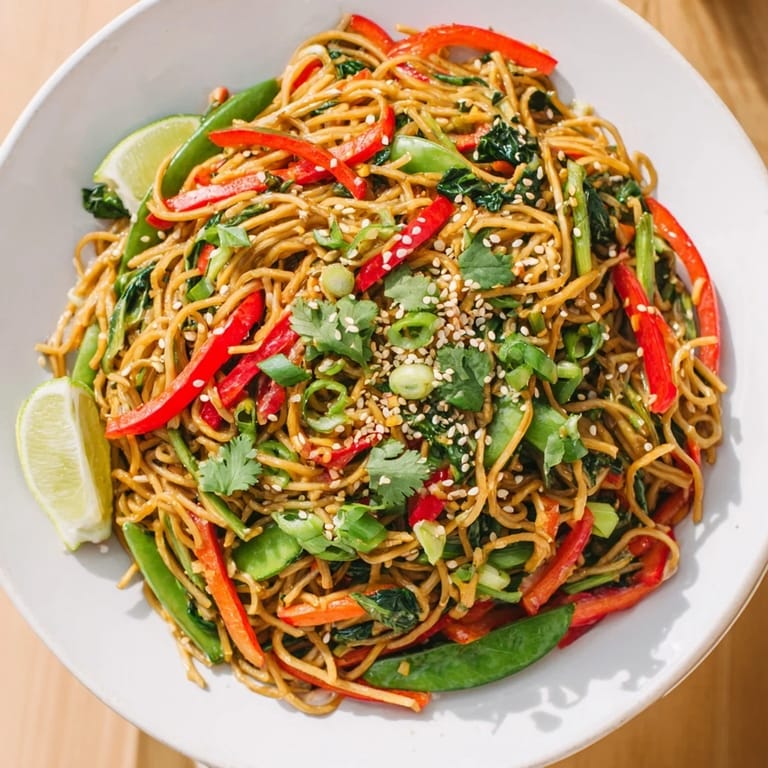
Save This recipe became my go-to after a long day at work when I want something that feels like comfort food but won't put me into a food coma. There's something deeply satisfying about chopping all those colorful vegetables and hearing them hit the hot pan, knowing dinner is minutes away.
Making It Your Own
Once you master the basic technique, this stir-fry adapts beautifully to whatever vegetables are languishing in your crisper drawer. I've made it with broccoli stems sliced thin, zucchini ribbons, even shelled edamame when I want more substance.
Protein Additions
Crispy tofu cubes work beautifully here, pressed and pan-fried before adding them back in at the final stage. You could also add cooked chickpeas or even scrambled eggs if you want something closer to traditional lo mein.
Sauce Variations
Some nights I stir a spoonful of almond butter or tahini into the sauce for a creamier, richer version that feels almost decadent. A splash of coconut aminos can replace tamari if you're avoiding soy completely.
- Double the sauce recipe if you love your noodles really saucy
- Crushed peanuts or cashews add another layer of crunch on top
- Serve with extra lime wedges because acid makes everything pop
 Save
Save This is the kind of recipe that proves healthy eating doesn't mean sacrificing satisfaction or flavor. Every bite is vibrant, textured, and full of life.
Recipe Help & Answers
- → Do kelp noodles need to be cooked?
Kelp noodles don't require traditional cooking. Soaking them in warm water for 10 minutes softens their texture while maintaining a pleasant crunch that works perfectly in stir-fries.
- → Can I add protein to this dish?
Absolutely. Cubed tofu, edamame, or cooked chickpeas make excellent protein additions. Add them during step 5 when tossing the noodles with sauce to heat through.
- → How long do leftovers keep?
Store in an airtight container in the refrigerator for up to 3 days. The vegetables will soften slightly, but the flavors will meld beautifully. Reheat gently in a skillet or enjoy cold.
- → What vegetables work best as substitutes?
Broccoli florets, zucchini ribbons, shiitake mushrooms, or bok choy all work wonderfully. Adjust cooking times accordingly—denser vegetables may need an extra minute or two.
- → Is this dish spicy?
The base version has mild heat from optional chili flakes. Adjust spiciness by increasing chili flakes or adding sriracha to the sauce. The ginger provides warmth without intense heat.
- → Can I make the sauce ahead?
Yes, whisk the sauce together up to 3 days in advance and store refrigerated. The flavors will actually develop and intensify over time for a more robust taste.