 Save
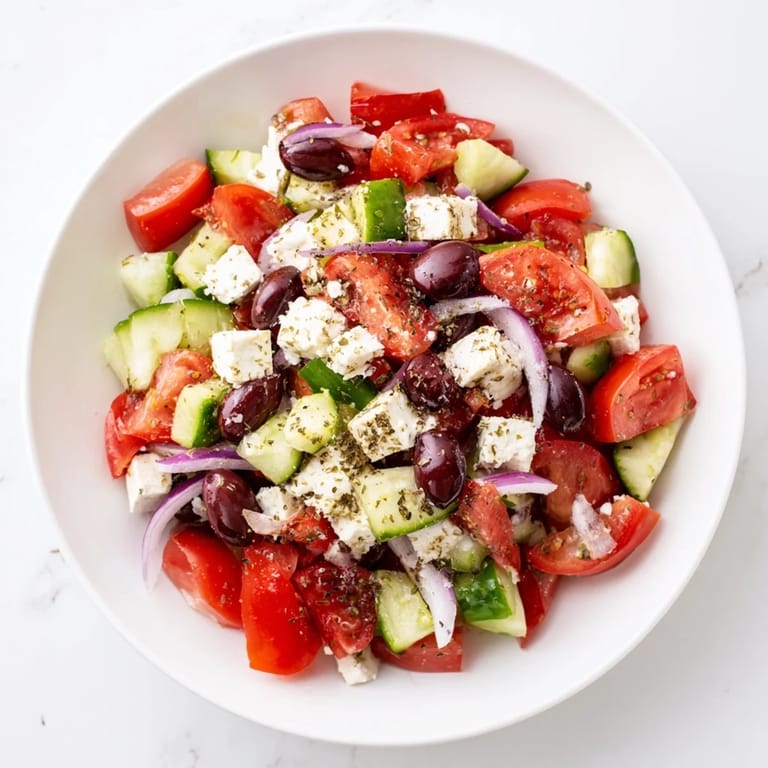
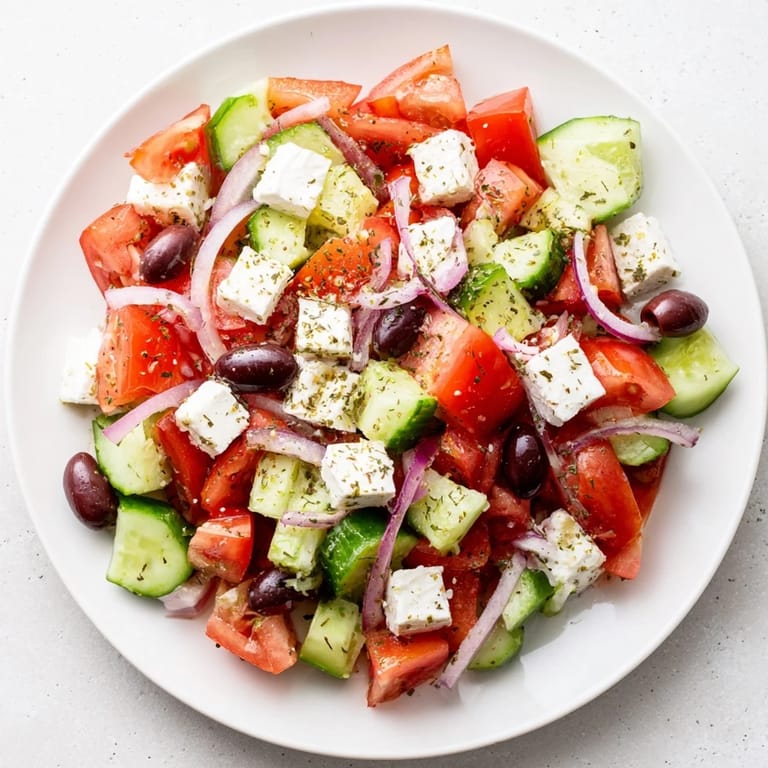
Save There's something about standing in a Mediterranean market on a hot afternoon—the smell of sun-warmed tomatoes, the clash of vendors calling out prices—that makes you understand why this salad matters. I picked up the habit of making this dish after a friend's family insisted it was the only way to start a proper meal, and they were right. It's the kind of salad that tastes like the sun cooperated in its creation, with no cooking required, just honest ingredients that taste like themselves.
I made this for my neighbor once when she'd just moved in, bringing over a bowl still cold from the fridge. She came back the next week asking for the recipe, then started making her own version with extra capers. Turns out there's a reason this salad has survived thousands of years—it's genuinely the thing people ask you to bring to gatherings.
Ingredients
- Ripe tomatoes (4 medium): Pick ones that give slightly when you squeeze them—those watery, mealy ones from the back of the produce section will ruin the whole thing, but truly ripe ones are almost too fragrant.
- Cucumber (1 large): The crisp texture is what keeps this from feeling heavy, so don't skip it or substitute with something soft.
- Red onion (1 small, thinly sliced): This gives a sharp bite that wakes everything up, but slice it thin or it dominates the bowl.
- Feta cheese (150 g): Crumble or cube it—either way works, but bigger chunks let you taste the sharpness distinctly.
- Kalamata olives (100 g, pitted and halved): The pitting matters because nobody wants to crack a tooth, and halving them distributes the briny flavor better.
- Extra virgin olive oil (3 tbsp): Don't cheap out here—this is literally half the dressing and your taste buds will know the difference.
- Red wine vinegar (1 tbsp): The acidity is what brings everything into focus, balancing the richness of the oil.
- Dried oregano (1/2 tsp): A whisper of this Mediterranean herb ties the whole thing together without overwhelming it.
- Salt and black pepper: Taste as you go because the olives and feta are already salty, and over-seasoning is easy to do.
Tired of Takeout? 🥡
Get 10 meals you can make faster than delivery arrives. Seriously.
One email. No spam. Unsubscribe anytime.
Instructions
- Cut everything with intention:
- Dice the tomatoes into chunks roughly the size of grapes—not tiny, not huge. Do the same with the cucumber, and slice the red onion thin enough that it wilts slightly when the vinegar touches it.
- Build the base:
- Toss the tomatoes, cucumber, onion, and olives together in a large bowl, letting them start getting acquainted. The idea is to combine them gently so nothing bruises.
- Add the cheese carefully:
- Scatter the feta over the top and use a light hand when you toss everything together—you want some chunks to stay visible, not dissolve into the vegetables.
- Make your dressing:
- Whisk the olive oil, red wine vinegar, oregano, salt, and pepper in a small bowl until it looks emulsified and tastes balanced. This takes about a minute, and you'll know it's right when the flavors stop fighting each other.
- Dress and serve:
- Pour the dressing over the salad and toss everything together gently one more time, then add fresh parsley or mint if you have it. Serve right away while everything is still crisp, because the longer it sits, the softer it becomes.
 Save
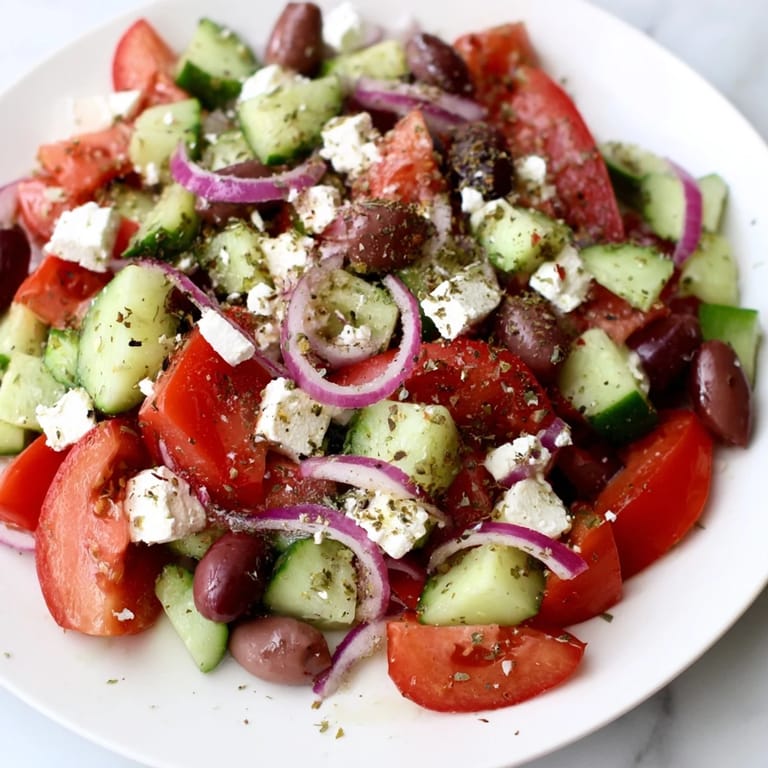
Save I remember sitting on a patio in Athens with this exact salad in front of me, watching the sun sink behind white buildings, and realizing that some of the best moments in life don't need anything fancy. This salad reminds me of that every time I make it.
Why This Salad Stayed on My Table
There's a reason Mediterranean cultures have eaten this combination for centuries—it's not just delicious, it's physically satisfying without being heavy. The salt from the feta and olives makes you thirsty, which is perfect on hot days when you're eating outside. I started making it in summer and then realized I wanted it year-round, which is when you know something has become part of your rotation.
The Secrets in the Details
The best versions of this salad I've tasted have one thing in common: whoever made them didn't overthink it. The vegetables do most of the work, and the dressing is just there to help them talk to each other. I've seen people add capers, sun-dried tomatoes, bell peppers, or radishes, and honestly they all work, but the simplest version is still the one people ask for seconds of.
How to Make It Your Own
The beauty of this salad is that it responds well to what you have on hand, which makes it perfect for improvisation. I've added crumbled vegan feta for friends with dairy allergies, thrown in crispy chickpeas for protein, and even added thinly sliced radishes for extra crunch. The foundation stays the same, but the personality can shift based on your mood or what's in season.
- If you want something heartier, add white beans or chickpeas—they absorb the dressing beautifully and make this work as a main course.
- Fresh mint is always better than parsley if you have it, but parsley is also lovely and more forgiving.
- Make extra dressing and keep it on the side, because people always want more once they taste what it does.
 Save
Save Make this when you want to feel like you're eating somewhere warm and unhurried, even if you're eating at your kitchen counter. That's the whole point of Mediterranean food.
Recipe Help & Answers
- → Which olives work best in this salad?
Kalamata olives offer a rich, briny flavor that complements the fresh vegetables and creamy feta perfectly.
- → Can the feta cheese be replaced for dietary preferences?
Yes, vegan feta alternatives provide a similar texture and tang for dairy-free preferences without compromising taste.
- → What dressing ingredients enhance the salad's flavor?
A simple mix of extra virgin olive oil, red wine vinegar, dried oregano, salt, and black pepper brings balance and brightness.
- → How should vegetables be prepared for this dish?
Tomatoes and cucumber should be diced, onions thinly sliced, and olives pitted and halved for even texture and taste distribution.
- → What optional garnishes complement the salad?
Fresh parsley or mint add a fragrant, herbal note that elevates the salad’s freshness and complexity.