 Save
Save I stumbled onto this platter concept while raiding my fridge after a farmers market haul—too many colors to eat separately, and suddenly I was thinking about light, shadow, contrast. The black board idea came from watching a chef in a cramped kitchen make the ordinary spectacular by changing the backdrop. What started as a way to use up vibrant vegetables became something I actually wanted to show people.
The first time I made this for a dinner party, my friend walked in mid-prep and just stood there staring at the board. No words, just pointing at the colors. That's when I knew the presentation mattered as much as the taste—it gives people permission to play with their food, to mix the salty eggs with sweet mango, to find their own flavor story.
Ingredients
- Mini cucumbers: They pickle faster and stay crunchier than full-size ones, giving you that satisfying snap.
- Rainbow carrots: Slice on the bias so they catch the light and look intentional.
- Radishes: They fade slightly as they sit, which somehow makes the whole platter feel alive and changing.
- Red onion: Thin slices turn almost translucent and add a sharp note that balances the sweet fruit.
- White vinegar and water: The 1:1 ratio keeps pickles crisp without overpowering the vegetables.
- Sugar and salt: Together they create that brine sweetness that's instantly addictive.
- Mustard seeds and peppercorns: These float around like little flavor surprises in each bite.
- Large eggs: Pick ones that feel uniform in size so the beet dyeing looks even.
- Beet: A medium one gives enough color without turning everything purple.
- Apple cider vinegar: It's slightly gentler than white vinegar and adds a mellow sweetness to the eggs.
- Fresh blueberries, blackberries, kiwi, mango, dragon fruit: Buy them the day before, prep the morning of—they're your color story.
- Microgreens or edible flowers: These finish the look, turning a platter into art.
- Flaky sea salt: Regular salt disappears; flakes stay visible and add that final designer touch.
Tired of Takeout? 🥡
Get 10 meals you can make faster than delivery arrives. Seriously.
One email. No spam. Unsubscribe anytime.
Instructions
- Make the pickling brine:
- Combine vinegar, water, sugar, salt, mustard seeds, and peppercorns in a saucepan over medium heat. You'll hear the mustard seeds start to pop softly as everything warms through. Once the sugar and salt dissolve and you see gentle steam rising, you're done.
- Pickle the vegetables:
- Slice your cucumbers, carrots, radishes, and onion into a heatproof container, then carefully pour the hot brine over them. The kitchen will smell like a bright, sharp garden. Let them cool on the counter, then slide them into the fridge for at least 2 hours, but overnight is when the real flavor magic happens.
- Cook and cool the eggs:
- Place eggs in cold water, bring to a boil, then cook for 8-9 minutes depending on how firm you like the yolk. The moment you drop them into ice water, you'll hear that satisfying crack of the shell against ice. Once they're cool enough to handle, peel them gently under cool running water—the shells slip off easier than you'd expect.
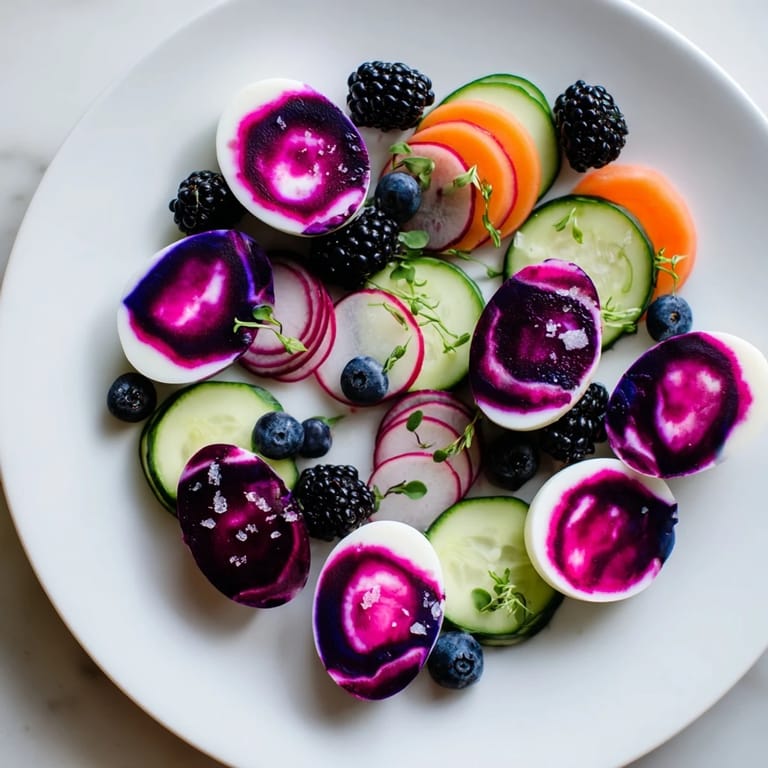
- Dye the eggs:
- Slice your beet and layer it with the peeled eggs in a jar, then pour over the vinegar mixture. The color transformation happens slowly, which is oddly meditative to watch. Within 2 hours you'll see pink edges; overnight they're a deep magenta with marbled patterns.
- Build your platter:
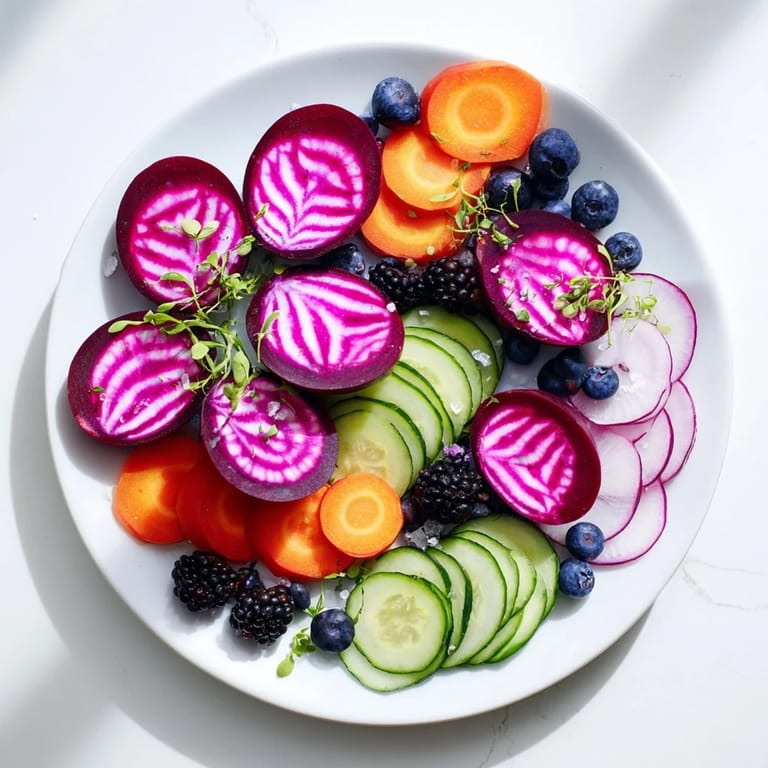
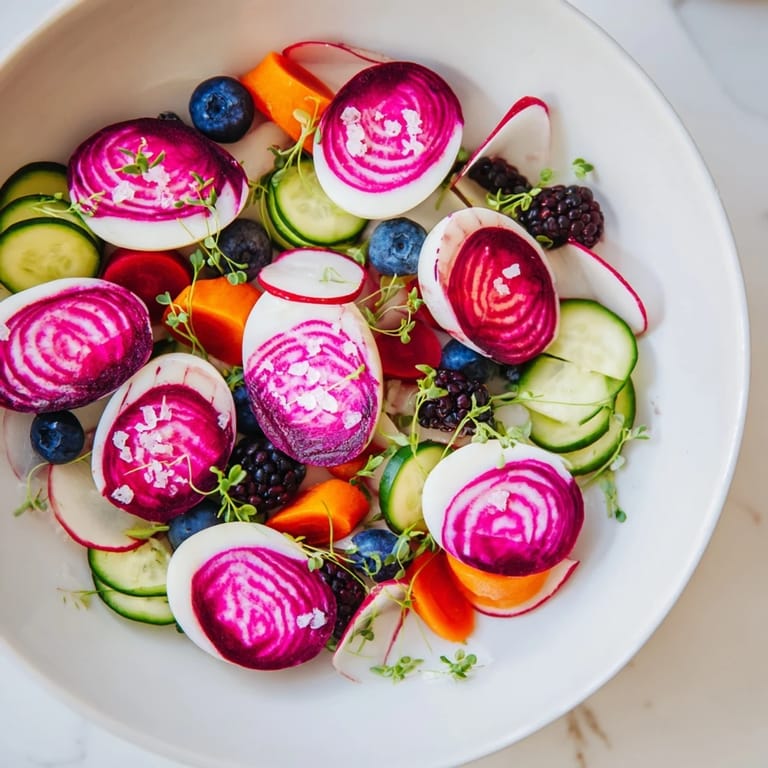
- Arrange pickled vegetables around the board in loose clusters, then halve or slice your beet eggs and tuck them in between. Add the fresh fruit, letting the colors guide you—no two platters look the same.
- Finish and serve:
- Scatter microgreens and a final whisper of flaky sea salt across everything. Serve it chilled so the pickles stay crisp and the eggs stay cool to the bite.
 Save
Save There's something humbling about feeding people something beautiful they weren't expecting. This platter has a way of making conversation easier, of turning a regular evening into something people remember.
Timing and Make-Ahead Strategy
The beauty of this dish is that every component loves sitting around. Make the pickled vegetables the day before, hard-boil the eggs the morning of, dye them while you shower, and slice fruit right before serving. On the day of your gathering, you're essentially just assembling a puzzle you've already solved. It's the rare appetizer that actually gets easier as the day goes on.
The Art of Color on a Black Board
Black is the reason this platter works at all. It makes the magenta eggs glow, the orange carrots pop, the fruit feel like jewels. If you don't have a black board, a dark slate tile or even a black tablecloth works. The darkness is doing half the visual work, so don't overthink the arrangement—just keep colors spread out and let them breathe.
Flavor Combinations and Variations
The real fun starts when you swap ingredients based on what's in season or what you love. Turmeric in the pickle brine turns it golden, purple cabbage makes the pickling liquid blue, and roasted beets can replace eggs entirely if you're feeding vegans. The framework stays the same but the story keeps changing, which is exactly how it should be.
- Try adding pickled pearl onions or thinly sliced celery to the brine for extra crunch.
- Serve with crusty bread or thin crackers to make it a proper spread.
- If your fruit oxidizes too quickly, squeeze a bit of lemon juice over the cut pieces right before serving.
 Save
Save This is the kind of dish that reminds you why cooking matters. It's not about being perfect; it's about making something that makes people pause and smile.
Recipe Help & Answers
- → How long should the pickles marinate for best flavor?
Allow the pickled vegetables to rest refrigerated for at least 2 hours, though overnight yields a deeper, more balanced flavor.
- → What is the best way to dye eggs with beet slices?
After boiling and peeling the eggs, submerge them in a mixture of cooked beet slices, vinegar, water, sugar, and salt. Refrigerate for 2 hours or until the eggs reach the desired color.
- → Can the marinating liquid be flavored differently?
Yes, for added color and taste, natural brines like turmeric or purple cabbage can be used in place of or alongside the standard vinegar solution.
- → What types of garnishes complement this platter?
Microgreens or edible flowers add freshness and visual appeal, while a sprinkle of flaky sea salt enhances flavor and texture.
- → Is this dish suitable for vegetarian and gluten-free diets?
Yes, it contains no gluten and is vegetarian, but includes eggs. For a vegan option, omit eggs and increase pickled vegetables.