 Save
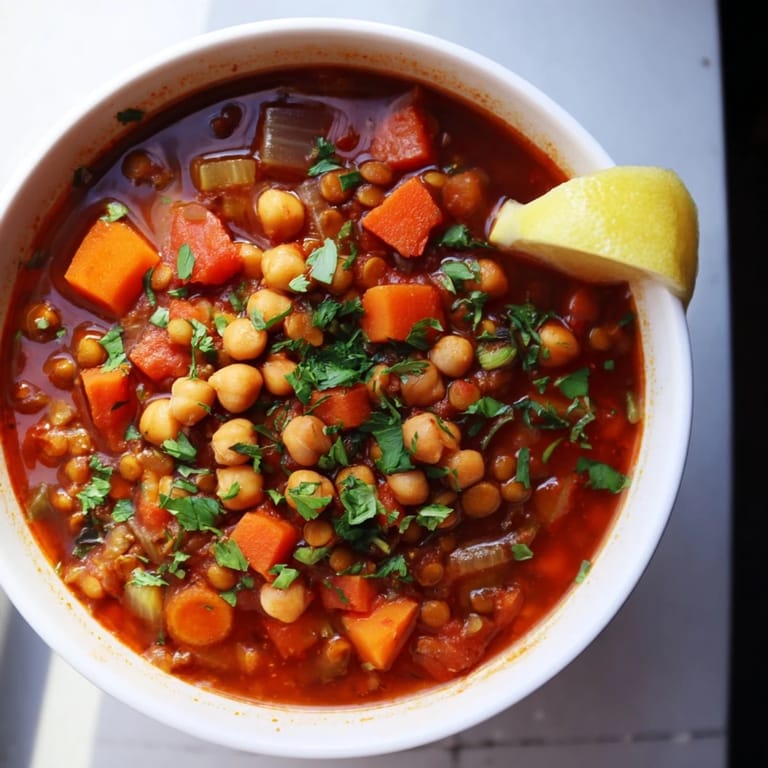
Save The first time I made harira, my kitchen filled with this warm, almost amber-colored steam that made everything feel intentional and slow. A friend had just returned from Morocco and described it so vividly—the way spices bloom in hot oil, how the broth turns this golden-rust color—that I had to try it that same evening. I didn't have all the traditional ingredients, but what I did have came together into something that tasted like it had been simmering for hours, even though it hadn't.
I served this to my family on a cold Sunday afternoon, and my mom—who's skeptical about anything she hasn't made herself—had three bowls. That's when I knew this recipe had staying power. There's something about a soup that's both comforting and exciting, that feels like it belongs at a festive table but also works for a quiet weeknight when you need something that feels like a hug.
Ingredients
- Chickpeas: These are the backbone, so soak them overnight if you have time, but canned work beautifully too—no shame in the shortcut.
- Lentils: They break down slightly and thicken the broth, so rinse them but don't skip them.
- Olive oil: The foundation for blooming your spices, so use something you'd actually taste.
- Onion, celery, and carrots: The aromatic base that everything else builds on, so take your time softening them properly.
- Tomato paste and canned tomatoes: Use both—the paste adds depth, the canned tomatoes add brightness and body.
- Garlic: Mince it fine so it disperses evenly and doesn't overpower any single spoonful.
- Ground cumin, cinnamon, ginger, turmeric, and paprika: This spice blend is the soul of the soup, so measure them out before you start cooking.
- Vegetable broth: This carries all the flavor, so use a good-quality broth or make your own if you have it.
- Dried apricots: They add that surprising sweetness and complexity that makes people ask what's in this.
- Fresh cilantro and parsley: Stir them in at the end so they stay bright and don't lose their essence to the heat.
- Lemon juice: This final squeeze lifts everything and balances the richness of the spices.
Tired of Takeout? 🥡
Get 10 meals you can make faster than delivery arrives. Seriously.
One email. No spam. Unsubscribe anytime.
Instructions
- Build your flavor base:
- Heat the olive oil over medium heat and add your onion, celery, and carrots. Let them soften for 6–8 minutes, stirring occasionally—you want them to turn translucent and start caramelizing just slightly at the edges. This is where the sweetness begins.
- Bloom the spices:
- Add the garlic and all your spices at once, stirring constantly for just a minute. Your kitchen will smell like a spice market, and that aroma is your signal that everything's working.
- Deepen the foundation:
- Stir in the tomato paste and let it cook for another minute until it darkens slightly, then add the canned tomatoes, chickpeas, lentils, and apricots. Everything should be coated in that spiced oil.
- Let it simmer:
- Pour in your vegetable broth, bring the whole pot to a boil, then immediately lower the heat and let it simmer uncovered for 45–50 minutes. Stir occasionally and watch as the chickpeas soften and the broth deepens in color, becoming this warm, burnished gold.
- Finish with brightness:
- When the legumes are tender, stir in the fresh cilantro, parsley, and lemon juice. Taste and adjust the salt and pepper—you might be surprised how much you need.
- Make it heartier (optional):
- If you want a thicker, more substantial soup, cook some vermicelli or rice separately and add it to individual bowls or stir it directly into the pot.
- Serve with intention:
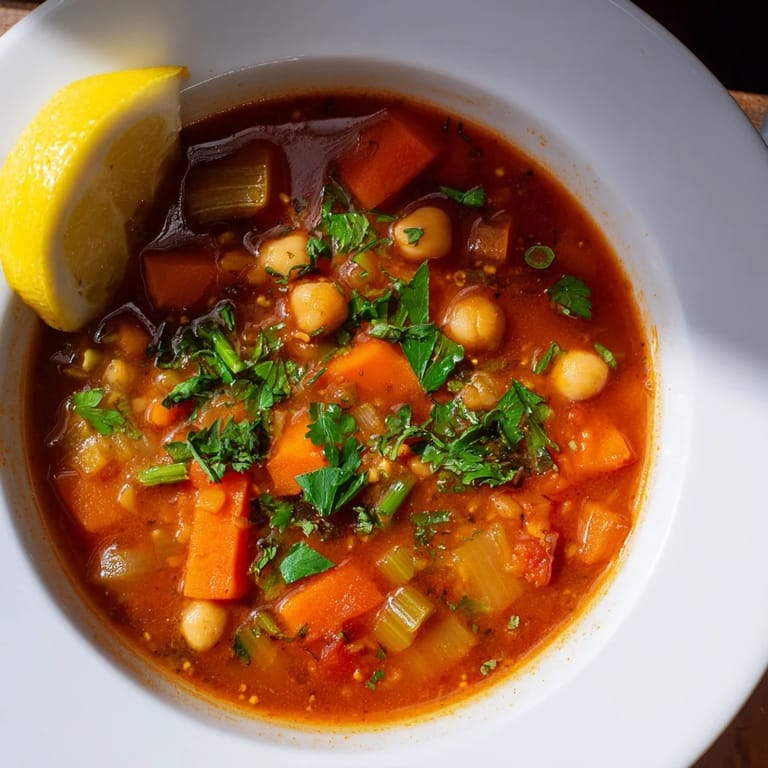
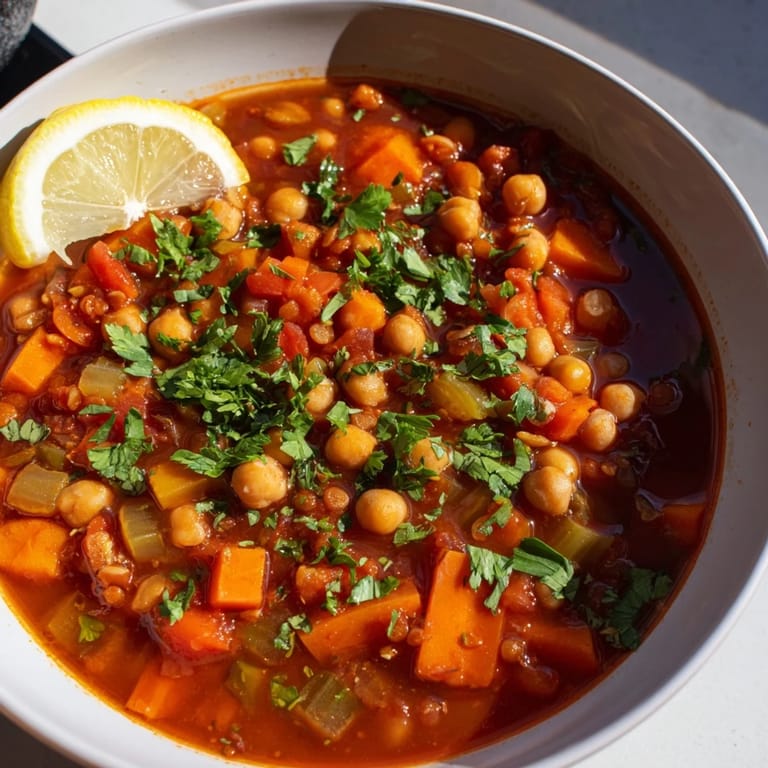
- Ladle into bowls and finish each one with extra fresh herbs, a lemon wedge on the side, and maybe a drizzle of good olive oil if you're feeling generous.
 Save
Save This soup has this quiet way of becoming part of your cooking routine once you've made it once. I've made it for dinner parties, for myself on tired Tuesdays, and once even as a gift in mason jars for neighbors. It's the kind of dish that reminds you why you started cooking in the first place.
The Story Behind North African Harira
Harira isn't just a recipe—it's a tradition that stretches across Morocco, Algeria, and Tunisia, often served during Ramadan to break the fast and warm the body and soul. But it's also become a year-round comfort, the kind of soup you make when you want something that feels festive without being fussy. The combination of sweet and savory is deliberate and ancient, balancing spices with fruit in a way that feels both surprising and inevitable once you taste it.
How to Make It Your Own
This recipe is flexible in the best way. If you love heat, add the full cayenne pepper or even a pinch of harissa paste for something smokier. If apricots don't appeal to you, try dates or even a tablespoon of honey stirred in at the end. Some people add a handful of spinach in the final minutes, others finish with a dollop of yogurt or a sprinkle of toasted nuts. The foundation is solid enough to handle your edits.
Storage and Making Ahead
This soup actually tastes better the next day, when all the flavors have had time to know each other. It keeps in the fridge for up to five days and freezes beautifully for up to three months—just leave out the fresh herbs and lemon juice until you're reheating and serving. If you're making it ahead for a gathering, you'll actually have less to do on the day itself, which is its own kind of gift.
- Let the soup cool completely before refrigerating or freezing.
- If freezing, leave room at the top of the container because the soup will expand slightly.
- To reheat, simmer gently on the stove with a splash of water or broth, then finish with fresh herbs and lemon juice just before serving.
 Save
Save Make this soup, and you'll understand why it's been feeding people for generations. It's humble and sophisticated at the same time, which is maybe the highest compliment a recipe can earn.
Recipe Help & Answers
- → What legumes are used in this harira?
Chickpeas and lentils are the primary legumes, providing hearty texture and protein.
- → Which spices create the soup's distinctive aroma?
A blend of cumin, cinnamon, ginger, turmeric, paprika, and optional cayenne pepper infuse fragrant warmth.
- → Can this soup be made vegan?
Yes, by using a plant-based vegetable broth and omitting any animal products.
- → What fresh herbs finish the dish?
Chopped cilantro and parsley are stirred in at the end to add freshness and color.
- → Are there suggested garnishes to enhance serving?
Lemon wedges and extra herbs bring brightness, while cooked vermicelli or rice can add heartiness.
- → How long should the soup simmer for best flavor?
Simmering for 45–50 minutes ensures the legumes are tender and spices fully meld.