 Save
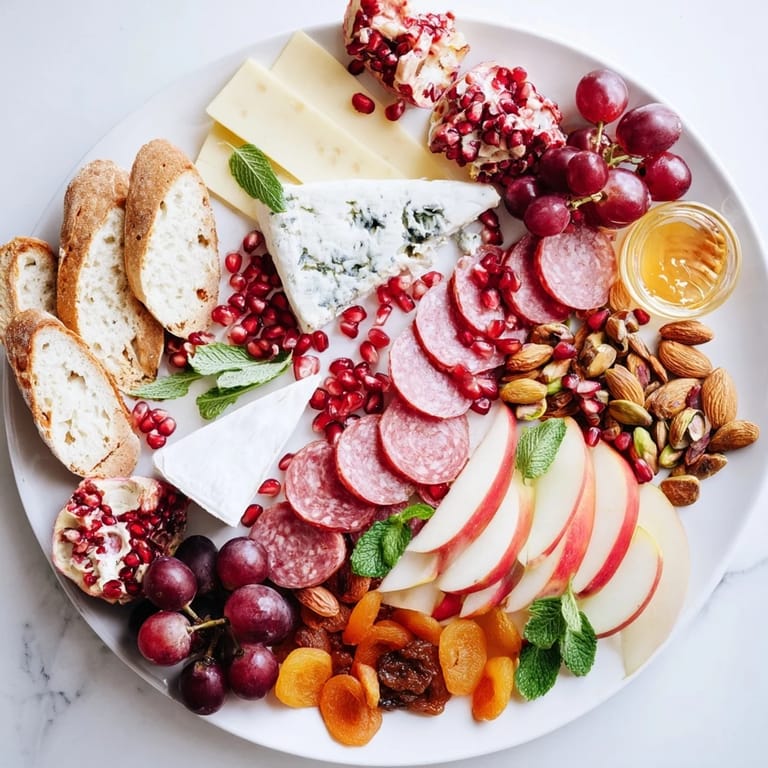
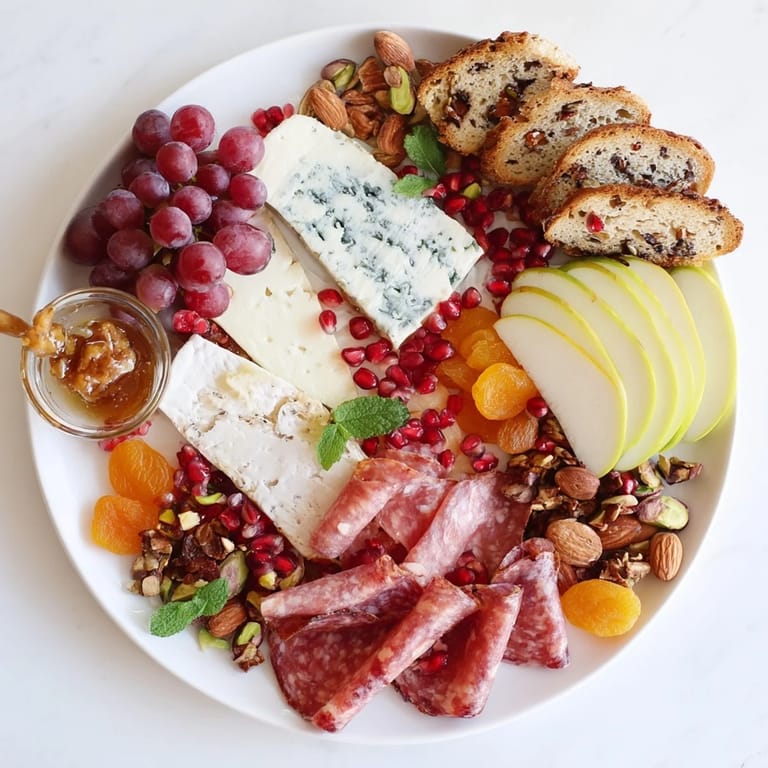
Save I still remember the moment I discovered that a cheese board could be more than just a collection of ingredients thrown on a platter. It was at a friend's summer dinner party where I watched in amazement as a spread was arranged with such intention and artistry that it became the centerpiece of the entire evening. The way those pomegranate seeds caught the light, glowing like tiny rubies scattered across creamy cheeses and delicate meats, made me realize that the most memorable gatherings are built on thoughtful details. That night, I learned that when you arrange food with care, you're really saying to your guests: you matter to me.
I made this board for my sister's engagement celebration, and watching her face light up when she saw those jewel-toned seeds scattered across the cheeses told me everything. She kept saying it was too beautiful to eat, but soon everyone was reaching for slices of aged Manchego paired with pomegranate arils, and the laughter never stopped. That's when I knew this wasn't just about feeding people; it was about creating a moment they'd remember.
Ingredients
- Creamy goat cheese, 100 g sliced: The tangy creaminess is your flavor anchor here. I always slice it just before assembling so it stays pristine and doesn't dry out on the board.
- Aged Manchego, 100 g sliced: This Spanish gem has a nutty depth that makes each bite sing. The slight saltiness is the perfect counterpoint to sweet pomegranate.
- Blue cheese, 100 g crumbled: I learned to crumble this by hand rather than pre-crumbling, so the pieces stay distinct and don't compact into a dense mass.
- Prosciutto, 80 g thinly sliced: Buy it sliced the day of if you can. The silky texture is what makes people pause mid-conversation to taste it again.
- Spicy salami, 80 g thinly sliced: This adds a gentle heat that wakes up your palate between bites of creamy cheese. Don't skip it thinking mild is safer; the contrast is the magic.
- Large pomegranate, arils only: These jewel-like seeds are non-negotiable for the look, but they also add bright bursts of tart sweetness. Removing the arils carefully prevents juice from staining everything, and I've found rolling the pomegranate gently on the counter first makes them release more easily.
- Red grapes, 1 small bunch halved: The sweetness here balances the salty cured meats beautifully. Halving them makes them easier to grab and keeps the design from looking too chunky.
- Ripe pear, 1 thinly sliced: Wait until the last possible moment to slice this, or toss the slices lightly in lemon juice to prevent browning. That delicate sweetness is worth the care.
- Apple, 1 small thinly sliced: A crisp variety like Granny Smith keeps its structure longer and adds a refreshing tartness that cuts through the richness of the cheeses.
- Dried apricots, 50 g halved: These sunny morsels add chewiness and a concentrated sweetness that complements aged cheeses wonderfully.
- Dried figs, 40 g sliced: I slice these fresh from the package so they don't crumble into powder. Their deep, honeyed flavor is almost addictive.
- Toasted pistachios, 40 g: The toasting step matters. It brings out a roasted nuttiness that raw pistachios just can't deliver. I keep them in a separate small bowl to control where they go.
- Roasted almonds, 40 g: These add a subtle earthiness and much-needed texture contrast. They're the unsung heroes of the board.
- Honeycomb piece, 1 small: Honey and cheese are an ancient pairing for good reason. That floral sweetness elevates everything around it.
- Fig jam, 1 small jar: This is your secret weapon for flavor depth. A small dollop on a cracker with blue cheese is absolutely transcendent.
- Crusty baguette, sliced: Choose one that's crusty on the outside and soft within. Those crispy edges are what carry the delicate flavors best.
- Artisan crackers, 80 g: Quality matters here. Look for something with character, not the bland alternatives. These become the vehicle for all those beautiful flavors to shine.
- Fresh mint leaves: This is the final garnish that says you cared about every detail. Mint adds brightness and aroma that feels elegant but unpretentious.
Tired of Takeout? 🥡
Get 10 meals you can make faster than delivery arrives. Seriously.
One email. No spam. Unsubscribe anytime.
Instructions
- Envision your diagonal path:
- Lay your board or platter in front of you and trace an imaginary line from the top left to the bottom right. This becomes your guide for everything that follows. I like to actually use a piece of chalk dust or even my hand to see where this line naturally feels balanced on my particular board.
- Begin your cheese foundation:
- Start placing your cheese slices and crumbles along that diagonal line. Alternate between the creamy goat cheese, aged Manchego, and blue cheese so that no two of the same type sit directly beside each other. This creates visual interest and ensures each cheese gets noticed. Overlap the slices slightly as you move down the diagonal, like shingles on a roof.
- Layer the cured meats with intention:
- Now comes the texture. Take those silky slices of prosciutto and salami and tuck them gently between the cheese sections. Let them fold naturally and overlap in ruffles rather than laying them flat. This creates depth and movement that draws the eye. I usually fold them in thirds, which gives them just enough volume without overwhelming the board.
- Weave in the fresh fruits:
- Begin placing your pear and apple slices along the cascade, interspersing them with the grape halves. As you do this, you're building layers of color and flavor. The soft pastels of the pear contrast beautifully with the deeper tones of the aged cheese. Don't rush this step; take time to see where each piece wants to go.
- Scatter the pomegranate jewels:
- This is the moment everything transforms. Generously sprinkle those pomegranate arils across the entire diagonal line, with small clusters concentrated in certain areas for that jewel-like effect. They catch light, add brightness, and those tiny bursts of flavor will make people want to come back for more. The tartness is the perfect counterpoint to all that richness.
- Add the dried fruits and nuts:
- Tuck in your dried apricots and figs, letting them nestle naturally among the fresh ingredients. Then scatter your toasted pistachios and roasted almonds across the design. These add crunch and keep each bite interesting. I often place a small cluster of pistachios near the pomegranate arils to let those colors play off each other.
- Position your condiment bowls:
- Place your small bowls of honeycomb and fig jam at either end of the cascade. These should feel like little treasures waiting to be discovered. Guests will naturally gravitate toward them, and they'll use them to enhance their bites with cheese and crackers.
- Fan out your breads and crackers:
- Along both sides of your diagonal cascade, arrange your baguette slices in a fan pattern and scatter your artisan crackers. Space them so they're easy to grab but also part of the overall design. I like to leave a little breathing room between them so the board doesn't feel crowded.
- Crown it with fresh mint:
- Just before serving, scatter fresh mint leaves across the top. This adds a final pop of color and a subtle aroma that makes the whole experience feel complete. It says that someone cared about every single detail.
- Serve immediately at room temperature:
- Bring the board to your table with pride. The room temperature is key because it allows all those flavors to shine. Cold cheese loses its creaminess, and cold cured meats lose their silky texture. This board is best when everything tastes like it was meant to be savored.
 Save
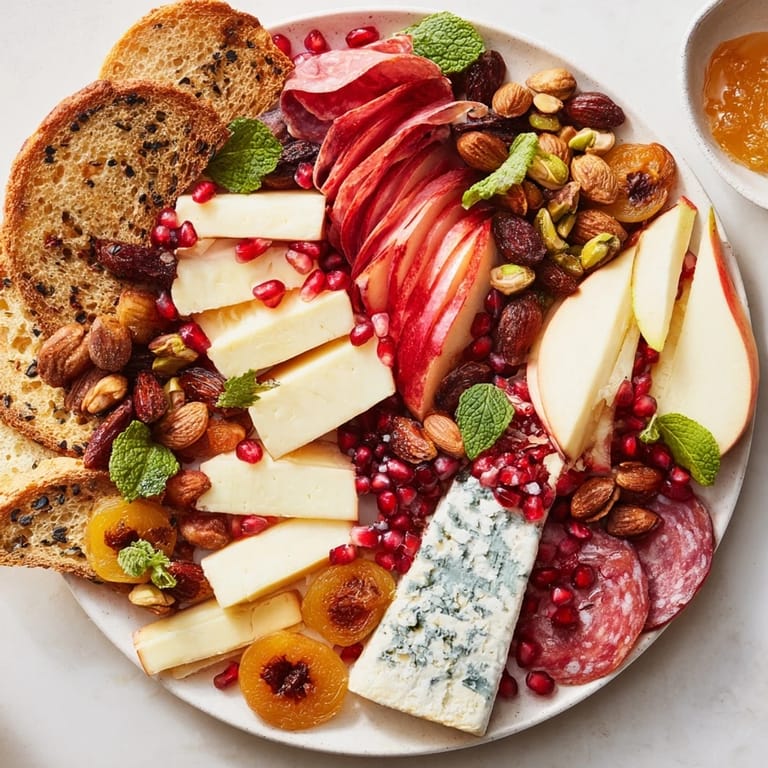
Save What I love most about this board is that it gave my grandmother a moment of pure joy at her birthday celebration. She'd spent her whole life perfecting French cuisine, so I was nervous. But when she tasted the pomegranate with the Manchego and reached for another piece, she smiled and squeezed my hand. That's when I understood that food, arranged with care, is really just love made visible.
The Art of Visual Arrangement
A cheese board is as much about what the eye sees as what the mouth tastes. The diagonal cascade isn't just a design choice; it's a guide that creates movement and draws people into wanting to explore every corner. When you arrange with intention, you're creating visual pathways that make the board feel intentional rather than haphazard. I've learned that the most beautiful boards aren't the ones with the most ingredients, but the ones where every piece has been thoughtfully placed to create balance, contrast, and flow. Think about how colors move across the board, how textures change from one area to the next, and how each element leads the eye to discover something new.
Pairing Your Board with Beverages
The beverage you choose can elevate the entire experience or, if you're not thoughtful, overwhelm the delicate flavors you've carefully arranged. A crisp rosé feels like the natural companion to this Mediterranean-inspired board because its slight sweetness echoes the pomegranate and dried fruits, while its acidity cuts through the richness of the aged cheeses. Sparkling wine adds an elegant effervescence that keeps your palate refreshed between bites. But I've also discovered that a non-alcoholic pomegranate spritzer is absolutely perfect, especially for a gathering where everyone needs to stay sharp. The pomegranate flavor in the drink echoes the arils on the board in a way that feels almost poetic.
Building Your Perfect Variation
The beauty of this board is that it's a foundation, not a prescription. I've learned through experimentation that you can swap almost any cheese or cured meat while keeping the essential structure intact. Brie adds creaminess where Manchego adds nuttiness. Camembert brings earthiness. When I want to make it fully vegetarian, I simply remove the prosciutto and salami and add more roasted vegetables, perhaps some charred peppers or caramelized onions in a small bowl. The board's magic isn't in specific ingredients; it's in the balance of flavors, textures, and colors. You must know that any substitution works as long as you're still building that cascade with care and intention.
- Try aged Cheddar or Gruyère if you prefer sharper, more complex cheese flavors
- Add roasted red peppers or charred zucchini slices for a vegetarian protein boost
- Consider offering gluten-free crackers alongside the regular ones so everyone can participate fully
 Save
Save This board is my reminder that hospitality is about creating space where people feel celebrated and cared for. When you serve this, you're not just feeding people; you're telling them they matter.
Recipe Help & Answers
- → What cheeses work best for this board?
Soft goat cheese, aged Manchego, and blue cheese are ideal for contrasting textures and flavors, but Brie or aged Cheddar can be used.
- → How can I make this board vegetarian-friendly?
Simply omit cured meats and add extra nuts or roasted vegetables to maintain variety and texture.
- → What fruits complement the savory elements?
Fresh pomegranate arils, red grapes, pears, and apples add sweetness and balance to the salty and creamy components.
- → Are there any suitable drink pairings?
This board pairs beautifully with crisp rosé, sparkling wine, or a refreshing non-alcoholic pomegranate spritzer.
- → How should the board be served?
Serve at room temperature to enhance flavors and aromas; arranging ingredients diagonally creates visual appeal.
- → What should I be aware of regarding allergens?
Contains dairy, tree nuts, gluten, and may have sulfites from dried fruits and cured meats. Check ingredient labels carefully.