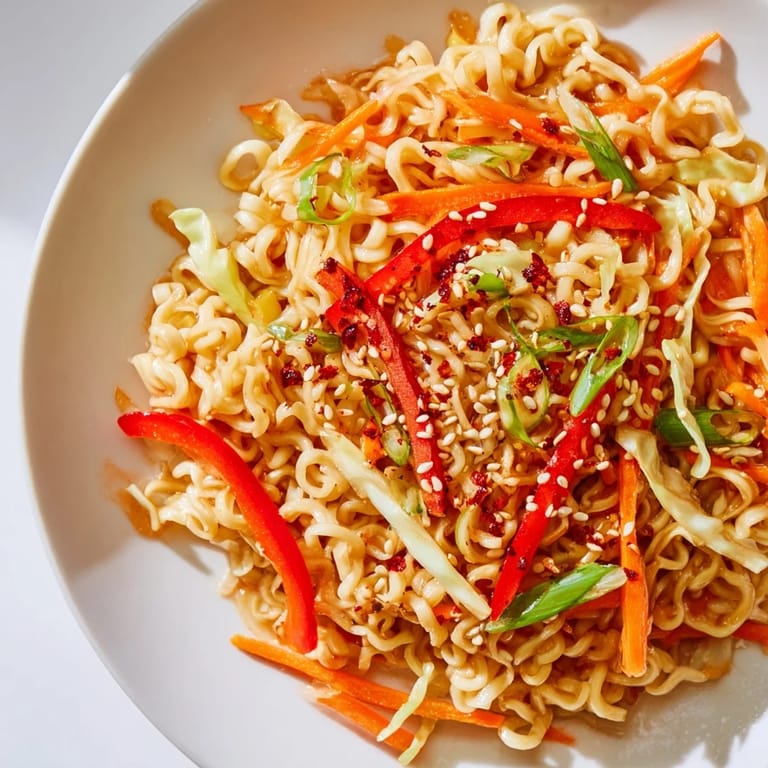
 Save
Save There's something magnetic about ramen that arrives in a cloud of steam—how it hits different when you're hungry at 11 PM and your phone is already pulling up TikTok videos of people making it look effortless. That's when I discovered this version, watching someone's wok dance with vegetables and noodles, the whole thing coming together in the time it takes to order takeout. I tried it that night and realized I'd been sleeping on how good simple ramen could taste when you actually cared about it for ten minutes.
I made this for my roommate on a random Wednesday when she complained that everything felt boring to eat, and I watched her face change when she took that first bite—the kind of reaction that makes you feel like a secret genius in your own kitchen. She asked for the recipe immediately, and now it's her go-to when she needs something that feels special but doesn't require a grocery run. That's when I knew this wasn't just a viral trend thing; it actually works.
Ingredients
- Instant ramen noodles (2 packs): Throw away the seasoning packets and think of the noodles as a clean canvas—they cook perfectly al dente if you trust the timing.
- Shredded cabbage (1 cup): It stays crisp and slightly sweet when you don't overcook it, which is the whole point of a stir fry.
- Carrot, julienned (1 medium): The thin cuts mean they soften just enough to be tender but never mushy, adding a faint natural sweetness.
- Green onions (2), sliced: These go in at the end because they're delicate and need that raw brightness to shine through.
- Red bell pepper (1/2 medium), thinly sliced: Red ones are sweeter than green, which balances the heat from the sauce perfectly.
- Soy sauce (2 tablespoons): This is your salt anchor—use the good stuff if you have it, because the whole dish rides on this.
- Sriracha or chili garlic sauce (1 tablespoon): Choose whichever one you keep reaching for; they both work, just taste different in the best way.
- Oyster sauce (1 tablespoon): This adds umami depth that makes the sauce feel complex instead of just spicy.
- Brown sugar (1 tablespoon): Don't skip this—it's the secret that makes the sauce taste rounded instead of one-note.
- Sesame oil (2 teaspoons): A little goes a long way; the smell alone tells you you're doing something right.
- Rice vinegar (1 teaspoon): This cuts through the richness and prevents the sauce from feeling heavy.
- Ground black pepper (1/4 teaspoon): Fresh ground if you can manage it; it makes a surprising difference.
- Garlic (2 cloves), minced: Don't pre-mince this if you can help it—fresh garlic transforms the moment it hits hot oil.
- Vegetable oil (1 tablespoon): Use something neutral that can handle the heat without smoking.
- Toasted sesame seeds (1 teaspoon) plus garnish: Buy them already toasted to save a step and ensure they're nutty, not raw.
- Red pepper flakes (1/2 teaspoon), optional: This is your heat insurance if the sriracha feels timid.
Tired of Takeout? 🥡
Get 10 meals you can make faster than delivery arrives. Seriously.
One email. No spam. Unsubscribe anytime.
Instructions
- Cook the noodles until they're still springy:
- Bring water to a rolling boil, add the noodles, and set a timer for one minute less than the package says. You want them with a little bite, not soft, because they'll heat through again in the pan and you want that texture to hold up.
- Make your sauce while everything's cooking:
- Whisk soy sauce, sriracha, oyster sauce, brown sugar, sesame oil, rice vinegar, and pepper in a bowl until the sugar dissolves. Taste it straight from the spoon—it should be bold enough that you feel it.
- Get your pan screaming hot:
- Pour oil into a skillet or wok over medium-high heat and wait until it shimmers slightly, then add the minced garlic and let it perfume the oil for about 30 seconds. You'll know it's ready when the smell hits you.
- Stir fry the vegetables until they're barely cooked through:
- Add cabbage, carrot, and bell pepper all at once and keep them moving with a spatula or wooden spoon for 2–3 minutes. They should still have resistance when you bite one—this is not a braise.
- Bring everything together in the pan:
- Add the drained noodles and pour in the sauce, tossing everything constantly for 1–2 minutes until the noodles are coated and hot all the way through. The sauce should cling to everything instead of pooling at the bottom.
- Finish with the delicate stuff:
- Remove from heat, scatter green onions and sesame seeds on top, add red pepper flakes if you're going for serious heat, and toss one last time just to combine.
- Serve immediately:
- This dish waits for no one—eat it straight from the pan or plate it fast, while the noodles still have warmth and the vegetables still have their crisp edges.
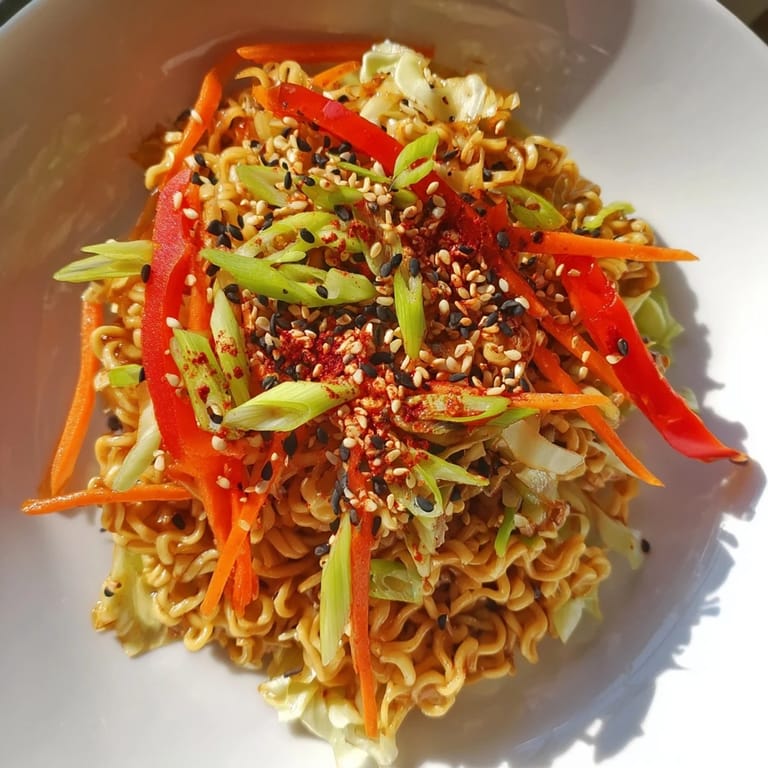 Save
Save This dish has a way of making you feel capable even when you're tired or rushed, which is maybe the best thing any food can do. I've made it dozens of times now and every time someone eats it, they're a little surprised by how good something so simple tastes.
Why This Works as a Meal
Stir fries exist because they solve a real problem: you're hungry, you have twenty minutes, and you want something that tastes intentional instead of resigned. This one takes the internet's viral moment and actually backs it up with technique—the hot pan, the quick cooking, the sauce that gets tangled through everything. It's the kind of meal that bridges that gap between "I should cook something" and "I actually want to eat this," which is harder than it sounds.
Building Flavor Through Layers
What makes this sauce work is that it doesn't rely on any one ingredient being overpowering—the soy sauce brings salt and depth, the sriracha brings heat, the oyster sauce whispers umami, and the brown sugar and rice vinegar balance everything into something that tastes thoughtful instead of just spicy. Each element is quiet enough on its own that when they meet in the pan, they feel like they were always meant to be together.
Variations and Improvisation
The beautiful thing about this recipe is that it's a framework, not a rulebook—it can absorb what's in your kitchen and still come out tasting great. I've made it with whatever vegetables I had on hand, added an egg on top when I wanted more protein, even stretched it with tofu one week when I was being virtuous about groceries. The core stays the same and everything else adapts around it.
- Try a soft-boiled egg on top for richness, or scrambled for something more integrated into the noodles.
- Cooked chicken shreds, shrimp, or crispy tofu all work beautifully if you want protein beyond what's already there.
- If you have it, a splash of fish sauce instead of some of the soy sauce deepens everything without making it taste fishy.
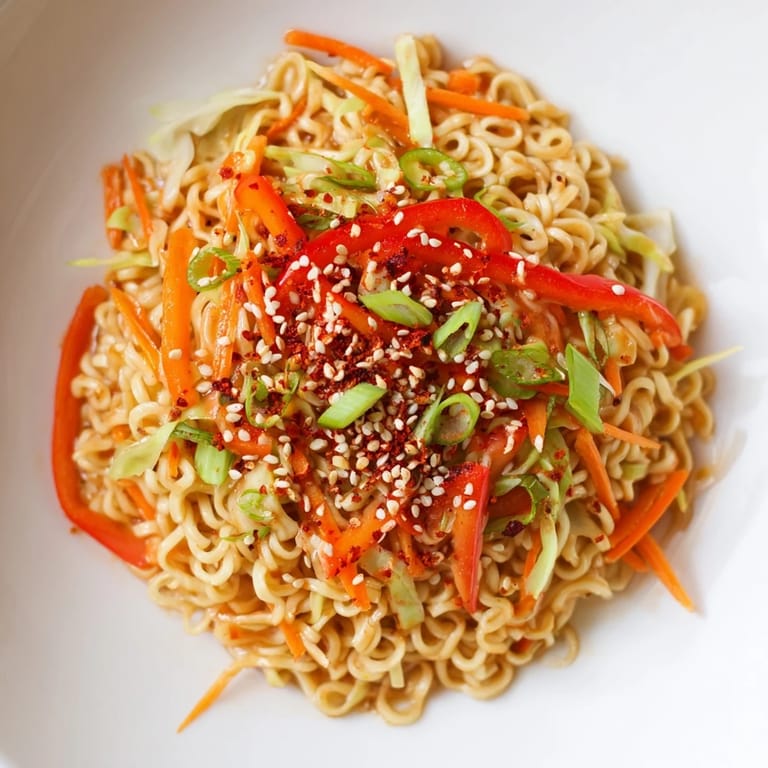 Save
Save This is one of those recipes I return to when I want to remind myself that good food doesn't have to be complicated or precious—just attentive for a few minutes. That's enough.
Recipe Help & Answers
- → Can I make this dish vegan?
Yes, substitute the oyster sauce with vegan oyster sauce or hoisin sauce to keep it plant-based.
- → How do I keep the noodles from getting soggy?
Reduce the boiling time by a minute to make noodles firmer, then drain well before stir-frying.
- → What vegetables work best here?
Shredded cabbage, julienned carrots, sliced bell peppers, and green onions provide great crunch and freshness.
- → Can I add protein to this dish?
Absolutely, try tofu, cooked chicken, shrimp, or a fried egg to enhance protein content.
- → What is a good drink pairing?
A crisp lager or unsweetened iced tea complements the bold, spicy flavors nicely.