 Save
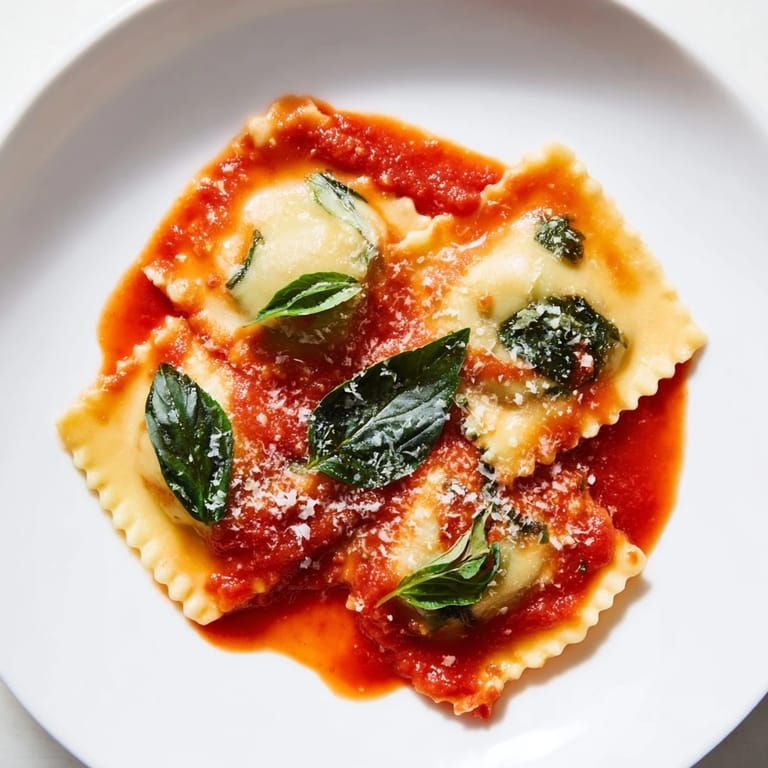
Save The kitchen counter was dusted with flour like fresh snow, and my hands were sticky with egg yolk when I realized I had no idea what I was doing. Making ravioli from scratch sounded romantic until I was actually elbow-deep in dough that refused to cooperate. But something shifted when I finally rolled out that first thin sheet, nearly translucent, and saw how the filling peeked through like little secrets. That batch was lumpy and uneven, but when they bobbed to the surface of the boiling water, I felt like I'd accomplished something real.
I made this for my sister on her birthday one year, and she cried a little when she took the first bite. Not because it was perfect, but because I'd taken the time to make something with my hands just for her. We sat at my tiny kitchen table with mismatched plates, twirling ravioli and laughing about how some of them looked like little pillows and others like deflated balloons. It didn't matter. The marinara was bright and garlicky, the basil was fresh, and the whole night felt warm in a way that had nothing to do with the stove.
Ingredients
- All-purpose flour: The foundation of your dough, it gives structure without being too heavy, and a little extra for dusting saves you from sticky disasters.
- Eggs: They bind the dough and add richness, make sure theyre at room temperature so they mix more easily into the flour.
- Ricotta cheese: The creamy heart of the filling, choose whole milk ricotta for the best texture and avoid the watery stuff.
- Fresh spinach: Adds color and a slight earthiness, but you must squeeze out every drop of water or your filling will turn soggy.
- Parmesan cheese: Sharpness and saltiness in one, freshly grated melts into the filling and tastes worlds better than pre-shredded.
- Egg yolk: Binds the filling together and makes it silky, dont skip this or the mixture will crumble.
- Nutmeg: Just a whisper of warmth that makes the ricotta taste more complex and somehow more Italian.
- Marinara sauce: Homemade is lovely, but a good jarred sauce works beautifully when youre already making pasta from scratch.
- Garlic: Freshly minced and sautéed until fragrant, it wakes up the entire sauce.
- Olive oil: A good glug to start the sauce and keep everything from sticking.
- Fresh basil: Torn at the last second, it adds a brightness that ties the whole dish together.
Tired of Takeout? 🥡
Get 10 meals you can make faster than delivery arrives. Seriously.
One email. No spam. Unsubscribe anytime.
Instructions
- Make the Pasta Dough:
- Mound your flour on a clean counter and create a well in the center like a little volcano. Crack the eggs into the well, add salt, and use a fork to slowly pull the flour into the eggs until a shaggy dough forms. Knead it for 8 to 10 minutes until it feels smooth and elastic, then wrap it tightly in plastic and let it rest for 30 minutes so the gluten relaxes.
- Prepare the Filling:
- Steam or sauté the spinach until wilted, then drain it and squeeze out every bit of moisture you can, this step is crucial. In a bowl, mix the ricotta, chopped spinach, Parmesan, egg yolk, nutmeg, salt, and pepper until everything is evenly combined and creamy.
- Roll the Pasta:
- Divide the dough in half and keep one half covered so it doesnt dry out. Roll out each half into thin sheets, about 1/16 inch thick, using a pasta machine or a rolling pin and a lot of patience.
- Shape the Ravioli:
- Place teaspoons of filling about 2 inches apart on one sheet of pasta, brush the edges with water, then lay the second sheet on top. Press gently around each mound of filling to seal, then cut into squares or use a ravioli cutter and press the edges with a fork to make sure they stay closed.
- Cook the Ravioli:
- Bring a large pot of salted water to a gentle boil and cook the ravioli in batches for 3 to 4 minutes. Theyll float to the surface when theyre ready, lift them out gently with a slotted spoon.
- Make the Marinara Sauce:
- Heat olive oil in a saucepan over medium heat, add minced garlic and sauté for about a minute until fragrant. Stir in the marinara sauce, season with salt and pepper, and let it simmer for 5 minutes to deepen the flavors.
- Serve:
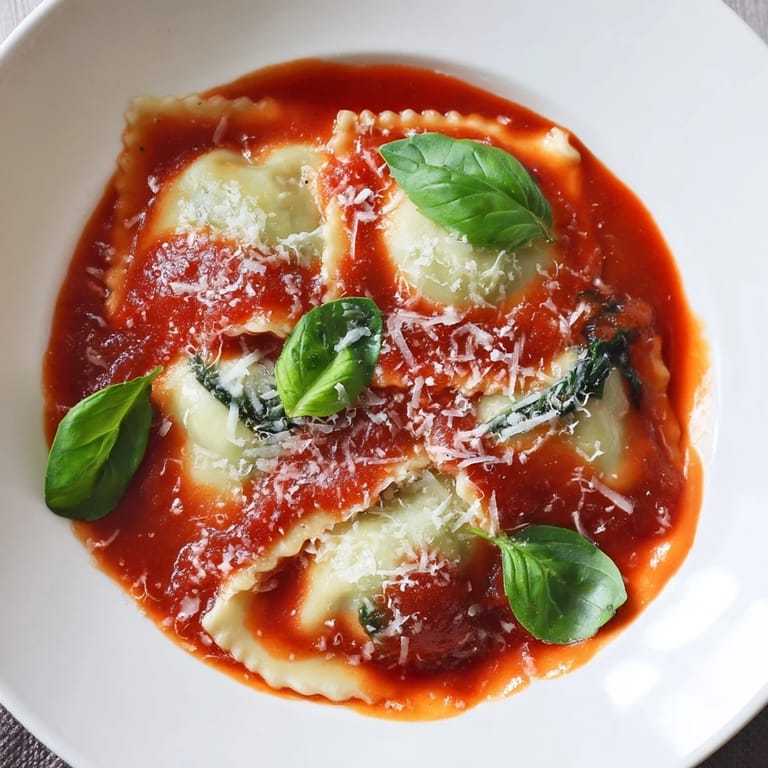
- Spoon some sauce onto each plate, arrange the hot ravioli on top, and add more sauce. Finish with torn basil leaves and a generous sprinkle of Parmesan.
 Save
Save There was a Sunday afternoon when I made ravioli with my neighbor, and we stood side by side at the counter, rolling and filling and laughing at our crooked shapes. Her kids ran in and out, stealing bits of Parmesan and leaving floury fingerprints on the door frame. When we finally sat down to eat, the kitchen was a mess and the ravioli were all different sizes, but no one cared. It was one of those meals that remind you food is really just an excuse to be together.
Choosing Your Ingredients
Fresh spinach is ideal, but frozen works beautifully if you thaw it completely and squeeze it dry in a clean towel. I learned this after my first batch turned into a watery mess because I skipped that step. Ricotta varies wildly in texture, so look for whole milk ricotta thats thick and creamy, not the kind that pools liquid in the container. Parmesan should be freshly grated, the pre-shredded stuff has anti-caking agents that make the filling grainy. If you cant find good marinara, a simple crushed tomato sauce with garlic and basil is even better.
Working with Pasta Dough
Rolling pasta dough by hand takes practice, but its deeply satisfying once you get the feel for it. I use a pasta machine now, but my first few batches were rolled with a wine bottle because I didnt own a proper pin. The key is to keep the dough covered when youre not working with it, because it dries out fast and becomes impossible to seal. Dust your work surface lightly with flour, but not too much or the dough will get tough. If the dough resists, let it rest for another 10 minutes and it will relax.
Storing and Freezing
Ravioli freeze beautifully, which means you can make a double batch and have a head start on a future dinner. Arrange them in a single layer on a baking sheet dusted with flour, freeze until solid, then transfer to a freezer bag. Cook them straight from frozen, just add an extra minute or two to the boiling time. Leftover cooked ravioli can be tossed in a little butter and crisped up in a skillet the next day, which is a completely different but equally delicious experience.
- Freeze uncooked ravioli on a floured baking sheet before bagging them to prevent sticking.
- Use semolina flour for dusting if you have it, it keeps the pasta from getting gummy.
- Cooked ravioli should be eaten the same day, but the dough and filling can be prepped a day ahead.
 Save
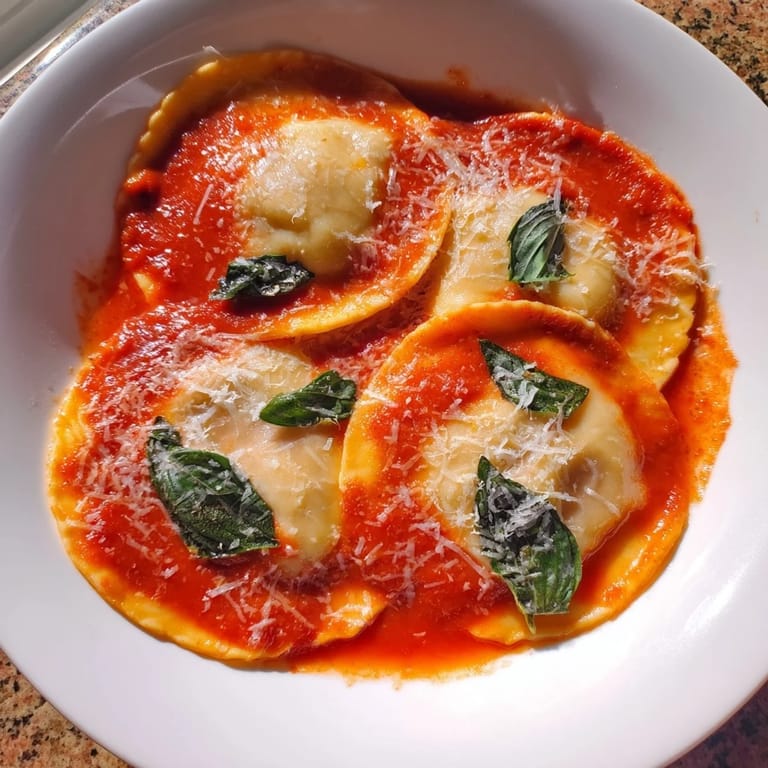
Save This dish will make your kitchen smell like an Italian grandmothers house, and your hands will be tired, but in the best way. Serve it with someone you care about, pour a glass of something crisp and cold, and enjoy every lumpy, imperfect, delicious bite.
Recipe Help & Answers
- → How do I know when ravioli is cooked properly?
Ravioli is done when it floats to the surface of the boiling water. Once it rises, let it cook for an additional 1-2 minutes to ensure the filling is heated through and the pasta is tender.
- → Can I make ravioli ahead of time?
Yes, you can freeze uncooked ravioli on a baking sheet, then transfer to a freezer bag for up to 3 months. Cook directly from frozen, adding 1-2 minutes to the cooking time.
- → What's the best way to prevent ravioli from bursting?
Don't overfill each ravioli, seal edges thoroughly by pressing with a fork, and maintain a gentle boil rather than a rolling boil. Keep water at a steady simmer to avoid vigorous movement.
- → Can I use frozen spinach instead of fresh?
Absolutely. Thaw frozen spinach completely and squeeze out all excess moisture before mixing into the filling. This prevents the filling from becoming watery.
- → How can I enhance the filling flavor?
Add a pinch of lemon zest, fresh garlic, or Italian herbs like oregano and basil to the ricotta mixture. Some cooks also add a touch of red pepper flakes for subtle heat.
- → What wine pairs well with this dish?
A crisp white wine like Pinot Grigio, Vermentino, or Sauvignon Blanc complements the creamy ricotta and tangy marinara beautifully.