 Save
Save I discovered this soup on a rainy Bangkok evening, sitting in a tiny restaurant where the cook let me watch from the kitchen counter. The way she stirred that green paste into the oil released such an intoxicating aroma that I knew I had to learn it myself. Years later, I still chase that same magic whenever I make it at home—that moment when the coconut milk clouds into the bright curry base feels like unlocking a small secret every single time.
I made this for my partner on their birthday during a particularly stressful work week, and they literally closed their eyes after the first spoonful. They didn't say anything for a moment, just sat there with their spoon halfway to the bowl, and I realized comfort food isn't about impressing someone—it's about giving them permission to exhale.
Ingredients
- Green curry paste: This is where all your flavor comes from, so don't skimp or reach for the tiny jar at the back of the shelf. Two tablespoons might seem timid, but it blooms into something powerful once it hits the hot oil.
- Coconut milk: Full fat tastes noticeably richer, but light coconut milk keeps things lighter without sacrificing creaminess. Shake the can well before opening.
- Firm tofu or chicken breast: Tofu absorbs the broth beautifully if you give it a chance; chicken cooks faster and adds its own subtle richness.
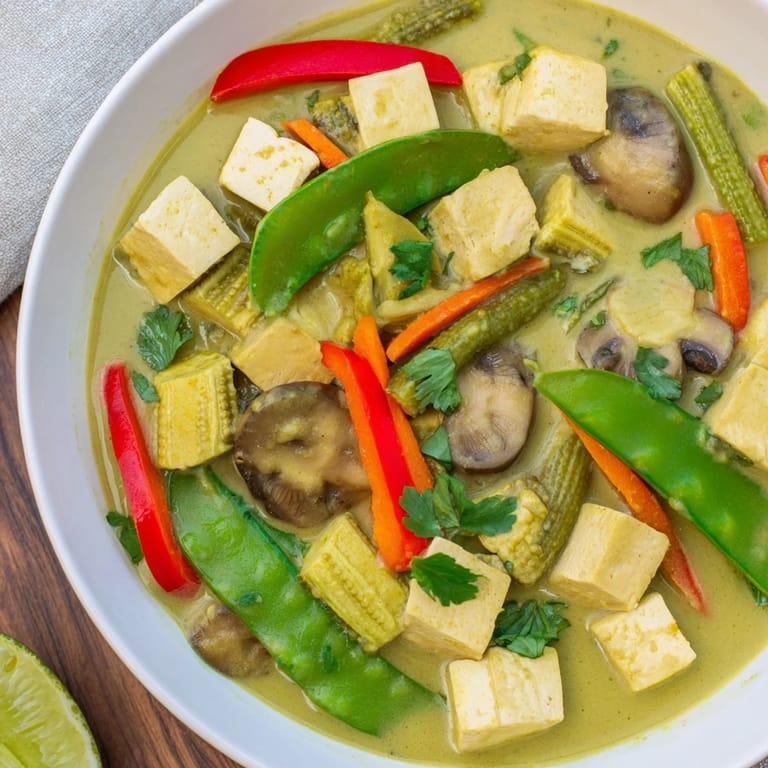
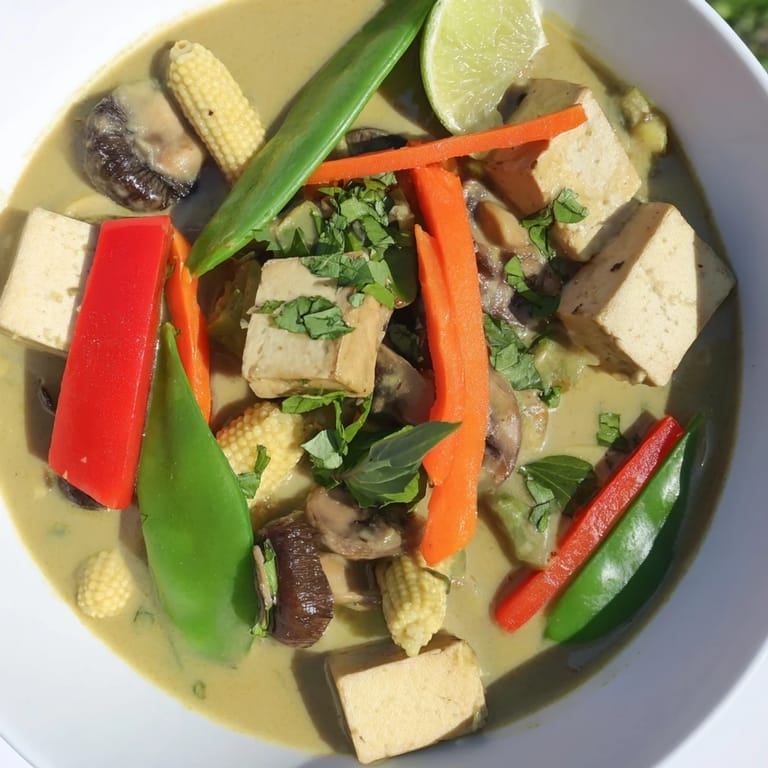
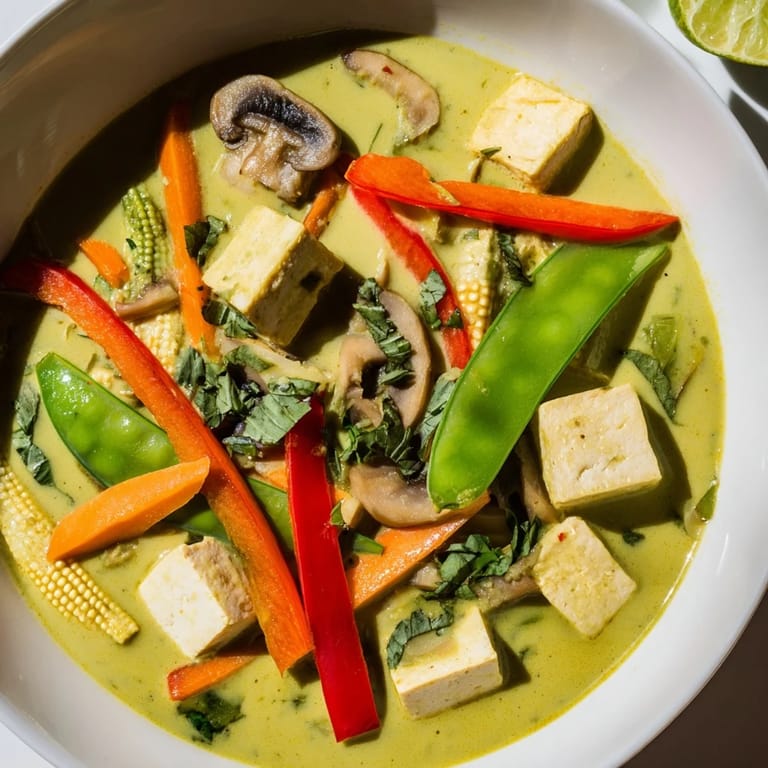
- Fresh vegetables: Baby corn, snap peas, mushrooms, bell pepper, zucchini, and carrot all add texture and keep the soup visually alive. Julienne that carrot thin so it doesn't overshadow the other flavors.
- Fish sauce or soy sauce: This is the umami anchor that makes people pause mid-bite and ask what that mysterious savory note is.
- Fresh cilantro and Thai basil: Add these at the very end so they stay bright and don't wilt into the heat.
Tired of Takeout? 🥡
Get 10 meals you can make faster than delivery arrives. Seriously.
One email. No spam. Unsubscribe anytime.
Instructions
- Toast the curry paste:
- Pour oil into your pot and let it shimmer, then add the green curry paste and let it sizzle for a full minute or two. You'll smell the aromatics wake up, and that fragrance tells you it's working.
- Build the base:
- Toss in sliced onion and let it soften slightly, about two minutes. This mellows the curry paste just enough so it doesn't overwhelm.
- Add protein gently:
- Slide in your tofu or chicken and stir occasionally for a few minutes. If using chicken, you're looking for the outside to turn opaque while the inside stays slightly underdone—it'll finish cooking in the broth.
- Pour in the liquid:
- Add coconut milk and broth together, stirring as you pour so the paste incorporates evenly. Let it come to a gentle simmer, not a rolling boil.
- Add vegetables in stages:
- Everything goes in now, and here's the secret—they'll cook at different rates, which is fine. Aim for that sweet spot where everything is tender but still has a whisper of resistance when you bite into it.
- Season and taste:
- Fish sauce or soy sauce, a teaspoon of sugar to round out the heat. Taste it now and trust your instinct—add a splash more broth if it feels too concentrated, more paste if it feels shy.
- Finish with brightness:
- Just before serving, scatter cilantro and Thai basil over each bowl, squeeze lime over it, and add sliced chili if you want more heat.
 Save
Save I learned to make this properly when a Thai friend tasted my first attempt and didn't politely smile—she just said, 'You're not letting the paste sing.' She was right. Once I stopped rushing through that first sizzle and gave the aromatics real time to open up, everything changed.
Customizing Your Soup
This recipe is a template, not a rulebook. Some seasons I lean into mushrooms because they're what's around; other times I add snap peas in the summer or mushrooms in the fall. The point is to work with what makes you excited to cook, because that energy transfers into how the food tastes.
Serving and Pairing
This soup wants company—jasmine rice soaks up the broth perfectly, or thin rice noodles if you're feeling something lighter. I've also served it over cauliflower rice for friends watching their carbs, and somehow it still feels like the same warm, satisfying moment we're all reaching for.
The Rhythm of Cooking Thai
Thai cooking is about balance: heat, salt, sweet, and sour. This soup teaches you that instinct because it begs for adjustment. Taste as you go and don't be afraid to add more lime, fish sauce, or even a pinch more sugar.
- Light coconut milk works beautifully if you prefer something less heavy but still creamy and nourishing.
- A squeeze of fresh lime juice at the table lets everyone adjust the brightness to their own preference.
- Keep extra sliced chili on the side so people can turn up the heat without overshadowing the other flavors.
 Save
Save This soup tastes like care in a bowl—simple ingredients, real flavors, and the kind of warmth that comes from knowing you made something good with your own hands. That's the whole point.
Recipe Help & Answers
- → Can I use chicken or tofu in this dish?
Yes, the soup can be made with either cubed firm tofu or thinly sliced chicken breast, depending on your preference.
- → What vegetables work best in the curry soup?
Fresh vegetables like bell pepper, zucchini, baby corn, snap peas, mushrooms, carrot, and onion provide the ideal balance of texture and flavor.
- → How spicy is the soup and can I adjust it?
The soup has a balanced spice level from the green curry paste, but you can increase heat by adding extra curry paste or fresh sliced chili.
- → Is there a recommended side to serve with this dish?
Steamed jasmine rice or rice noodles complement the rich, creamy broth and make the meal more filling.
- → What alternatives exist for fish sauce in this preparation?
You can substitute fish sauce with soy sauce for a vegetarian or vegan option, ensuring to use gluten-free soy sauce if needed.